Ukrainians have difficulty exercising property rights due to procedural obstacles and legal unawareness
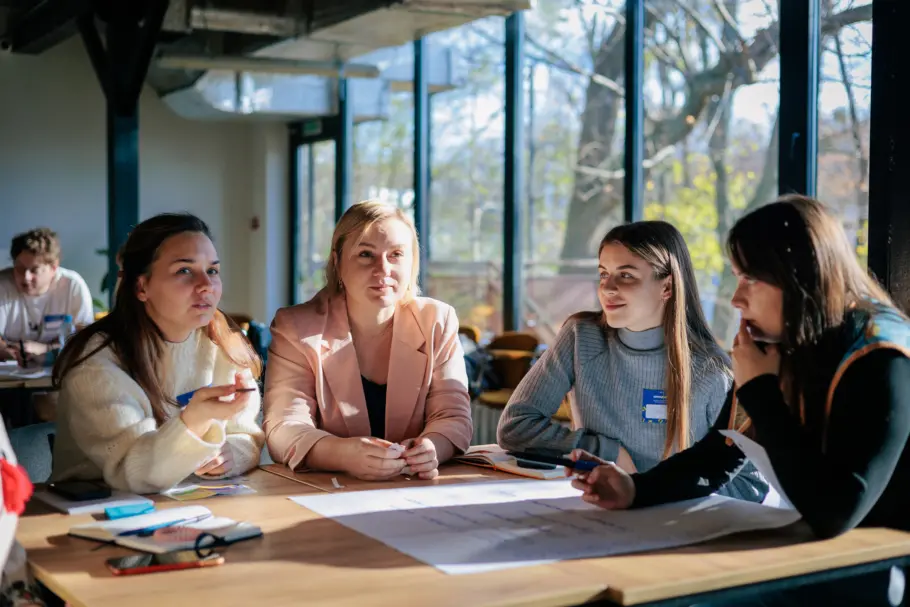
On October 5, the Center for Public Advocacy, with support of the Rule of Law Program of the International Renaissance Foundation, organized a discussion entitled: “Exercising the Right to Ownership in Ukraine: a closer view.”
Leonid Tarasenko, a representative of the Center, pointed out that the right to ownership is one of the four rights,along with access to justice, labor rights, and freedom of entrepreneurship, that, according to the UN Commission on Legal Empowerment of the Poor, citizens of Ukraine are unable to properly realize. According to him, ownership problems arise due to complex registration procedures (for unlicensed construction, re-registration of state land acts under the new type, etc.) procedural obstacles and lack of knowledge of basic ways citizens can exercise their rights.
Oksana Koval, a social issues lawyer at the Center for Public Advocacy, stressed that social benefits should be considered an element of ownership rights and that this right is widely violated in Ukraine. “The government is trying to do everything possible to not pay legally guaranteed social benefits to numerous categories of citizens, such as children of war, Chornobyl liquidators, Afghan war veterans, etc., even though the European Court has repeatedly pointed out this violation,” she said.
The most common violations of property rights were discussed: non-execution of judicial decisions on ownership; violations of the right to social benefits; inefficient management of communal property; violations of procedures for purchasing real estate from citizens for public use; complicated procedures of legalizing unlicensed construction; complicated procedure for registration of hereditary rights; complexity of registration by condominiums of ownership to the surrounding territory; deprivation of minors’ property rights to real estate as a result of illegal actions by their parents, custodial care services, buyers, notaries, etc; barriers to using foreign currency (i.e. latest rules introduced by the NBU for exchanging foreign currency), etc.
It was recognized that courts frequently render decisions concerning ownership that run contrary to the law and position of the Supreme Court of Ukraine, in particular: granting ownership without a legal basis, recognizing property acquisition agreements as valid when they should not be. Furthermore, citizens are often forced to go to court even when there is an easier solution: to obtain ownership to property one can go to the competent authority to get a duplicate document instead of the court; in cases involving an inheritance there is no need to go to court because this can be handled by a notary at the place of opening of inheritance. Experts noted that there are many such cases and that they increase the load on the judicial system. This could be avoided if people knew there are other legal ways to protect their ownership rights.
The Center for Public Advocacy
(+38 032) 244 46 59
cga@lawngo.net
***
The aim of the Rule of Law Program is to support the civil society initiatives directed to the protection of human rights and fundamental freedoms, to promote strengthened legal consciousness and public activity at the central and local levels.