

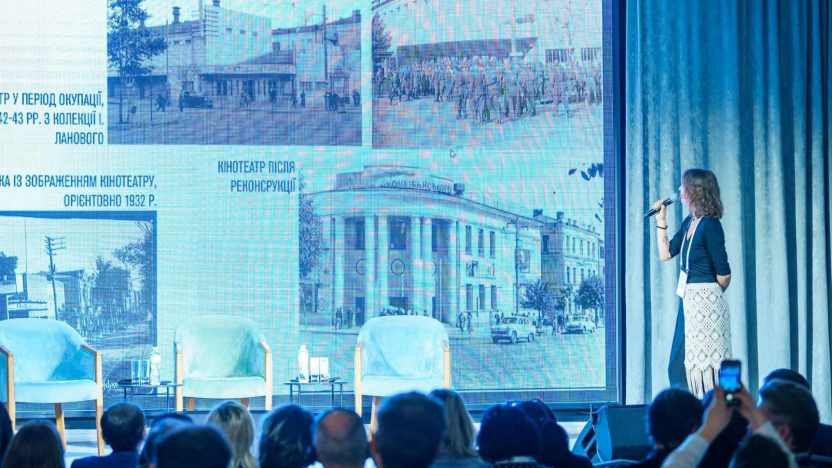
Panel discussions, roundtables, workshops, and a guided tour. Vinnytsia hosted the international architectural conference “FATA MORGANA: Museum. Heritage. Restoration,” which is one of the steps toward establishing the future Ukrainian Museum of Contemporary Art (UMCA) in the city.
Participants in the conference included representatives of government agencies, international organizations, architects, scholars, and cultural figures from Ukraine and Europe. The event was organized by the Vinnytsia City Council in collaboration with the civil society organizations “Museum of Contemporary Art” and “Artistic Association ‘Plai’” in the field of contemporary art and cultural development, with the support of Ukrainian and international partners.
The conference served as a platform for a substantive dialogue about the future museum—its architectural concept, institutional model, and place in the contemporary urban landscape. From April 7 to 9, participants discussed key issues regarding the museum’s role in society, the reinterpretation of cultural heritage, and architectural approaches during the wartime and post-war periods.
Following the event, a nationwide architectural competition will be announced for the revitalization of the former M. Kotsyubinsky Cinema building, where a center for contemporary art is planned. Vinnytsia will be the first city to implement the concept of a networked institution of the Ukrainian Museum of Contemporary Art (UMCA).
Vinnytsia Mayor Serhiy Morgunov outlined his vision for this space in Vinnytsia.
This marks a new chapter in the history of Vinnytsia’s development. Today, there is a clear demand from artists, Vinnytsia residents, and all forward-thinking individuals for the creation of such a space. We are not talking about a traditional museum with static collections, but rather a creative, vibrant space integrated into the network of the Ukrainian Museum of Contemporary Art. Vinnytsia is now becoming the launchpad for its creation. We have a suitable location—the building of the former Mykhailo Kotsyubynsky Cinema, which, in my opinion, is worthy of bringing this project to life. I sincerely thank everyone who joined the conference—both in person and online. It is extremely important to bring together professional architectural, spatial, and artistic expertise to form a high-quality vision of contemporary art. It is gratifying that architects from various European countries, as well as young creative professionals from Vinnytsia, Kharkiv, and other Ukrainian cities, joined the discussion. We strive to be pioneers and create a truly high-quality, meaningful space that will contribute to the city’s development for decades to come,” noted Serhii Morhunov.
In addition, the head of the Vinnytsia community thanked the NGO “Museum of Contemporary Art,” the NGO “Artistic Association ‘Plai,’” the UNESCO Office in Ukraine, the “Social Capital” program of the International Renaissance Foundation, as well as all partners and experts who contributed to this work.
In turn, Olga Balashova, chair of the board of the NGO “Museum of Contemporary Art” and UMCA, spoke about the concept for the future museum institution. According to her, it should be a decentralized network that will unite different regions of Ukraine and operate on the principles of community collaboration.
This refers to a networked, horizontal institution that will operate in various regions of the country. Ukraine is a large country with diverse local contexts, and these must be thoroughly researched, analyzed, and presented. The model we are currently developing envisions decentralization—without a single central management hub. Instead, it will be a network of local centers, the first of which will emerge in Vinnytsia and will later unite into a unified system. We are working to ensure that this institution does not place an additional burden on the state or local budgets, but rather functions through partnerships and synergies among various civil society institutions. It is important that everything acquired within the local centers remains in the communities, while at the same time a shared national collection is formed, accessible in a digital environment. “This should be a modern Ukrainian art system—integrated, service-oriented, open, with a transparent and adaptable management system, where decisions are made not by the central office but by a delegated council of network representatives,” noted Olga Balashova.
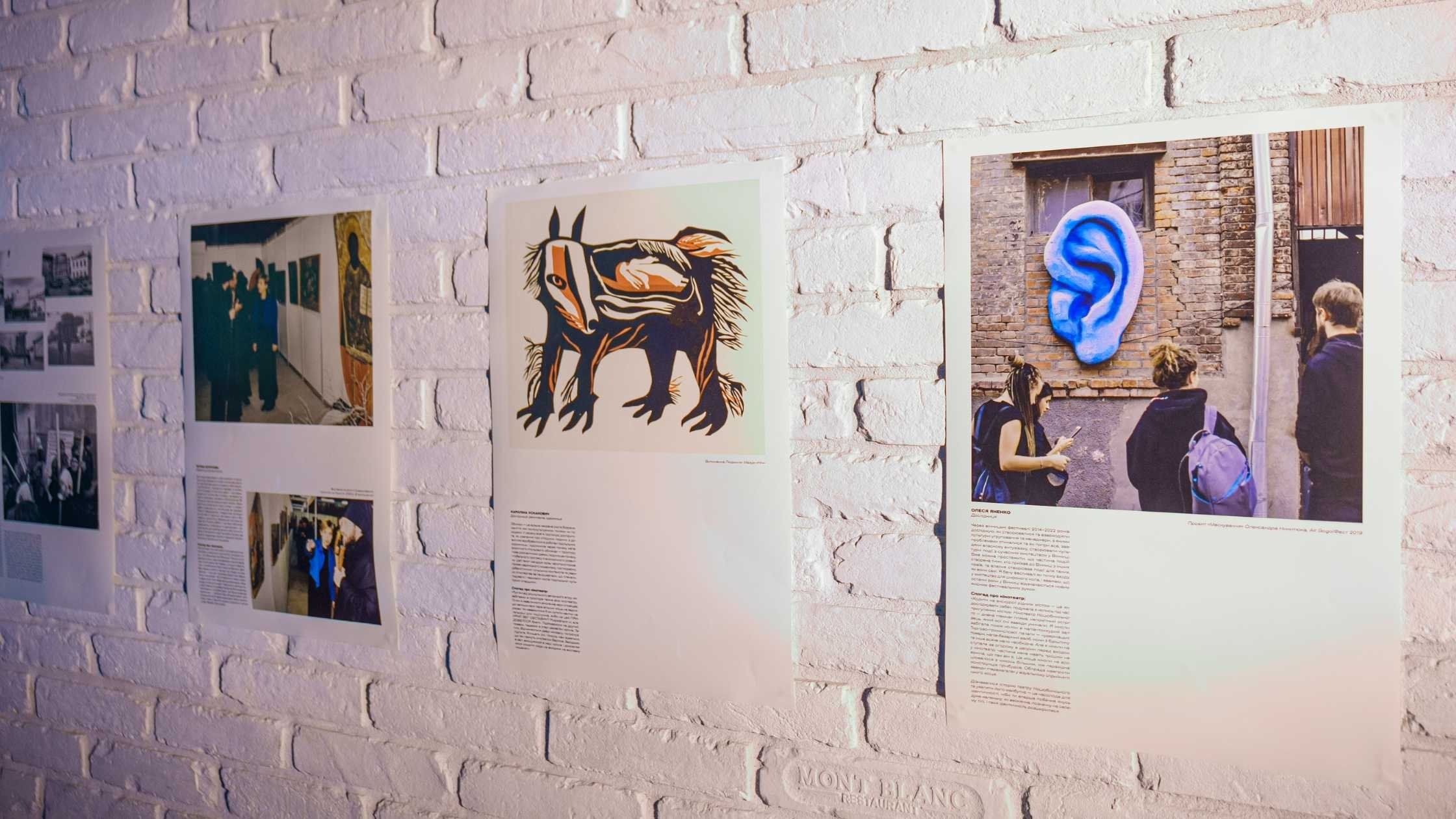
Впродовж конференції учасники та учасниці працювали у форматі панельних дискусій, круглих Throughout the conference, participants took part in panel discussions, roundtables, workshops, and field trips. In particular, they discussed the following topics:
- the role of the museum as a social institution in the 21st century;
- the interplay between architecture and museum spaces;
- the preservation and reinterpretation of historical heritage;
- dealing with “uncomfortable heritage,” particularly the Soviet past;
- the restoration of cities and cultural environments in wartime.
Maksym Filanchuk, Director of the Department of Culture at the Vinnytsia City Council, emphasized that holding such a conference is an important step toward forming a shared vision for the city’s future cultural and educational space:
This event provided an opportunity to bring together architects, museum professionals, scholars, and cultural managers around a shared idea—the creation of a modern arts hub in Vinnytsia. Even in times of war, we continue to lay the cultural foundation for future recovery. Today, museums are becoming platforms for international dialogue and support, and culture is a key factor in strengthening our resilience and countering attempts to destroy it.
A separate highlight was the signing of a cooperation agreement with the UNESCO Office in Ukraine, underscoring the initiative’s international significance.
According to Oleksandra Venslavovska, head of the “Plai” Art Association, Vinnytsia has already developed a strong artistic potential, but its growth requires systematic support and the necessary infrastructure.
Since the founding of our organization, we have realized that artists need more than just event-based formats—they need a permanent space for development, collaboration, and the realization of their ideas. That is why we are talking about creating a full-fledged cultural hub that will bring together various art forms and serve as a growth center for the entire community. Such a platform is also important so that young artists do not have to seek opportunities elsewhere but can stay and develop here, in Vinnytsia, in the Podillia region. We strive for the city to become a magnet for creative people and a place where they can realize their potential,” said Oleksandra Venslavovska.
The speakers at the conference were: Deputy Minister of Culture Ivan Verbytskyi, Head of the UNESCO Office in Ukraine Chiara Dezzi Bardeschi, Director of the “Social Capital” Program at the International Renaissance Foundation Hryhorii Baran, Vladimir Chornogor, Head of the Division of Museum Affairs, Inventory, and Restoration of Cultural Property at the Department of Cultural Heritage Protection and Preservation of the Ministry of Culture of Ukraine; Vladislav Skalsky, Deputy Mayor of Vinnytsia; Yanna Tchaikovska, Director of the Municipal Enterprise “Institute for Urban Development”; Senka Ibrisimbegovic, Director of the Ars Aevi Museum of Contemporary Art (Bosnia and Herzegovina); Yulia Vaganova, Director of the Khanenko Museum; Nazar Kovalenko, Head of the Municipal Enterprise “Spatial Development Agency”; and other experts. Detailed information about the speakers for each day of the conference can be found in the posts on the UMCA page.
Summarizing the productive discussions at the event, Yulia Hnat, co-founder of the Museum of Contemporary Art NGO, emphasized that the vision of a networked museum aligns with the needs of a city that has specific resources, constraints, and challenges in the context of both its own and regional development.
Source: VITA TV

