

Ukraine is approaching a new stage of European integration—a stage that requires not only political will but also deep institutional maturity. This involves meeting the benchmarks for Negotiation Chapter 22, which covers regional policy and the coordination of the European Union’s structural instruments. In fact, this is one of the key chapters that determines the extent to which the state is capable of effectively managing EU financial resources allocated for regional development.
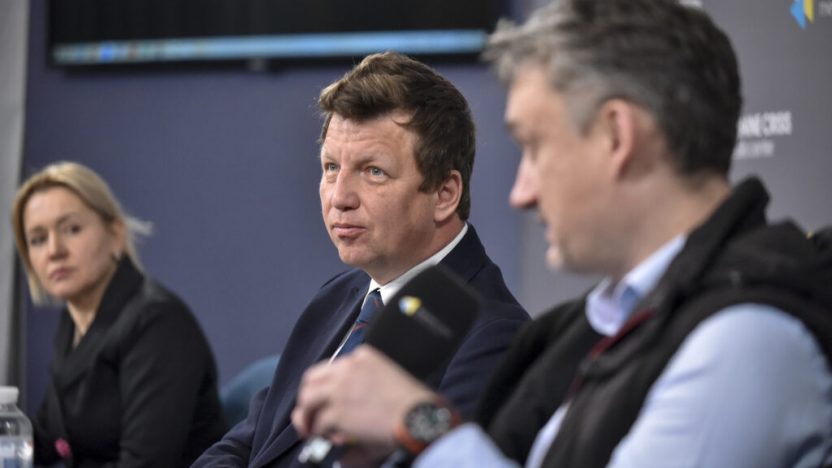
These eight benchmarks will test our country’s ability to manage these resources. And what is the internal perspective on whether we are ready to operate under the new rules today? To explore this, Rostyslav Tomenchuk, Director of Development at the Ukrainian Institute of International Policy; Mykola Rubchak, Director of the Multilevel Governance Directorate at the Ministry of Community and Territorial Development; and Oleksandr Korinnyi, Head of the All-Ukrainian Association of United Community Territories and Mayor of Novoukrainka in the Kirovohrad region, sat down with regional journalists for a roundtable discussion.
At first glance, benchmarks may seem technical and difficult to understand. To the average person, they often appear to be a set of formal requirements. However, in reality, these indicators are a condensed reflection of the criteria that the European Commission outlines annually in its reports on candidate countries. While the reports consist of several pages of general recommendations, the benchmarks are a detailed action plan that clearly defines which specific elements of the public administration system need to be established or improved.
The essence of Section 22 lies in verifying the state’s capacity to manage EU structural funds. This is not merely about receiving funds, but about the full cycle of their use: from strategic planning to reporting on achieved results. In European Union countries, this system is structured such that regional development funding is channeled through clearly defined programs with transparent rules, long-term priorities, and clear performance indicators.
The distinctive feature of structural funds is that they are aimed at supporting regions whose level of development is below the EU average. This means that Ukraine, as a future member of the Union, has the potential to receive significant resources for modernizing infrastructure, developing the economy, and improving the quality of life for its citizens. However, this comes with a key requirement: the ability to manage these funds effectively.
Unlike international technical assistance, which is often delivered through external organizations and does not pass through the state budget, structural funds operate on a different principle. Funds are transferred directly to the country’s budget, and national institutions are responsible for their allocation, use, and oversight. This requires a high level of institutional capacity, transparency, and accountability.
Today, Ukraine is still in the process of establishing this system. One of the main challenges is the lack of a comprehensive approach to planning and implementing development programs. Decisions are often made on an ad hoc basis, and communities only learn about funding opportunities at a stage when there is almost no time left to prepare high-quality projects. In EU countries, the situation is fundamentally different: there, calls for proposals are announced in advance, with clearly defined priorities and budgets, allowing local authorities to prepare systematically.
Another important element is the principle of partnership, which is fundamental to the EU’s cohesion policy. It stipulates that not only government bodies but also representatives of local self-government, business, and civil society are involved in the program management process. In Europe, such partners are not limited to providing advice—they serve on monitoring committees and share joint responsibility for implementing programs throughout their entire duration.
In Ukraine, this approach is only just beginning to be implemented. At present, public engagement is often merely a formality and does not allow for any real influence on decision-making processes. At the same time, without the full implementation of the partnership principle, effective management of structural funds will be impossible.
A serious challenge remains the shortage of personnel, especially in small and medium-sized communities. There is currently a lack of specialists capable of developing, implementing, and administering projects. This problem is exacerbated by urbanization and migration, which have accelerated due to the war. Young people are leaving the country or moving to larger cities in search of better opportunities, leaving communities without the necessary human resources. Under these conditions, the issue of training personnel and creating new forms of cooperation takes on particular importance.
One promising area is the development of inter-municipal partnerships and a cluster approach. Many projects—especially in the fields of ecology, tourism, or healthcare—cannot be effectively implemented within a single community. They require coordination at a broader territorial level.
The cluster approach allows for the pooling of resources, knowledge, and capabilities across multiple communities to achieve common goals. This is particularly important in the context of post-war reconstruction, when competition for resources will be fierce and the standards for project quality will be even higher.
At the same time, it is important to understand that the EU’s cohesion policy is not uniform. It takes into account the specific characteristics of different territories—from frontline regions to mountainous or remote areas. This means that Ukraine must develop a flexible planning system that will allow development tools to be adapted to specific conditions.
In this context, it is also important to continue the decentralization reform and clearly delineate the division of powers among different levels of government. The principle of subsidiarity, which underlies the European model of governance, stipulates that decisions should be made at the level where they can be implemented most effectively.
For communities, this means the need to shift toward strategic thinking. They must develop comprehensive development programs that cover various areas—from infrastructure to the economy and social services. Only by having a clear vision of their own priorities will communities be able to effectively attract funding from various sources and integrate them into a unified system.
Ultimately, meeting the benchmarks of Chapter 22 is not merely a technical task within the framework of negotiations with the EU. It represents a profound transformation of approaches to managing the country’s development. It requires a shift in mindset, an improvement in the professional competence of managers, and the creation of new institutional mechanisms. Ukraine has already taken important steps in this direction. However, complex and long-term work lies ahead. Not only access to EU financial resources but also the state’s ability to ensure the sustainable development of its regions and improve the quality of life for its citizens depends on how successfully this work is carried out.
The event took place as part of the project “European Integration: Making the Complex Simple” with financial support from the International Renaissance Foundation
Source: UCMZ

