Horizontal European Integration: How Communities and Civil Society Help Keep Ukraine on Track toward the EU
The team of the International Renaissance Foundation is joining the Carpathian Sea Democracy Week – an annual international forum and festival of democracy that brings together representatives from Ukraine and European partners for an open dialogue about the country’s future.
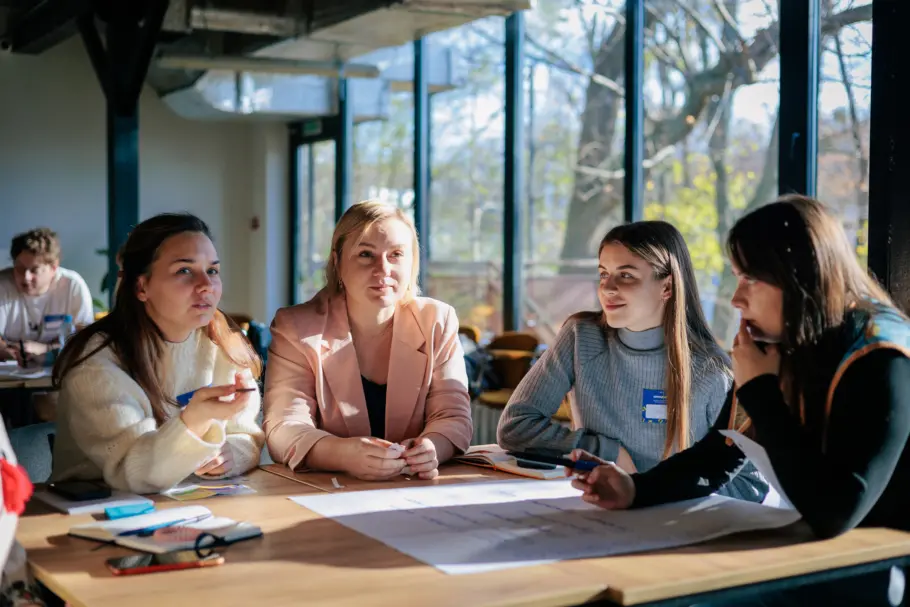
As part of the Carpathian Sea Democracy Week, which will take place in Truskavets on April 28, the Foundation will host its own discussion titled “Horizontal European Integration: How Communities and Civil Society Help Keep Ukraine on Track toward the EU.” The aim of the event is to explore the role of communities, local initiatives, and civil society in advancing European change in practice.
Although European integration is often perceived as a state-level process, it is communities that are already implementing European approaches in their daily work through transparency, participation, inclusion, and accountable governance. The discussion will create a space to explore how these “horizontal” processes contribute to a sustainable path toward EU membership for Ukraine.
Speakers of the discussion include:
- Inna Pidluska, International Renaissance Foundation
- Nataliia Starodubets, NGO “Bery i Slav”
- Solomiia Lohinska, Regional Youth Center
- Viktor Dratchuk, Veterans Development Center, Institute of Physical Culture
- Iryna Stasiuk, NGO “Open Code”
- Nataliia Savka, NGO “Euroregion-Carpathians”
The Carpathian Sea Democracy Week traditionally brings together politicians, diplomats, experts, civil society representatives, business leaders, and young people. The program covers key topics for Ukraine – from security and recovery to democracy, energy, and European integration – and creates a space for building new partnerships and joint solutions.
Stay tuned for updates – we will share insights, key takeaways, and results from the discussion.
The event is supported by the “Impulse” Project, implemented by the International Renaissance Foundation and the Eastern Europe Foundation with funding from Norway (Norad) and Sweden (Sida), as well as by the European Union and the International Renaissance Foundation within the joint initiative “”Whole of Society Accession”