


At the International Renaissance Foundation, we believe that a vision does not arise solely from analysis and planning. It is born from the ability to create, to see the bigger picture, and to dream even in the face of exhausting uncertainty. In creation and creativity, we find the inspiration to act consciously: to reflect on our perceptions of ourselves, other people, and what life might be like after recovery.
That is why it is important to combine the daily work of recovery and building resilience with the creative aspect. After all, progress begins with those who can look around, visualize, and dream of a better “other,” and bring it to life step by step. Like a master who sees in the fragments not defeat and debris, but potential for action and material for a new creation that could become remarkable. With these thoughts in mind, we created The Impulse Project, which the International Renaissance Foundation is implementing together with the Eastern Europe Foundation, with the support of Norway and Sweden.
This philosophy is also embodied in the traditional Japanese ceramic restoration technique known as kintsugi. In Japanese, this word means “golden seam” or “golden union.” The kintsugi technique historically emerged as a method for repairing tea ware, so traditionally, the artisans who practice it glue and restore broken ceramic pieces. They do not hide the cracks but highlight them with lacquer dusted with precious metals: gold, silver, and platinum. In kintsugi, the main goal is not to recreate the original appearance, but to carefully restore and imbue new meaning into what has survived destruction. It is a practice of embracing an object’s history, its experiences, and the changes that have become part of its value.
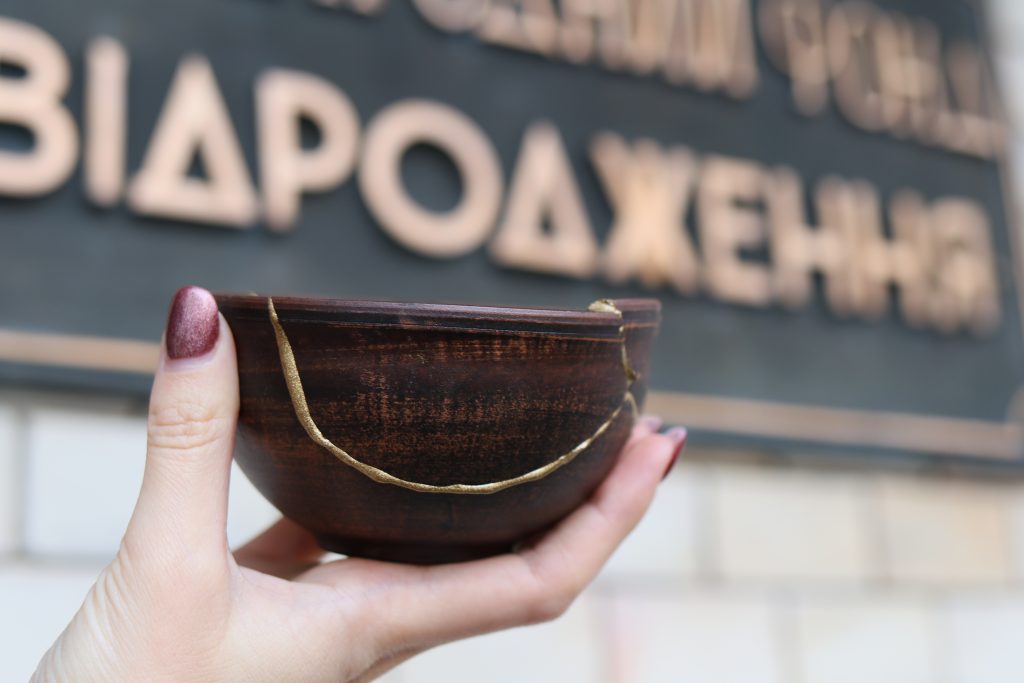
This is how we see the work of The Impulse Project grantees: they are rebuilding their communities skillfully, thoughtfully, and with respect for experiences that have been difficult and, at times, traumatic. In this approach, attitude is just as important as execution. It’s about patience, responsibility, and a willingness to seek new solutions where others see only shards and cracks.
It was this vision that inspired us to create kits for making kintsugi pieces as part of the project. Impulse grantees received gift boxes. Inside them are materials for neo-kintsugi, a modern adaptation of the technique that allows you to work with more accessible tools and materials while preserving the core principle: not to hide cracks, but to make them part of the piece.
We included Slavic ceramics made in the Donetsk region in the kits. This is our tribute to the artisans who, despite threats and frontline conditions, continue to create and preserve their traditions. These ceramics are part of the region’s living history, sustained by the people and their desire to shape the future.
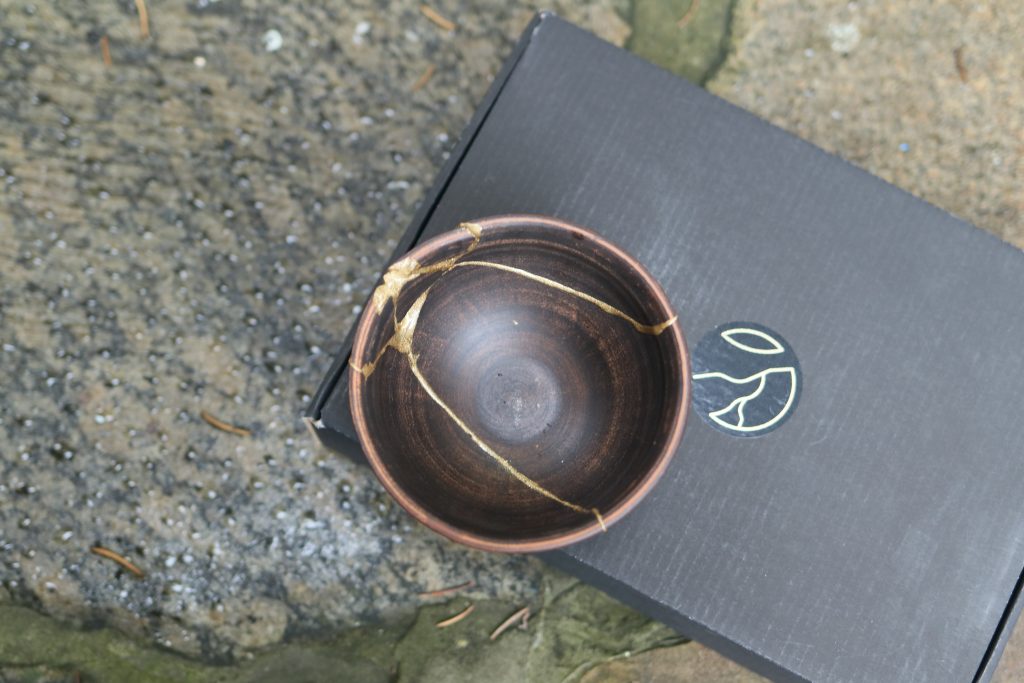
We hope that these creations will serve as a reminder of the value of daily labor and the determination of the people who are taking on the task of rebuilding their communities. Because that is exactly who our grantees are. Some of them have already created their own kintsugi: with their own meanings, teams, and community representatives.
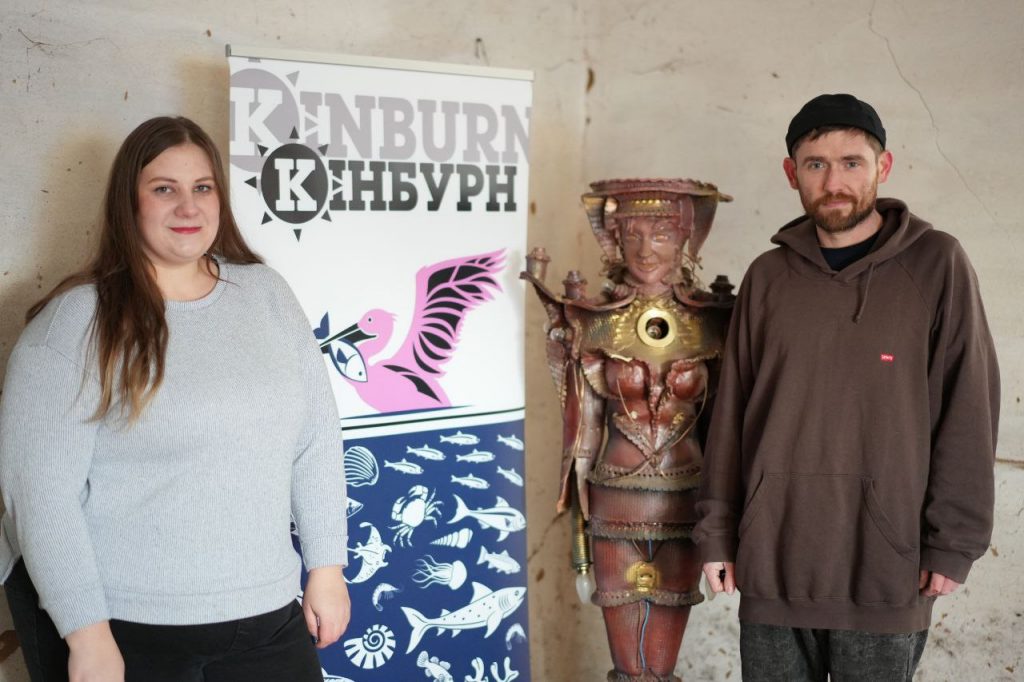
The team from the NGO “Kinburn” restored the sculpture “Her Majesty Electricity” by Alex Lovell. It was a process of reflecting on the importance of energy resilience amid the energy crisis Ukraine is facing during the war.
“Today, electricity is more than just a resource. It is the nervous system of space, a silent presence without which everything stops. Its value has become tangible not in theory, but in the pauses of light, in the silence without energy, in the moments when the familiar suddenly turns out to be fragile. That is precisely why this sculpture resonates differently. It is no longer just about form—it is about connection, about tension, about restoration as a manifestation of resilience. About the ability to maintain integrity not despite the cracks, but because of them,” said the Kinburn NGO.
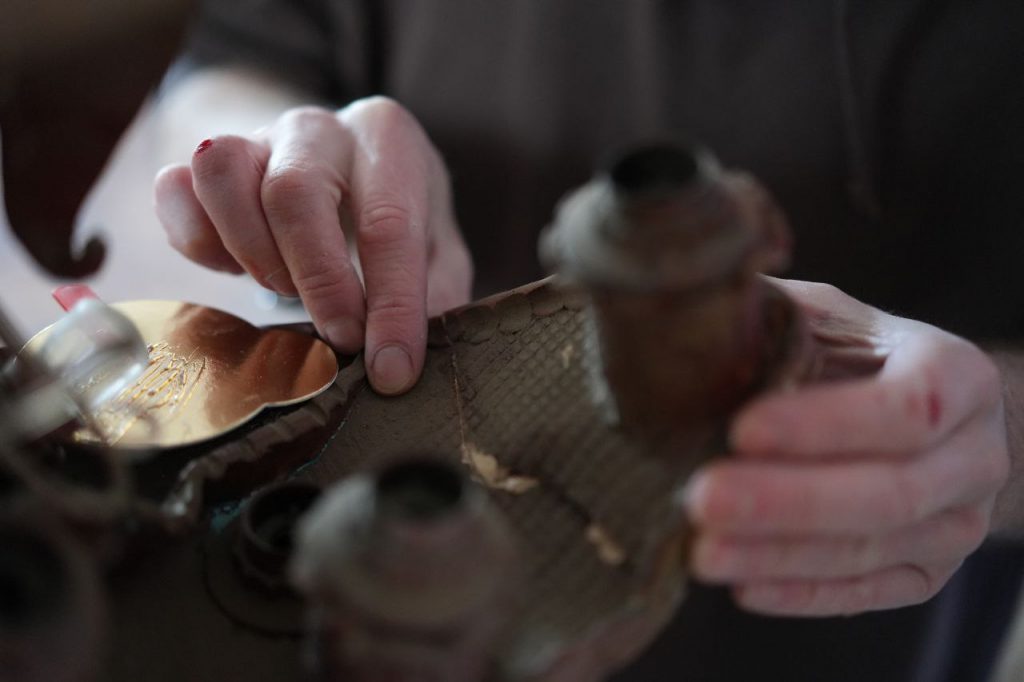
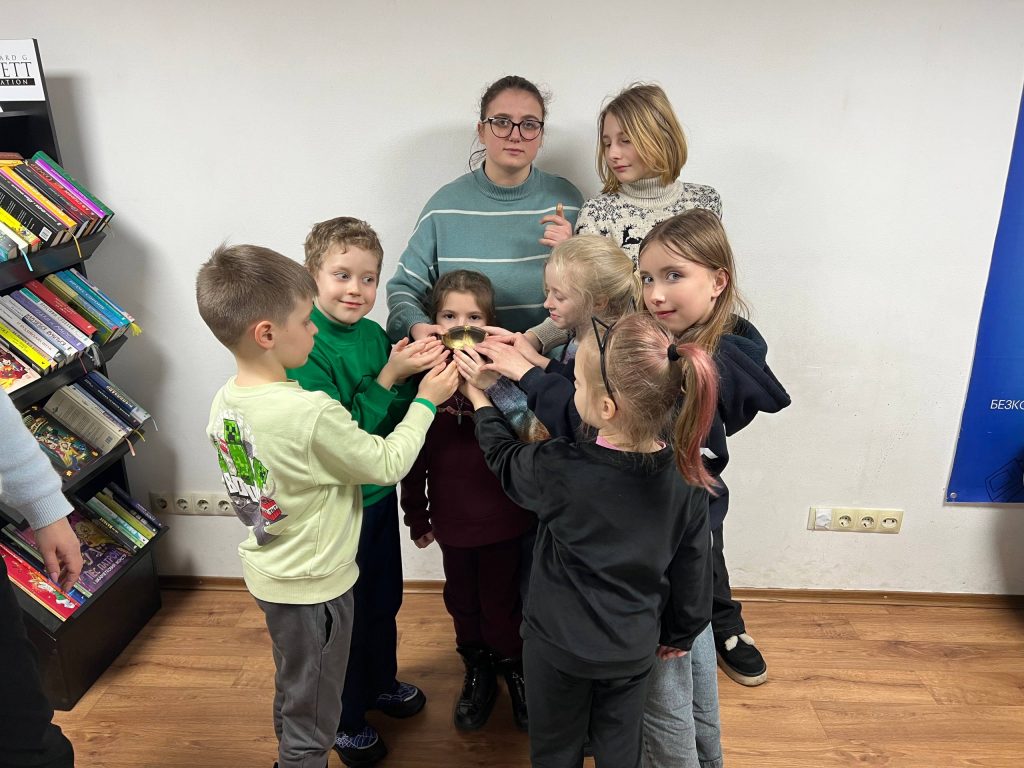
The non-profit organization “Persona” Center for Innovative Development also shared its experience. The team noted that the kit was an unexpected gift, but they immediately understood its significance.
Both the organization’s team and children from the frontline region joined the process of creating the piece. They study in shelters, often starting their mornings to the sound of air raid sirens, but despite this, they continue to attend classes at the organization’s educational center.
“For us, kintsugi is not just a technique for restoring ceramics. It is about faith in a better future, about restoring integrity, and about ‘gluing’ together a society that is undergoing trials but does not lose the strength to hold itself together,” noted the “Persona” Center for Innovative Development.
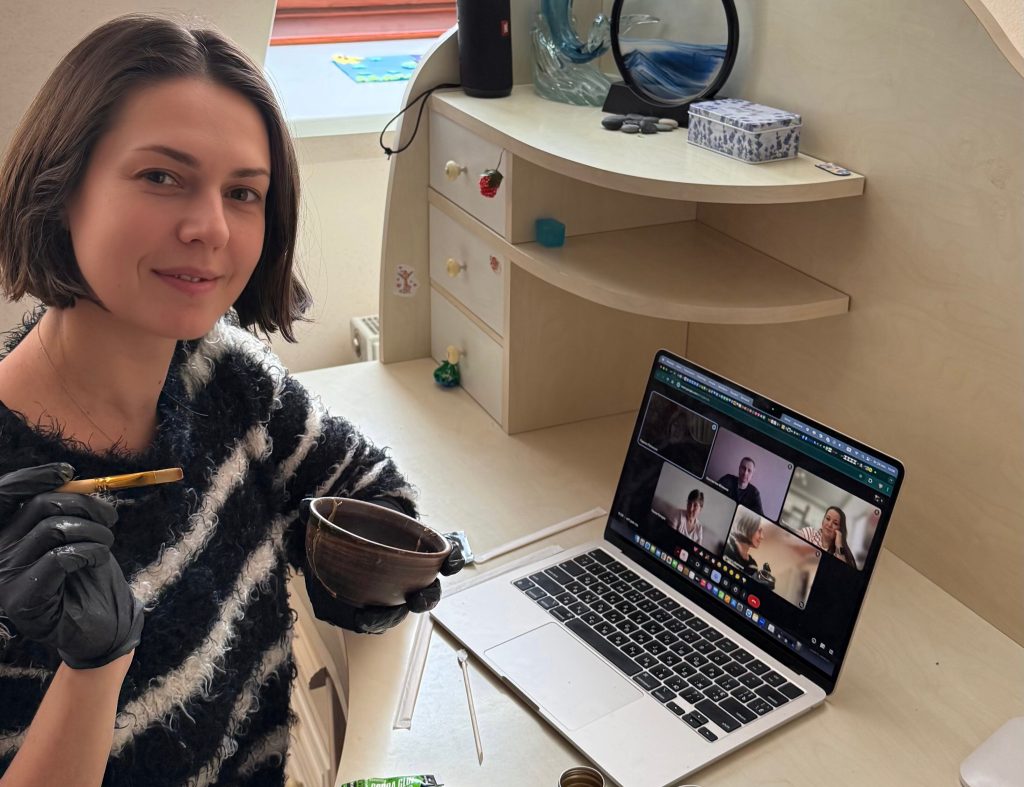
The team from the Kherson Community Foundation “Zakhyst” is currently scattered across various cities in Ukraine and abroad and couldn’t gather in person, so they met online to go through the process of restoring the ceramics together.
“We talked about the team, missed each other, reminisced about the office in Kherson, and felt a closeness that we’ve been sorely missing. As we repaired the dishes and pieced their fragments back together, we were also coming together as a team and as part of the scattered Kherson community,” shared the “Zakhyst” Foundation.
We at the International Renaissance Foundation also tried our hand at creating a piece using the kintsugi technique. It was our first time, and even though we worked carefully and meticulously, we couldn’t avoid making mistakes. The cracks sometimes behaved unpredictably, the materials settled differently than expected, and the process required constant readiness to act quickly. This experience served as a reminder that difficulties are inevitable in pilot projects. But for us, what mattered more than flawless execution was that every step provided new insights, new skills, and new solutions. In the end, we held the finished product in our hands—imperfect, but precious to us.
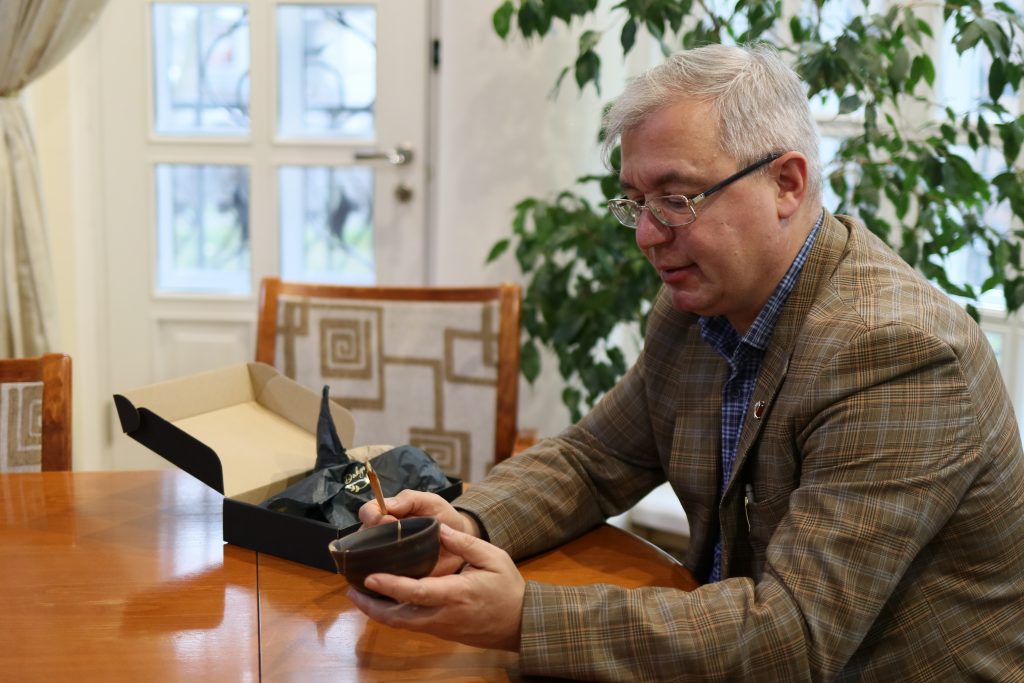
And that is exactly how resilience is born—through recovery, mindful practice, trial and error, and the insights that can only come from taking action.
The article was prepared within the framework of the Impulse Project implemented by the International Renaissance Foundation and the East Europe Foundation with funding from Norway (Norad) and Sweden (Sida).


