

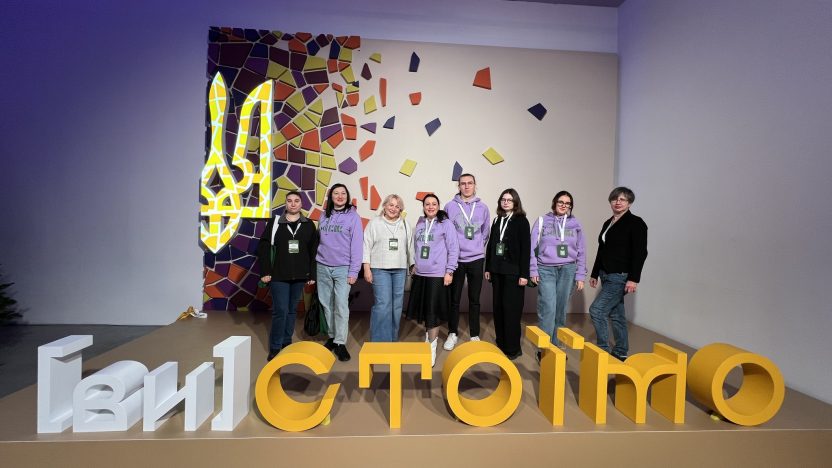
The “Persona” Center for Innovative Development is a nonprofit organization dedicated to the development of the Pavlohrad community in Dnipropetrovsk Oblast through education, cultural initiatives, social engagement, and support for internally displaced persons. The organization’s mission is to create opportunities for positive change in communities through personal development. At the heart of its work are people, their interactions, and the joint creation of solutions for the community.
In 2025, the organization became an institutional grantee of The Impulse Project, implemented by the International Renaissance Foundation and the Eastern Europe Foundation with funding from Norway (Norad) and Sweden (Sida).
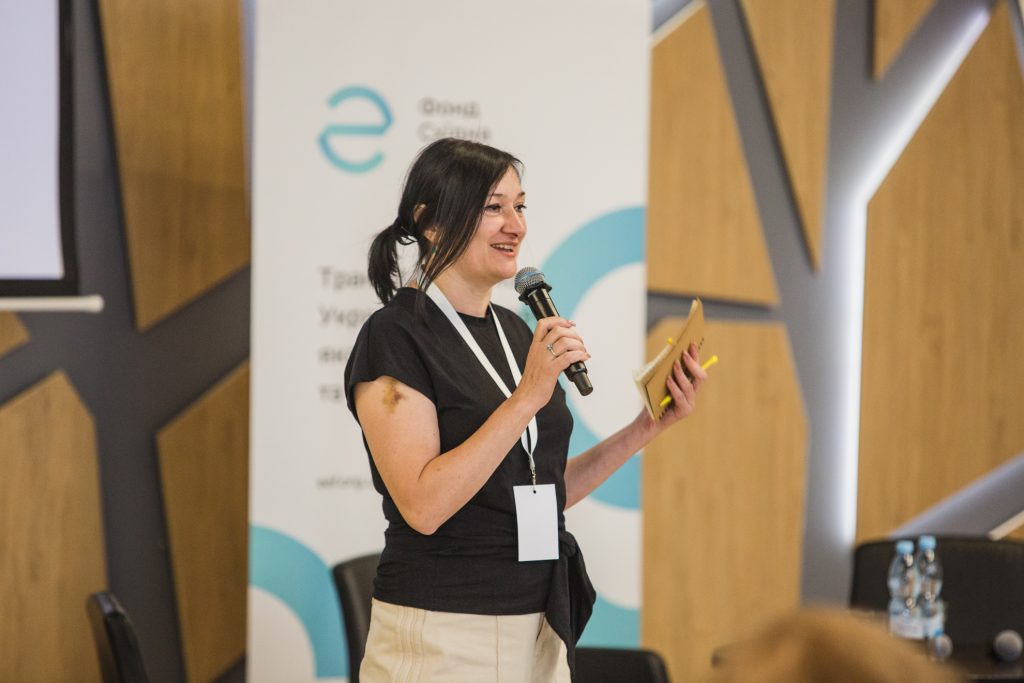
During the panel “Resilience Case Studies: What We Do to Endure,” held on the sidelines of the 14th Civil Society Forum, “Persona” Chair Olena Kachanova spoke about how a small local initiative can grow into a large civic space, a network of partnerships, and a system of collective action within the community.
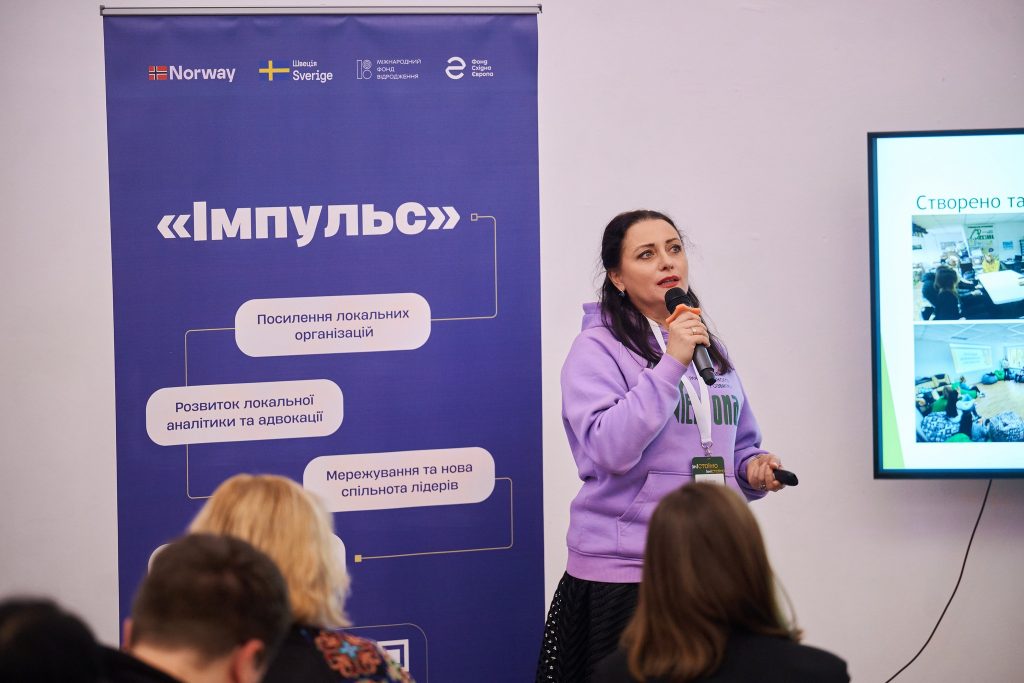
From a Local Initiative to a Sustainable Community
The organization began as an initiative by a group of entrepreneur friends who wanted to create cultural and intellectual leisure activities for adults and opportunities for informal education in their city. Over time, this initiative led the team to collaborate with various institutions, including the Ukrainian Catholic University, ISAR “Yednannia,” and the Institute of Sociocultural Management. At the time, this seemed like a distant prospect, as the team was working in a small town, but it was precisely these connections that helped define the organization’s future direction.
The turning point came in 2022. In May, “Persona” began creating an inclusive space together with partners from Avdiivka, who had experience implementing cultural initiatives and working in the field of social cohesion. During the project presentation, it became clear that a working group of people who wanted to change the situation in the community was already forming in Pavlohrad. Although at that time the team didn’t even have its own space, there was a desire to support people and seek answers to the challenges facing the region.
One of the key areas of activity was the creation of an integration space for displaced civil society organizations and internally displaced persons. This space became a safe place for interaction and support for the community, a platform for educational, psychological, and cultural events, and a venue for collaboration between activists, IDPs, and local residents.
Its creation was a response to the needs of the Pavlohrad community: local residents needed a space for interaction, internally displaced people needed a place where they would be heard and accepted, and civil society organizations needed a platform for coordination and collaboration. In the context of war, such safe spaces have become a vital resource for supporting community resilience.
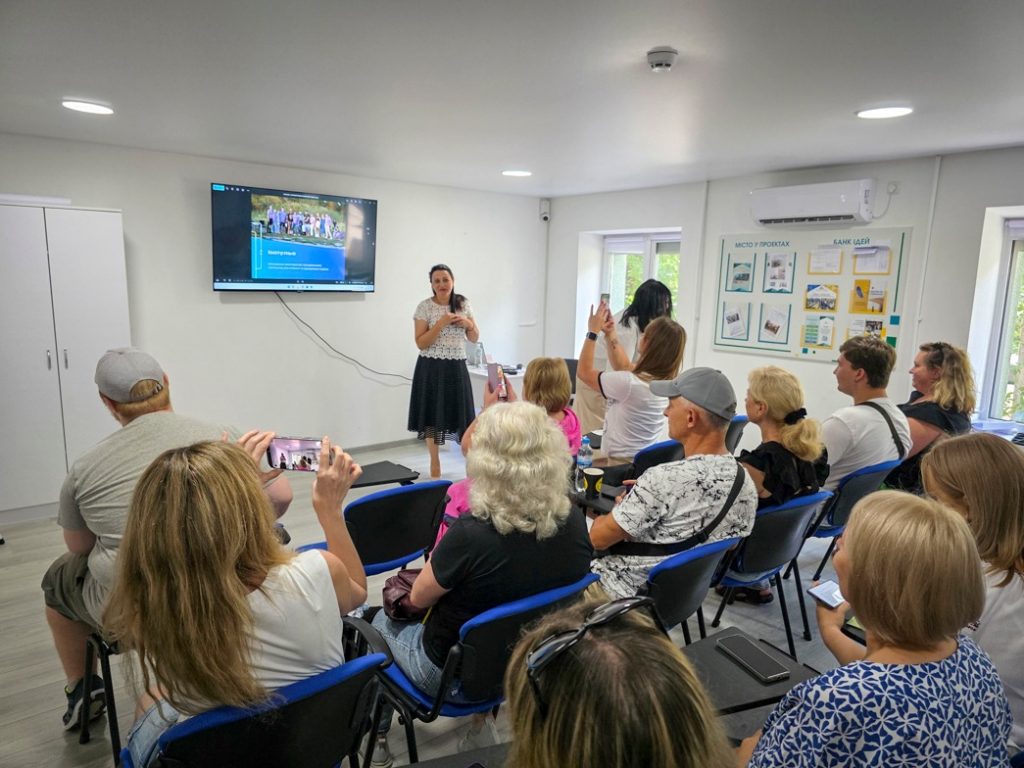
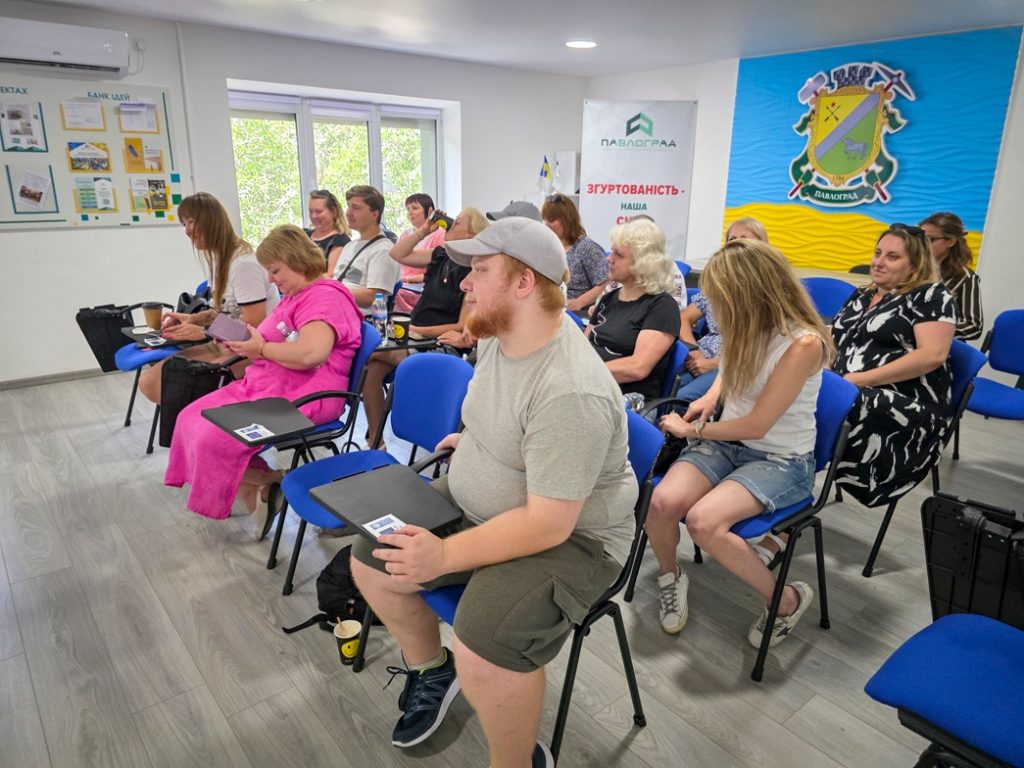
The Integration Space as a Platform for Growth
The first step toward systematic work was a participatory assessment of safety and social cohesion. It helped identify the specific issues of concern to community residents. Based on this assessment, “Persona” developed a strategic development plan for 2023–2027. This shift allowed the team to move from reacting to individual challenges to long-term planning and systematic work.
At the time, it seemed almost impossible for the team to work on infrastructure projects or collaborate with local government, but gradually these things began to become a reality, as the organization addressed the community’s specific needs. Other civil society organizations and activists began to rally around the initiative. This is how a consortium of civil society organizations was formed.
Work on the integration space became a catalyst for internal changes within the organization itself: “Persona” shifted from organizing individual events to systematic community development, established strategic areas of activity, created a volunteer team, and strengthened its managerial and operational capacity.
Over time, various groups of people began to visit the space—adults, children, and small initiative-driven communities. What began as a single meeting per week gradually grew into a large center that now occupies five floors. Every month, the team holds about 120 events for children, and about a thousand children attend them regularly. It is a safe and free offline space with its own shelter, which is especially important in wartime, when many activities have moved online. The space has become a psychological, social, and educational hub for the community.
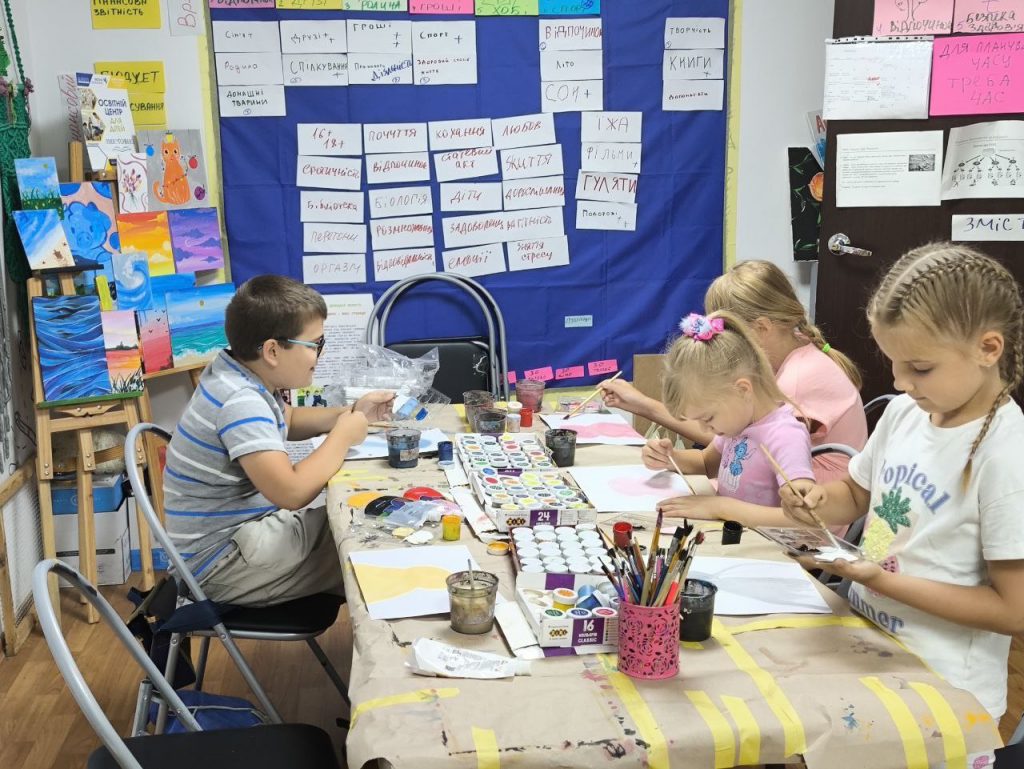
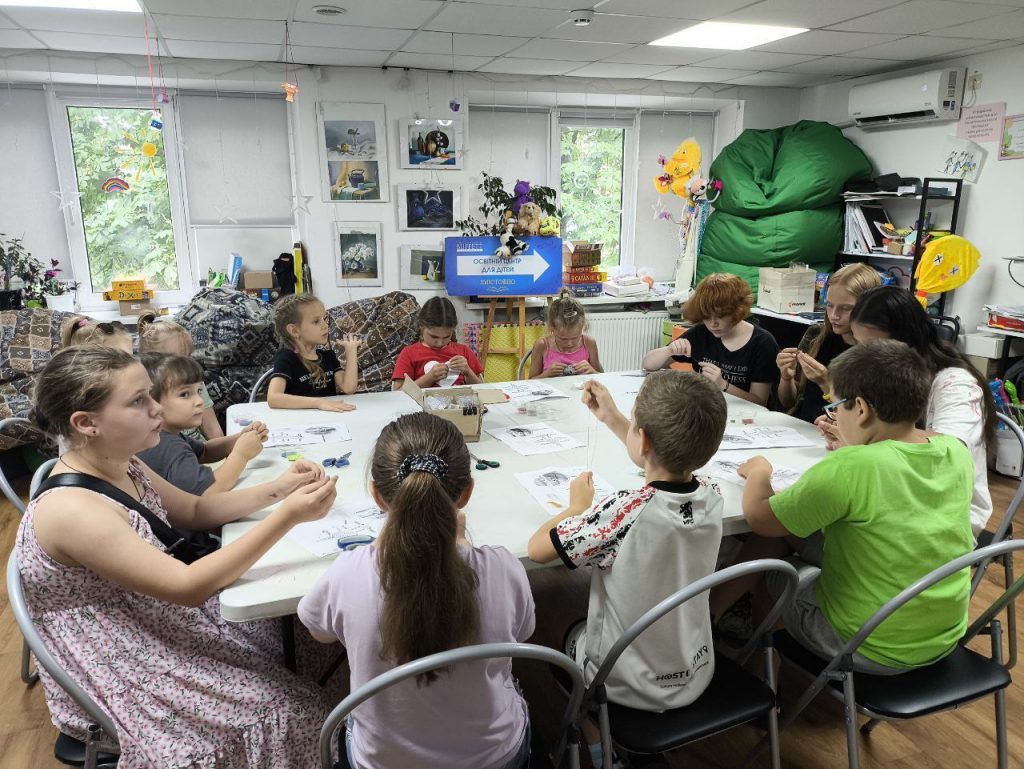
As part of the initiative, an entire ecosystem of community activities has gradually taken shape. Thanks to collaboration with local partners, a Plast scout troop has been established in the city. The library and museum evacuated from Avdiivka also continue to operate in Pavlohrad—the team has taken on the responsibility of preserving these cultural institutions and supporting their activities. Additionally, the organization continues to develop ideas from other communities in Pavlohrad, particularly Dobropillia.
Currently, the community hosts a volunteer hub, an integration space for displaced CSOs and IDPs, a psychosocial center, the “Zmistovno” educational center, youth and novice groups of the National Scout Organization of Ukraine “Plast,” as well as the “Avdiivka Code” library hub.
Strategizing, Scaling Up, Building Resilience
Education and culture remain the team’s key focus. The organization works to preserve intangible cultural heritage. Initially, this work covered the Donetsk region, but it is now expanding to the Dnipropetrovsk region.
The center’s work has contributed to the development of social cohesion and shared responsibility within the community. In Pavlohrad, new partnerships have emerged between civil society organizations, government, and business; internally displaced people have become more actively integrated into community life; a volunteer movement has developed; and regular joint initiatives and transparent mechanisms for cooperation have gradually become the norm. The organization collaborates with a wide range of local institutions—libraries, social services, educational institutions, the police, municipal utilities, and local government bodies.
The organization’s growth demonstrates how a small initiative can scale up. While the organization’s budget was approximately 30,000 hryvnias in 2023, it had grown to 3.5 million hryvnias by 2024. In just one year, the team implemented eight projects, held six street campaigns, organized four summer camps, and conducted 35 training sessions. Over 15,000 people participated in these events, including more than 11,000 children. A team of ten people worked on the projects, and 50 volunteers and 27 partner organizations were involved in the activities.
“Resilience is not just about the ability to weather a crisis, but about fostering a new quality of interaction within the community. It manifests itself in the development of joint projects, the strengthening of the institutional capacity of civil society organizations, the formation of a culture of cooperation, the emergence of regular formats of interaction—clubs, trainings, meetings—and the community’s ability to independently sustain its own initiatives,” notes Olena Kachanova, head of the civil society organization.
Summarizing their experience, the team formulated three key principles for those who want to initiate similar changes:
- Start by building trust, because people are more important than facilities and resources.
- Engage diverse groups of people and truly listen to their opinions.
- Build a system, not just hold events. It is partnerships, consistency, and well-established processes that form the foundation of long-term change.
The main idea behind the inclusive space created by the team is that people who come there can find themselves. Through volunteering, learning, shared activities, and new connections, they discover their own potential and integrate into community life. This is what the team considers the foundation of sustainability—both for their organization and for the community as a whole.
Strengthening Together with the Impulse Project
The Pavlohrad community is located near the front lines: it has taken in over 20,000 internally displaced persons and is occasionally subjected to rocket and drone strikes. At the same time, strong people live and work here, the civil society sector and business are actively developing, and the community is seeking new ways to support one another and move forward.
It is in this context that the project “Strengthening the Organizational Capacity of the NGO ‘CIR ‘Persona’ to Support Democratic Processes in Pavlohrad Communities” emerged within the framework of the Impulse Project. Its goal is to strengthen the organization’s institutional capacity to more effectively promote the inclusive, participatory, transparent, environmentally responsible, and sustainable recovery of communities.
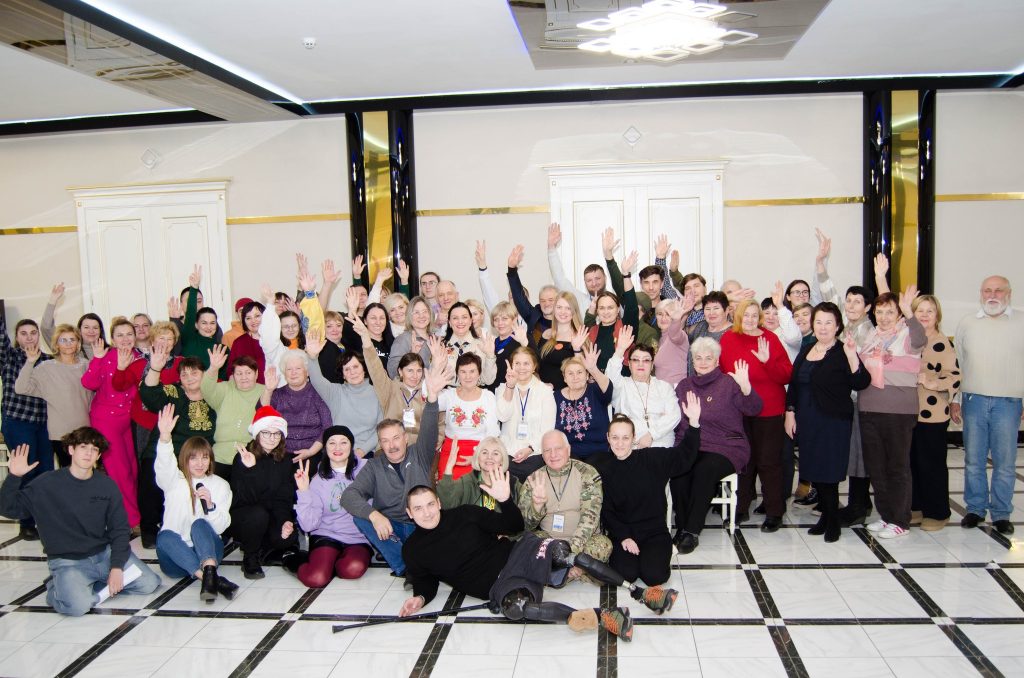
The organization works with communities in the city of Pavlohrad and the Pavlohrad district. For most team members, these are their home communities, and for those who ended up here because of the war, they have already become home. The team lives alongside these people, sees their needs and challenges every day, and therefore strives to be there for them right here and right now.
This project gives communities the impetus for change by fostering trust and cooperation among people, organizations, local authorities, and businesses. It creates opportunities for collective action—where residents can discuss problems, articulate needs, and seek solutions together. In this way, communities not only respond to the challenges of war but also foster a new culture of engagement where everyone can contribute to the development of their environment.
One of the key areas of “Persona’s” work is supporting children and youth.
“We want them to be able to learn, grow, have access to support, and feel cared for, even in difficult times. It is also important to support active local residents who have ideas and strive to change their communities for the better. We help them bring these initiatives to life because we believe that development starts from the bottom up—with people,” the organization notes.
The project also involves developing advocacy at the local level. Advocacy campaigns are planned in Pavlohrad and the Pavlohrad district to help communities articulate their needs and convey them to local authorities. This will allow decisions to be made with residents’ voices in mind and make local politics more open and accountable.
Support from like-minded people, openness to collaboration with other organizations, and positive examples help
At the same time, the team is working to raise awareness on important social issues. Through educational campaigns, trainings, and public events, the organization promotes gender equality, equal opportunities, and inclusivity, working with schools, youth, businesses, and the media to demonstrate practical examples of a just and open society.
Another area of focus is the conservation of natural resources and the promotion of environmentally responsible practices. The organization conducts eco-lessons, community cleanups, and workshops on waste sorting, and promotes resource-saving technologies so that “green” habits become part of the community’s daily life.
At the same time, the team understands that change doesn’t always come easily. Among the challenges are limited resources, occasional skepticism or indifference toward issues that seem secondary against the backdrop of the war, as well as general fatigue and a sense of hopelessness among some people that their voice can make a difference.
“Despite this, we are driven by our inner motivation: to see real change, people’s feedback, even the smallest shifts. Support from like-minded people, openness to collaboration with other organizations, and positive examples help—when we see how, thanks to joint efforts, communities become more active, their voices louder, and people more confident in themselves,” the team emphasizes.
The experience of the NGO “Persona” demonstrates how a local initiative can grow into a community support system. Teams working in their cities and communities and seeking opportunities for development can join the Impulse Project through the Small Grants Competition.
The article was prepared within the framework of the Impulse Project implemented by the International Renaissance Foundation and the East Europe Foundation with funding from Norway (Norad) and Sweden (Sida).


