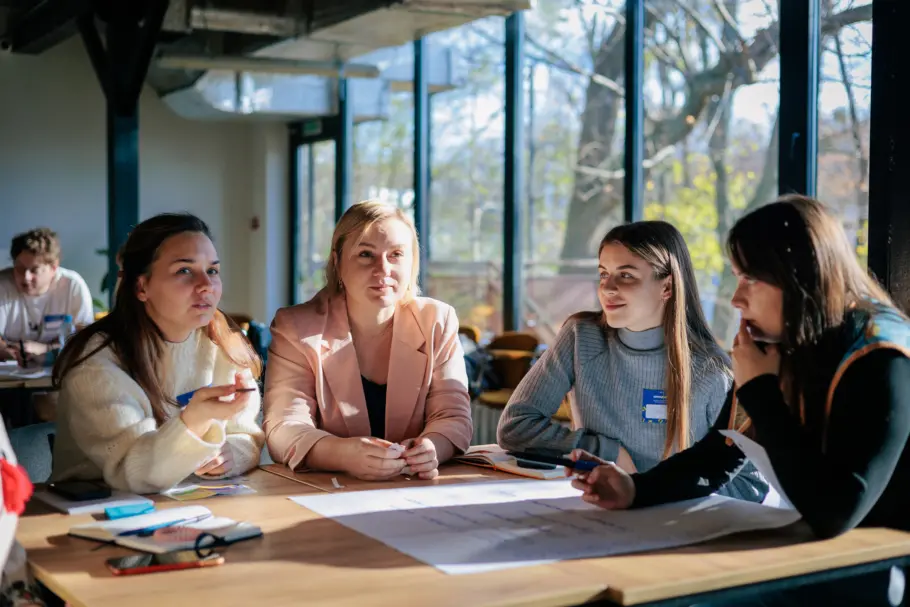
Results of the “Donetsk Region 2025” Forum: How Communities and Authorities Are Shaping the Region’s Recovery Amid the War
On November 28, the forum “Donetsk Region 2025: A Look into the Future—Preserving Human Capital and Institutions Through Civic Engagement” addressed key issues related to the development of civic engagement and the preservation of human potential in the Donetsk region. The forum was the first of seven regional Sustainability Conferences to be held as part of the “Impulse” project. Events of this scale have not been held in the region since 2021, according to the forum’s organizers, the civil society organization Renaissance and Development Association.
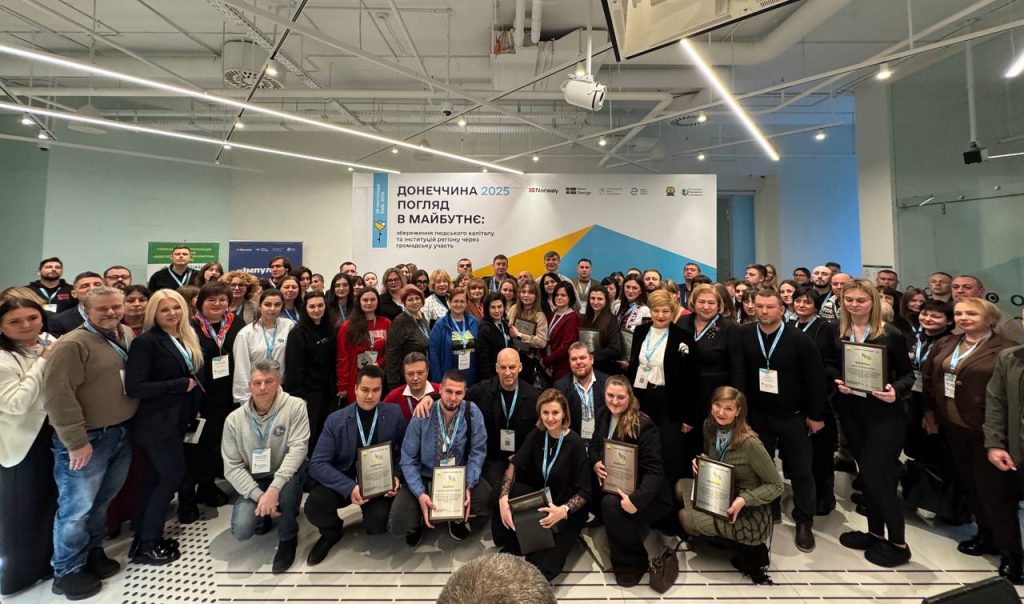
It is reported that the event brought together over 170 in-person participants, including volunteers and representatives of civil society and charitable organizations. Another 1,500 people joined online.
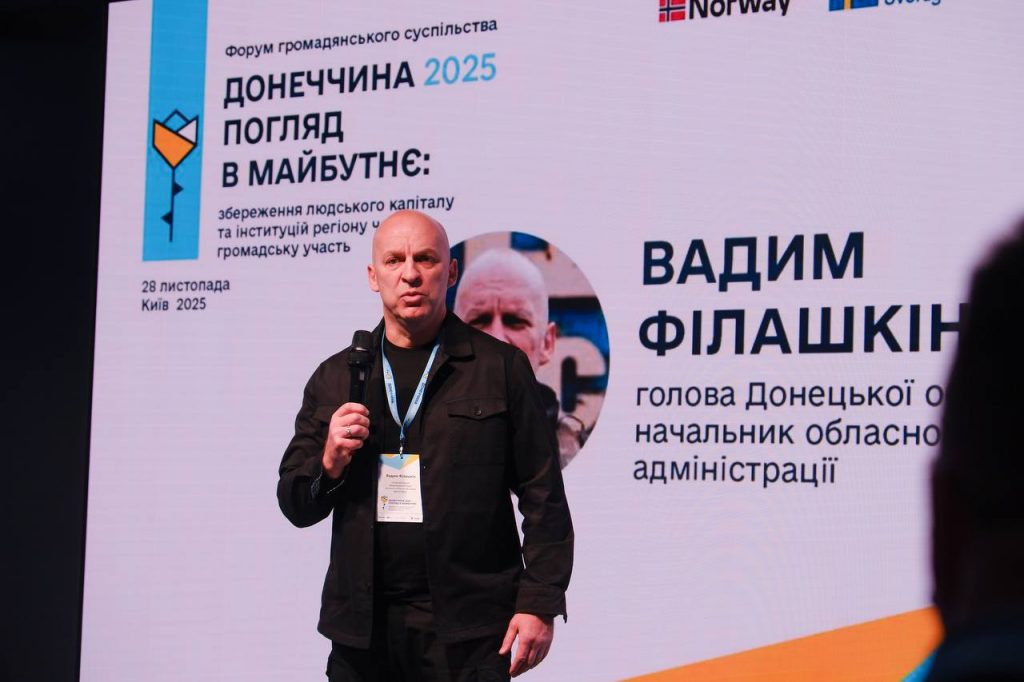
The forum was opened by Vadym Filashkin, Head of the Donetsk Regional State Administration and Head of the Regional Military Administration. In his address, he emphasized the importance of supporting people who continue to work in the region amid the ongoing war: “The strength of Donetsk Oblast lies in its people, and our goal is to support them during these difficult times. Many representatives of charitable and international organizations, as well as volunteers, have lost their lives. Donetsk Oblast has suffered the greatest loss of life among all frontline regions. And our task is to support those who remain. That is why we have gathered at this forum today.”
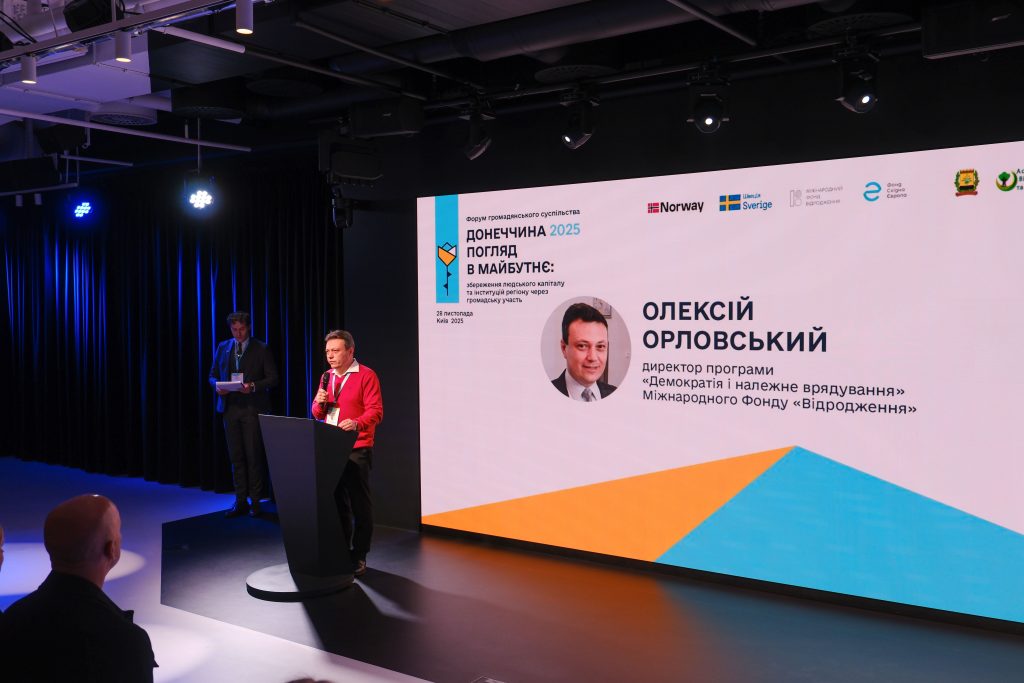
Oleksiy Orlovsky, director of the “Democracy and Good Governance” program at the International Renaissance Foundation, emphasized the importance of holding events of this kind to discuss current challenges and find solutions for early recovery. He also noted that the event took place as part of the “Impulse” project, implemented by the International Renaissance Foundation and the Eastern Europe Foundation with support from Norway (Norad) and Sweden (Sida).
A people-centered approach as the key to good governance and post-war recovery
The first panel of the forum was dedicated to discussing a people-centered approach to recovery. Representatives from government, the civil society sector, and the expert community agreed that humanity, solidarity, and support for regional identity are essential prerequisites for the recovery of the Donetsk region.
Vadym Filashkin, Head of the Donetsk Regional State Administration and Head of the Regional Military Administration, emphasized the importance of a people-centered approach for the region. According to him, Donetsk Oblast has suffered the greatest loss of life among the frontline regions, so solidarity and coordinated work among all institutions remain critically important. He also noted that since the start of the full-scale war, state programs to support the population and initiatives for youth development have been launched, as young people will play a vital role in the region’s recovery in the future.
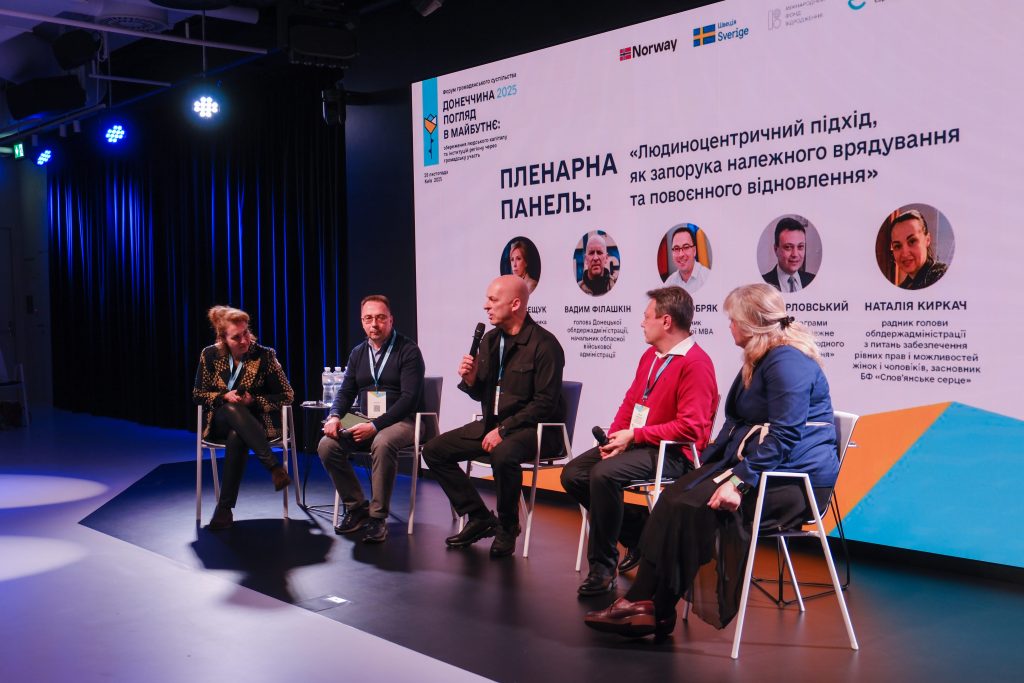
Serhiy Dobryak, head of the Pokrovsk City Military Administration, noted that the administration’s top priority is protecting the lives of residents, particularly organizing the evacuation of children. He described practices regarding compensation for destroyed property and measures for evacuating residents, which demonstrate the community’s commitment to supporting people in times of crisis.
Natalia Kirkach, advisor to the head of the Donetsk Regional State Administration on ensuring equal rights and opportunities for women and men, highlighted that the region has extensive experience in addressing challenges, which could be beneficial to other regions. She called for openness and strengthened cooperation among all stakeholders.
Oleksiy Orlovsky, director of the “Democracy and Good Governance” program at the International Renaissance Foundation, noted that similar forums will also take place in other regions, specifically in the Odesa and Sumy regions. He emphasized the importance of maintaining ties with people who come from Donetsk Oblast but are currently living outside its borders, as such a sense of community helps preserve regional identity.
The Role of the Public in Shaping the Government’s Strategy for the Donetsk Region
The issues of retaining human capital and planning the region’s future are closely linked to how the public sector currently operates and the challenges facing the Donetsk region. The second panel discussion was devoted to these topics.
Natalia Chukova, Head of the Department for Cooperation with Local Self-Government Bodies at the Donetsk Regional State Administration, noted that Ukraine has a targeted state program for the development of civil society, and the region has developed its own regional program. She emphasized the importance of joint decision-making focused on concrete results.
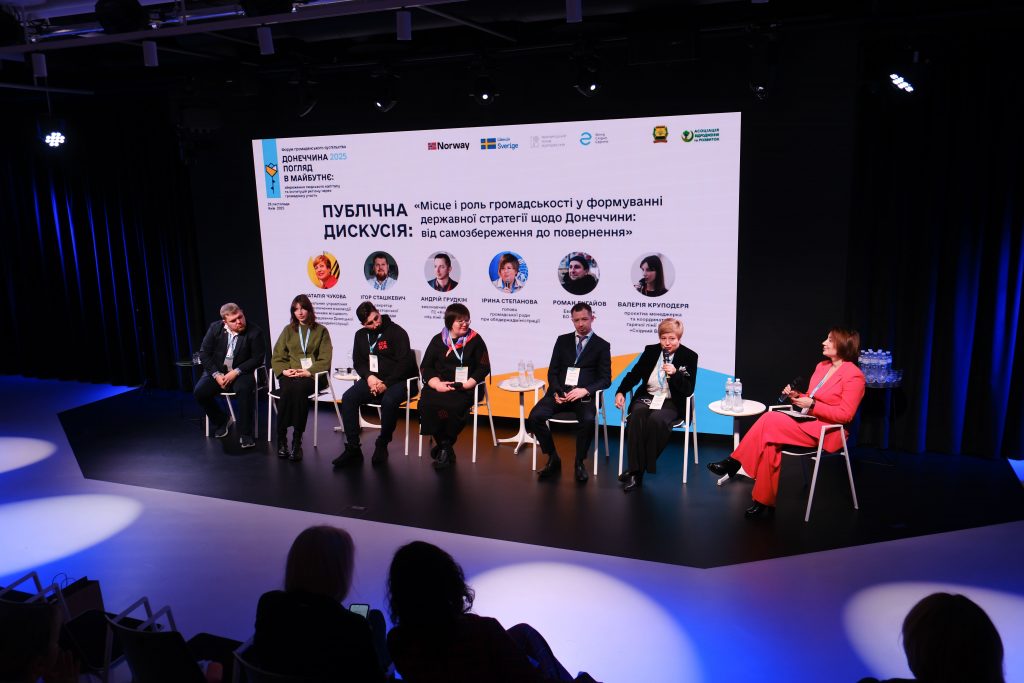
Andriy Grudkin, executive director of the public association “Coalition on the Front Line,” highlighted the role of communication: “In my opinion, communication should not be a means but an end in itself for the regional state administration and for the relocated local government bodies. So that all our human capital is visible as a resource. So that the formation of a personnel reserve is not done in a formalistic manner. So that a foundation is established for forming a reserve of personnel from among our fellow countrymen.”
Valeria Krupoderia, project manager of the “Eastern Option” hotline, outlined the situation in the temporarily occupied territories: “The situation in the temporarily occupied territories is catastrophic… We launched a chatbot to understand what people need. We are working together with other organizations to provide information, support, and evacuation.”
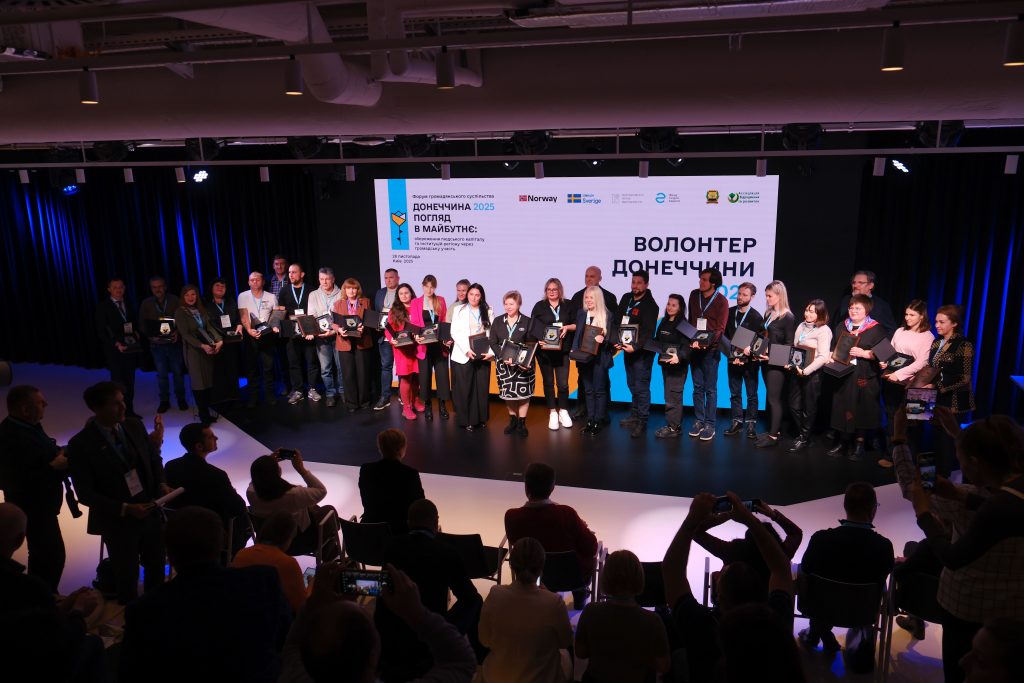
A separate part of the forum was dedicated to honoring volunteers working in the communities of Donetsk Oblast. They were presented with the “Volunteer of Donetsk Oblast 2025” awards as a token of gratitude for their assistance to the region’s residents and the development of local initiatives.
The Local Identity of Donetsk Oblast
The speakers emphasized that culture and education play a vital role in preserving local identity, fostering responsible citizenship, and promoting an understanding of shared values.
Oleksandr Khara, a member of the Council of Public Associations of National Minority Communities of Ukraine under the State Service for Ethnic Policy and Freedom of Speech, noted that the protection of minority rights is a necessary condition for Ukraine’s accession to the European Union. According to him, this is inherent to Ukrainians, and work in this area is important first and foremost for Ukrainians themselves.
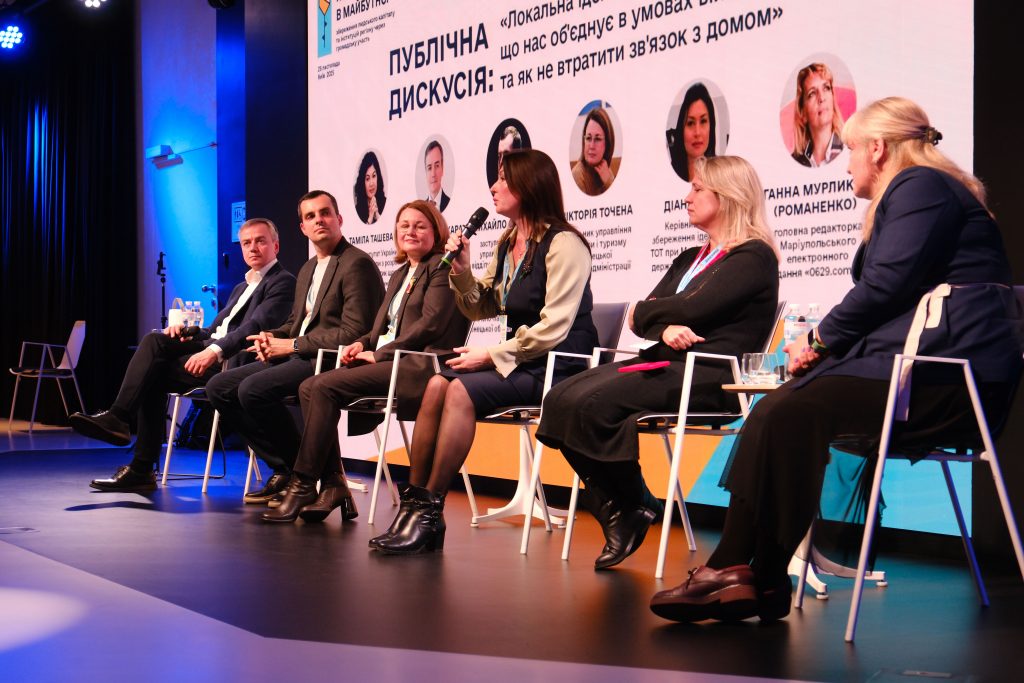
Mykhailo Snopenko, deputy head of the Department of Youth Policy, Family, and National-Patriotic Education at the Donetsk Regional State Administration, highlighted the complexity of the concept of identity. He explained that it can be broadly divided into Ukrainian and civic identity: Ukrainian identity encompasses history, culture, language, and memory; civic identity is linked to the awareness of being part of the Ukrainian nation and an understanding of rights and responsibilities.
Viktoria Tochena, Head of the Department of Culture and Tourism of the Donetsk Regional State Administration, spoke about the experience of preserving local identity in the region after 2014. She noted that regardless of their nationality, residents of the Donetsk region identify as Ukrainians, and cultural institutions are working to foster citizens who are aware of their sense of belonging and values.
A separate presentation was given on the Catalog of Civil Society Organizations in the Donetsk Region. This resource compiles information on the region’s most active organizations that support residents and continue to implement initiatives amid the war. The catalog was created to increase the visibility of the civil society sector, facilitate collaboration, and foster partnerships. It currently contains information on more than 50 organizations and will be updated in the future.
This event served as a reminder that strength lies in collaboration, support, and a willingness to act together. This is how resilience, faith in the future, and the ability to move forward despite all difficulties are born.
This material was prepared by the NGO “Renaissance and Development Association” as part of the Impulse Project, implemented by the International Renaissance Foundation and the Eastern Europe Foundation with funding from Norway (Norad) and Sweden (Sida). The content of this material does not necessarily reflect the views of the International Renaissance Foundation, the Eastern Europe Foundation, the Government of Norway, or the Government of Sweden.