


The Dobrobchyn Social Welfare Center, a non-governmental organization, has been operating since 1998. Over this time, the organization has grown from a local initiative into a stable institution that brings together local and regional initiatives. In 2025, the organization joined the Impulse Project, implemented by the International Renaissance Foundation and the Eastern Europe Foundation with funding from Norway (Norad) and Sweden (Sida).
Today, Dobrochyn is an organization with deep roots in the communities of Chernihiv region and a clear understanding of its role: to promote the development of an open and democratic civil society, particularly among young people. For Dobrochyn, working with young people is a continuation of its mission. The idea is simple: the organization should not live on grants, but on meaning, building a support system in which young people become partners rather than recipients of services.
“In our opinion, an organization should not live on projects. It should live by its mission and combine different projects so that young people can truly expand their rights, receive support, and feel like equal partners,“ emphasized Dobrochyn Board Chair Nataliia Drozd during the panel discussion ”Cases of Sustainability: What We Are Doing to Survive.”
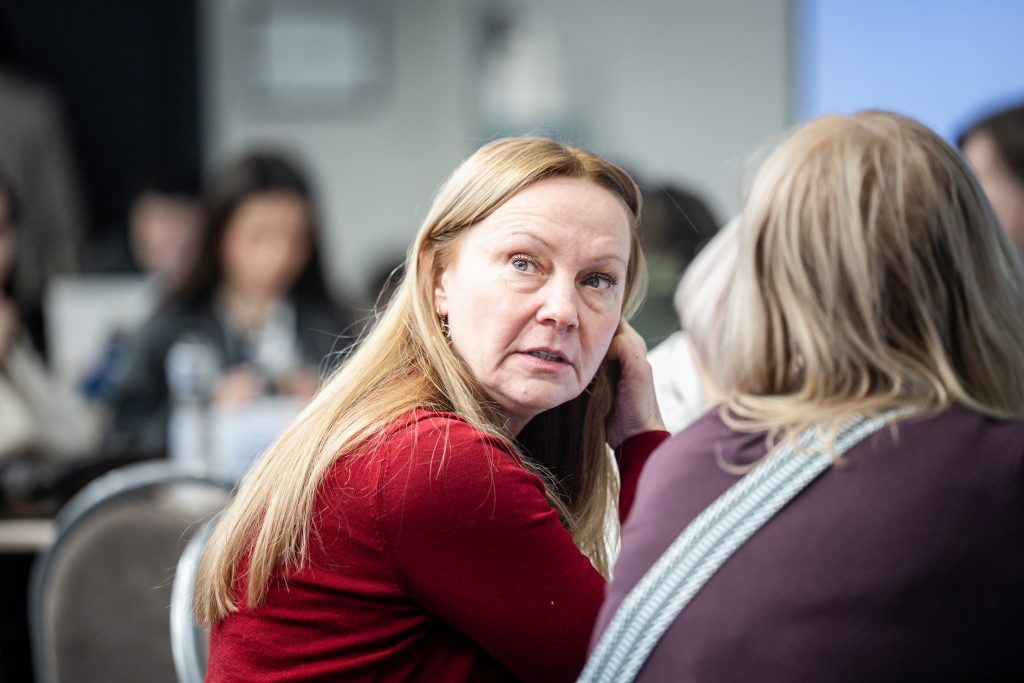
The panel, which was part of the Impulse Project, brought together civil society organizations from frontline communities working on solutions for sustainability, recovery, and cohesion in wartime. The presentations took place on the sidelines of the XIV Civil Society Forum.
When young people try to implement initiatives themselves, their attitude towards processes in the community changes. They begin to perceive participation not as a demand on the authorities, but as a shared responsibility.
At the heart of the Dobrochyn case study is the participation of young people in community life, particularly in recovery processes. This is not about formal involvement or top-down work, but about creating conditions in which young people themselves determine how and in what they want to be involved. The team fundamentally departs from a paternalistic approach and works with young people as equals.
An important part of this work is not only learning, but also practice. Participants go through the entire process—from forming an idea to its implementation, reporting, and public communication of results. It is this experience that helps them understand how the community works, what the limitations and opportunities are, and why decisions cannot always be made quickly.
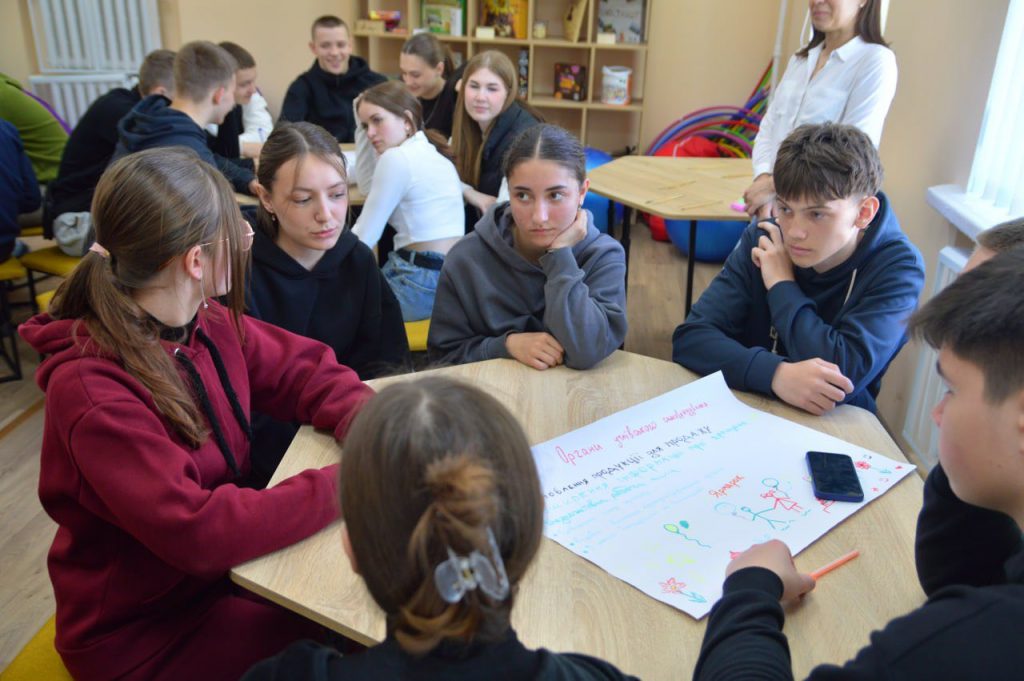
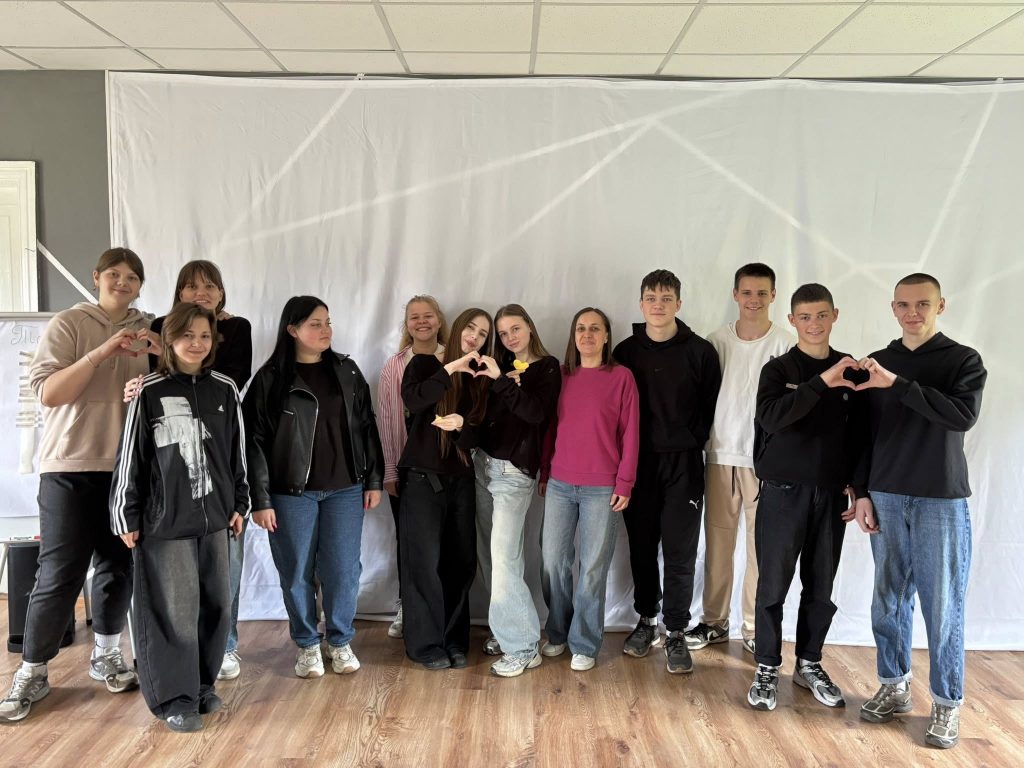
When young people try to implement initiatives themselves, their attitude toward community processes changes. They begin to perceive participation not as a demand on the authorities, but as a shared responsibility.
“When someone doesn’t do anything for them, that’s one thing. But when you give them funds and say, ‘Go ahead, do it, we’ll help,’ that’s a completely different mindset,” explains Natalia.
The organization is currently working with the communities of Bakhmach, Horodnya, Mensky, and Ripky in the Chernihiv region. In just a few years, youth activity in these communities has grown significantly: the number of initiatives has increased, competition has emerged, and there is demand for new formats of participation. This result was made possible by a combination of two factors: active local youth groups and partnerships with local authorities.
The context of Chernihiv Oblast is particularly significant. It is a border region, part of whose communities have experienced occupation. At the same time, a significant proportion of the population, particularly young people, have remained in the area. That is why recovery here is not only about infrastructure, but also about restoring human connections, trust, and lively communication.
Support for young people is flexible: through training, mini-grants, and ongoing support. It is important for young people to know that they have a resource center and can seek support regardless of whether a specific project is ongoing.
Among the supported initiatives are the Mena Energetic Youth Club, which works with urban space through the creation of murals; The NGO NZUM in the Gorodnya community, which develops youth media and provides streaming of local government events; The NGO Korvus in the Ripky community, which brings young people together around sports and solidarity; The NGO “Expansion of Good” in the Bakhmach community, where young people initiated the creation of a student self-government after training; and the youth space “MUR” in the Menska community, which has become a place for meetings, conversations, and joint planning through simple but important formats of interaction.
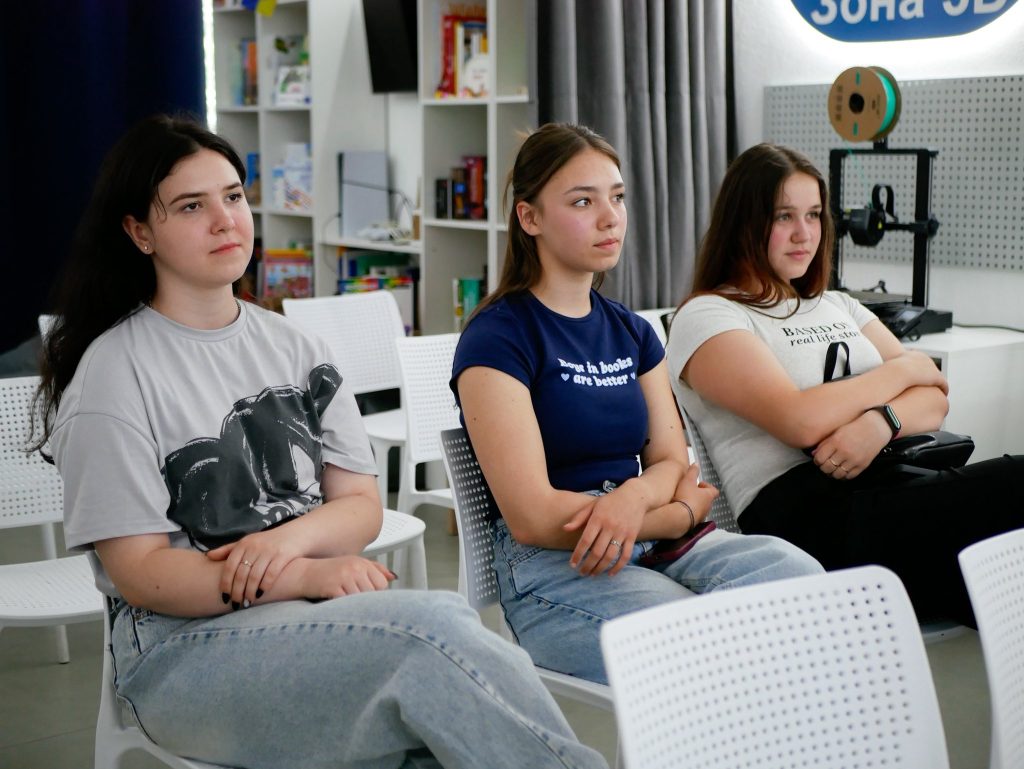
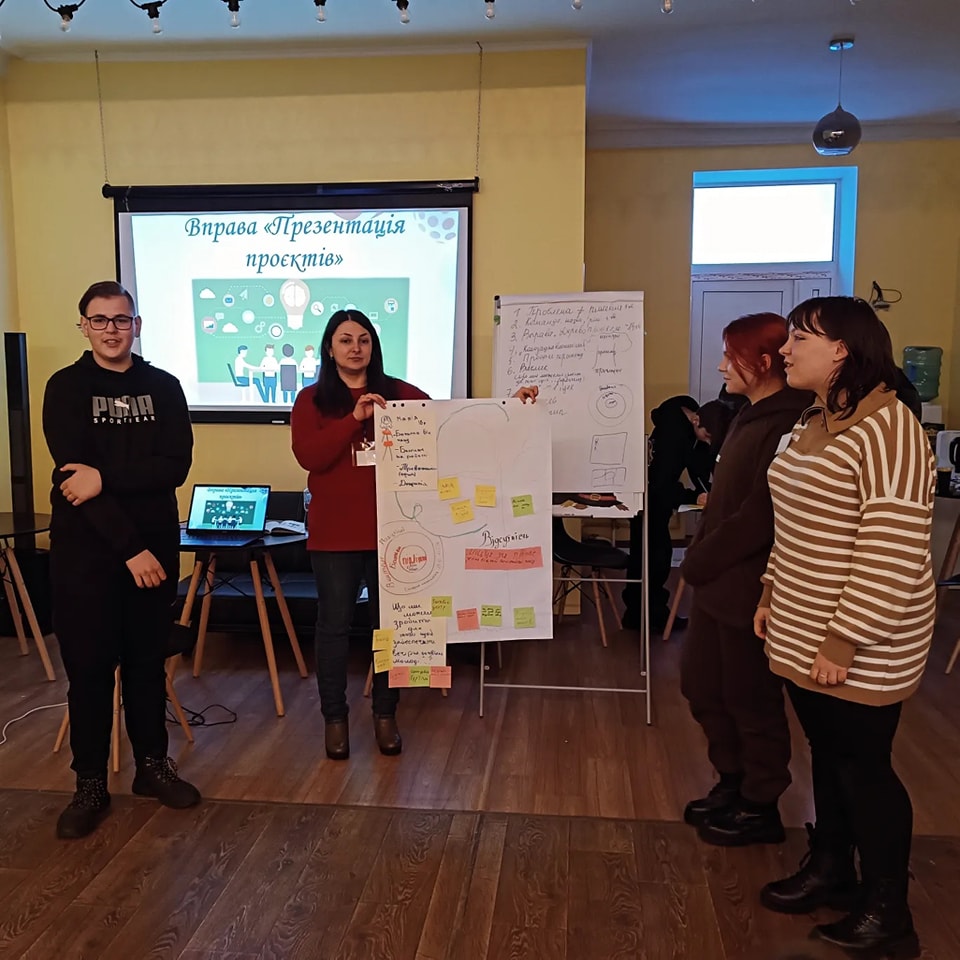
As a result of this work, young people gain leadership, advocacy, and project management skills, while communities gain active co-creators of change rather than passive observers. The key principles of this case remain consistency, the involvement of young people in all stages of the work, and partnership based on trust and equality.
“Trust works best. When you say: we hear you, and your methods have a right to exist,” concludes Natalia Drozd.
According to her, this is how the living fabric of the community is gradually formed—from young people who stay, participate, and step by step strengthen the sustainability of their territories.
Impulse for Dobrochyn
Within the framework of the Impulse Project, the Dobrochyn Center is strengthening its institutional capacity to work with communities not on a case-by-case basis, but systematically. This allows it to provide higher quality and more sustainable support to communities and civil society organizations operating in a complex war and post-war context. These are long-term changes in the ways of interacting, making decisions, and feeling responsible for joint development.
The impulse gained is being transformed into several interrelated areas: strengthening civil society, developing effective and inclusive governance, and increasing the resilience and cohesion of communities. Through education, practical participation, and support for initiatives, residents’ involvement in addressing local issues is increasing, trust between citizens and authorities is being built, and recovery is increasingly taking on a people-centered dimension.
This impulse is not only about support, but also about motivation for change: a transition from passivity to active participation, from waiting for decisions to forming and promoting one’s own agenda.
The choice of communities in Chernihiv region is a continuation of the Dobrochyn Center’s many years of work in the region and its deep partnership with local authorities and civil society. In the context of full-scale war, these communities are forced to devote significant resources to survival and basic stability, which is why cooperation between CSOs and local authorities is key to effectively responding to social challenges and improving the quality of life of residents.
Within the framework of the project, the organization focuses on strengthening its team and financial base, developing advocacy and communication capacities, diversifying funding sources, and building coalitions with other CSOs and international partners. “This impulse is not only about support, but also about motivation for change: the transition from passivity to active participation, from waiting for decisions to forming and promoting one’s own agenda, even in a situation of constant uncertainty,” the organization notes.


