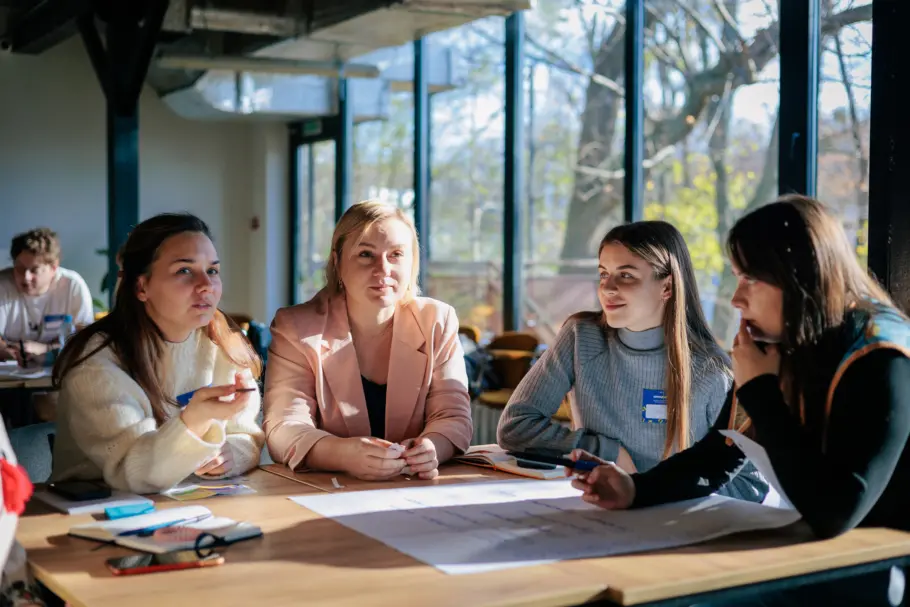
The dandelion sprouting through the asphalt. How “Ecosense” brings together and revitalizes communities in Zaporizhzhia through environmental initiatives
The symbol of the non-profit organization “Ecosense,” which operates in the Zaporizhzhia region, is the dandelion—a plant that thrives in any conditions. The team chose this symbol before the war, but with the onset of the full-scale invasion, it took on new meaning.
Since 2016, the organization has been working in the areas of environmental education, sustainable development, climate change adaptation, and environmental safety. During the war, these areas became critically important—particularly due to the risks associated with the occupation of the Zaporizhzhia Nuclear Power Plant, radiation safety, and access to water. In response, the team has intensified its efforts to raise awareness about environmental threats and support people’s mental health.
The organization’s mission is to protect the lives and health of Ukrainians and ensure the right to a safe environment amid war and reconstruction. In its work, the team focuses on green recovery, climate change adaptation, energy independence, mental health, and social cohesion within communities.
In 2025, “Ecosense” became an institutional grantee of the “Impulse” project, implemented by the International Renaissance Foundation and the Eastern Europe Foundation with funding from Norway (Norad) and Sweden (Sida).
During the panel “Sustainability Case Studies: What We Are Doing to Endure” at the 14th Civil Society Forum, Tetyana Zhavzharova, head of the NGO “Ecosense,” explained how the team combines environmental solutions, community engagement, and the development of cooperation to strengthen resilience and green recovery in frontline regions.
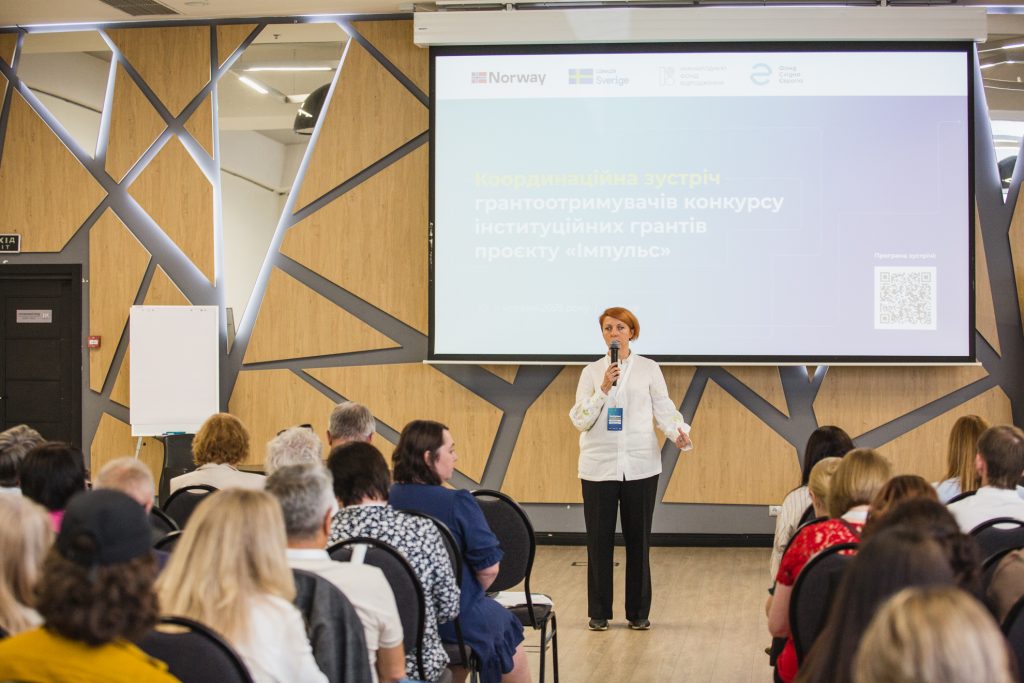
Climate and the Environment in Community Recovery
The organization’s activities encompass environmental protection, climate change adaptation, water resource restoration, renewable energy development, and environmental safety. At the same time, the team works on sustainable development and democracy—specifically through the development of tools for public participation, good governance, social cohesion, and the green economy.
Since 2023, “Ecosense” has been developing as a think tank for green recovery in southeastern Ukraine. In this context, the “Vidnova.Info” resource was created, where information on green recovery is collected and analyzed not only for the Zaporizhzhia region but also for the broader region. The resource contains materials on European legislation and opportunities for implementing green solutions for communities.
During the full-scale war, Ecosense has prepared a series of analytical and practical materials—ranging from studies on the condition of small rivers and recommendations for greening to community development strategies and guides on participatory tools. These resources are used by local governments, educators, and communities.
In addition to analytics, the organization actively works with communities on a practical level—from strategic discussions with authorities to planting trees, educational events, and joint initiatives. This approach combines a strategic vision with concrete actions that can be implemented today.
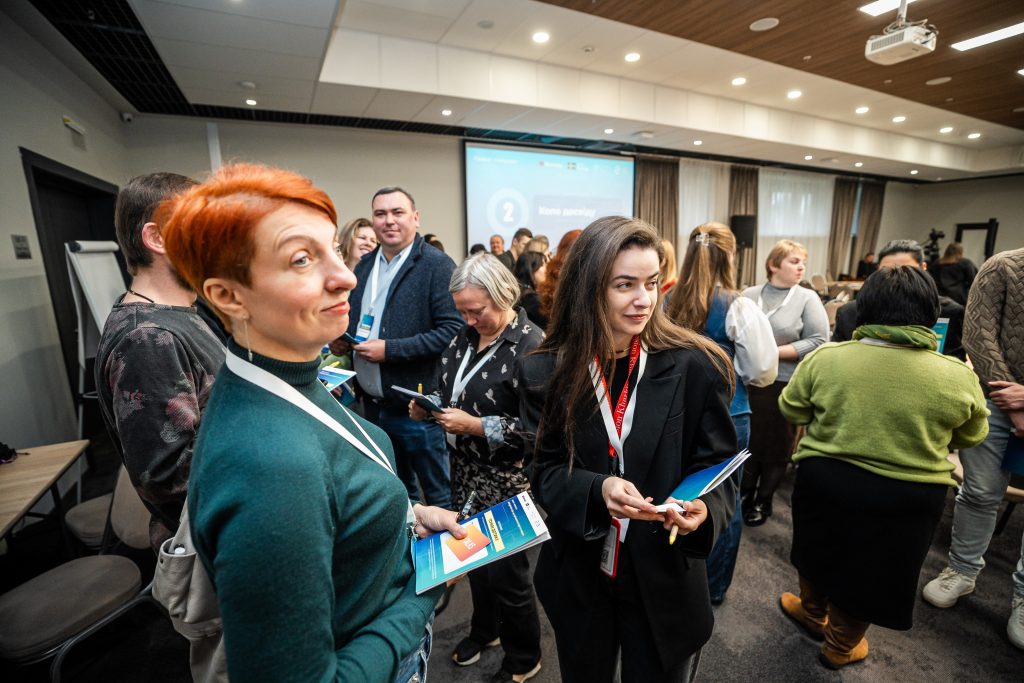
In December 2025, the NGO “Ecosense” held the Interregional Sustainability Conference “Unbreakable Southeast” in Zaporizhzhia. It brought together over 120 representatives from government, the public sector, business, and experts from the Zaporizhzhia, Kherson, and Mykolaiv regions and served as a platform for sharing experiences in community recovery.
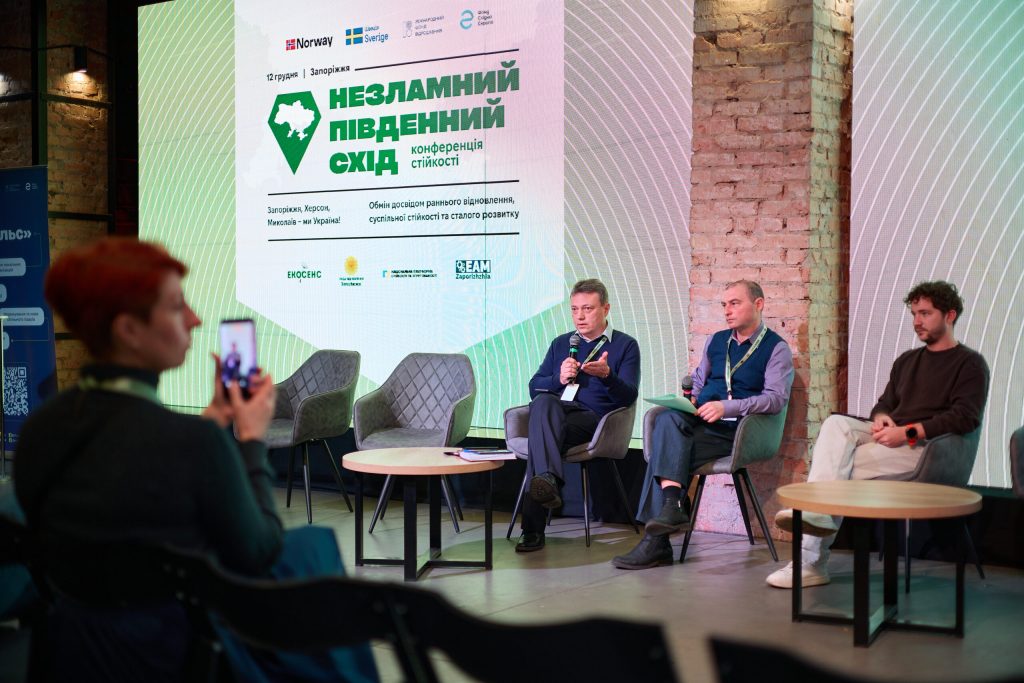
During the discussions, participants identified a common direction for future work on recovery and resilience: through systematic risk assessment, strengthening the role of local government, cooperation between government, civil society initiatives, and the business sector, as well as combining rapid solutions with long-term green recovery.
Based on the content of the presentations delivered during the conference, the organization’s analysts developed a case study titled “Resilience Practices in the Southeastern Regions of Ukraine.” The publication contains an analysis and summary of early recovery, social cohesion, and community resilience practices implemented in 2024–2025 by local governments, civil society organizations, universities, businesses, and associations in the Zaporizhzhia, Mykolaiv, and Kherson regions.
Ecosense notes that this document will help disseminate successful practices of resilience and early recovery and may be useful for risk management and recovery planning.
Dandelion Cocktail of Resilience
The team describes its approach to restoration and sustainability through the “dandelion cocktail of sustainability,” which includes several interconnected components.
The first is adaptation. The guiding principle of the NGO “Ecosense” is “adapt and survive.” This applies to both environmental solutions and psychological resilience. The team combines these levels through nature-oriented approaches: planting, caring for the environment, river monitoring expeditions, community workdays, and walks that help people ground themselves and cope with uncertainty.
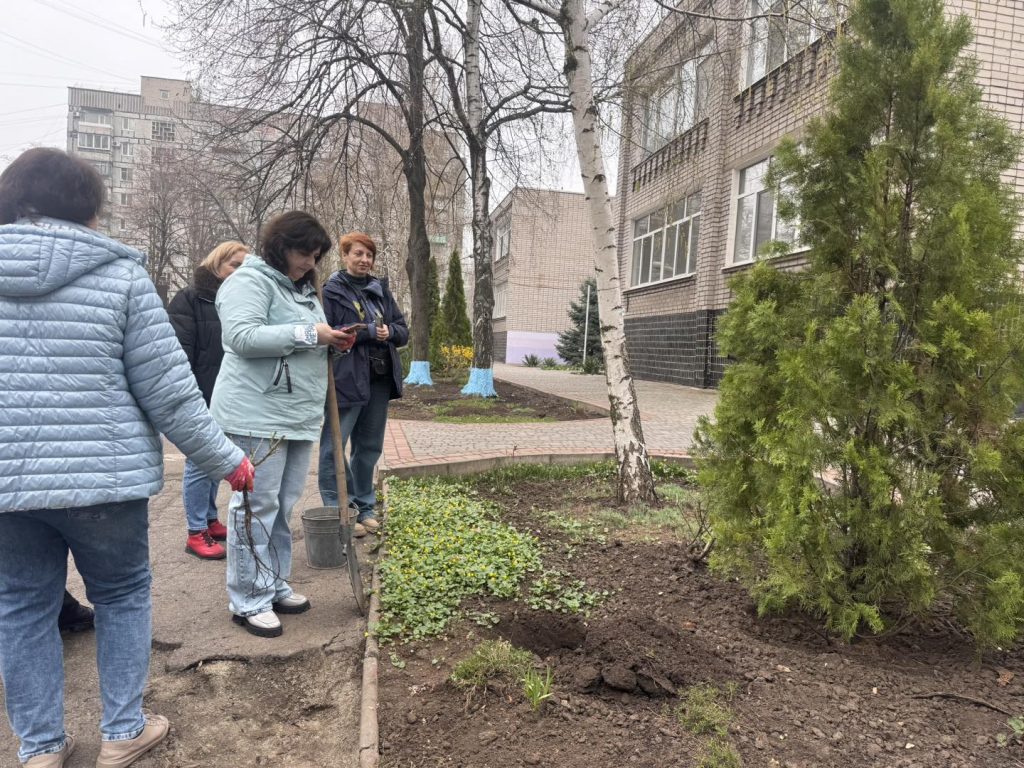
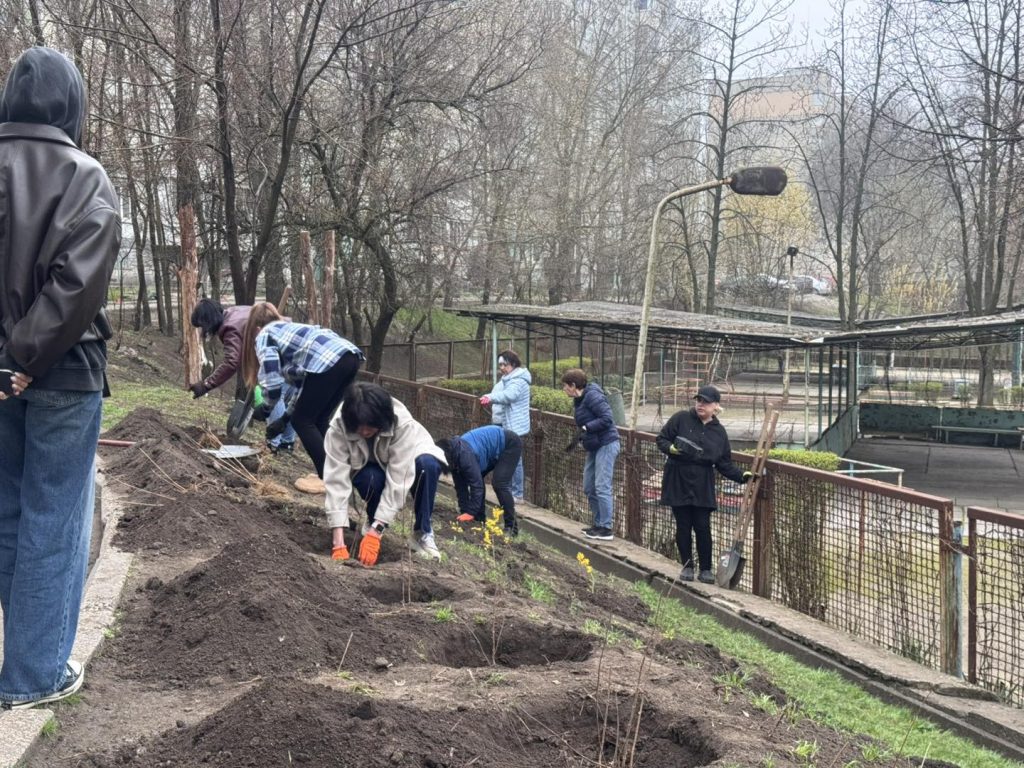
Ecosense places special emphasis on simple, practical solutions. For example, one case study involves the restoration of a small river by planting lilacs to reinforce the banks. At the same time, the team also speaks of “small joys” as part of resilience. Simple daily things—coffee, silence, sunshine, or planting—create a sense of control and stability and help people adapt to stress.
The second component is a collaborative community. During the war, “Ecosense” initiated the creation of the Zaporizhzhia Recovery Council—a coalition of civil society organizations, experts, and local government representatives. This platform enables the coordination of joint actions and the engagement of diverse communities in the recovery process.
The third component is “bottom-up” participation. The organization conducts surveys and focus groups, engages various segments of the population—including vulnerable groups and IDPs—in joint actions, and teaches participatory tools through hands-on practice.
The fourth is community dialogue with authorities. “Ecosense” creates platforms for communication between civil society organizations, local authorities, lawmakers, the regional administration, relocated communities, the police, volunteers, and residents. In this format, working groups and training sessions are held to discuss pressing issues of urban development and build trust—a crucial element of resilience.
The fifth component is linked to the Impulse Project—it involves knowledge sharing, networking, and support for civil society. In this context, the team works at the intersection of green recovery analytics and practice, develops interregional and intersectoral cooperation, and helps strengthen community cohesion.
Impulse for Ecosense
Ecosense expects that, thanks to three years of institutional support from the Impulse Project, the team will be able to strengthen the organization’s expertise and influence. This will allow them to expand cooperation with local governments and communities in Zaporizhzhia Oblast and other regions, continue developing the Zaporizhzhia Recovery Council network, engage more actively with national networks, and influence regional and national policy more effectively.
“The central themes of the analytical and advocacy work of the NGO ‘Ecosense’ are environmental protection, climate change adaptation, sustainable development, and just green recovery. Therefore, we will continue to work in the areas of sustainable development and green recovery, as well as environmental protection, but we will be able to defend people’s rights more effectively,” the organization notes.
The organization explains that its project provides communities with momentum by developing green recovery analytics for southeastern Ukraine and refocusing attention on environmental and universal human values: “We help people see, analyze, and build strategic reconstruction processes, while keeping in mind the need to preserve the planet for future generations.”
The team also supports specific local actions—from planting trees to restoring small rivers—and engages communities in green recovery without putting it off until “after the war.” This approach, they say, not only strengthens resident participation but also promotes the implementation of democratic practices: “We teach city residents tools for civic participation and personal activism, while guiding the government toward participatory and inclusive recovery.”
For us, being close to the Zaporizhzhia community means being an active part of it, inspiring and helping to overcome challenges
The NGO “Ecosense” pays special attention to helping communities adapt to climate change, particularly through nature-based solutions, the restoration of water resources, and work with the ecosystems of the Dnipro and small rivers.
At the same time, the organization operates amid the constant challenges of a frontline city. “Many civil society organizations and government officials have left Zaporizhzhia, but we remain rooted, like our symbol—the dandelion,” Ecocense notes. Under these conditions, one of the priorities is to strengthen social engagement, community cohesion, and resilience. The team combines analytical, advocacy, and practical work: from participating in the development of strategies and programs to community-based monitoring of environmental risks and promoting nature therapy as a tool for supporting people.
At Ecosense, they emphasize that their role today is to be part of the community while supporting its development: “For us, being close to the Zaporizhzhia community means being an active part of it, one that inspires and helps overcome challenges.” The organization expects that, thanks to the “Impulse” project, significantly more people will join the green restoration of Zaporizhzhia.
The article was prepared within the framework of the Impulse Project implemented by the International Renaissance Foundation and the East Europe Foundation with funding from Norway (Norad) and Sweden (Sida).