


A little over a year ago, we announced the launch of a new project called the Impulse Project, in which the Foundation joined forces with Norway, Sweden, and the Eastern Europe Foundation to help organizations in frontline regions grow and transform their communities for the better.
Since then, our team has held four calls for proposals, organized a dozen events, and awarded 69 grants to organizations from 12 regions. But today we’d like to talk not about numbers, but about the ideas, stories, and emotions behind them.
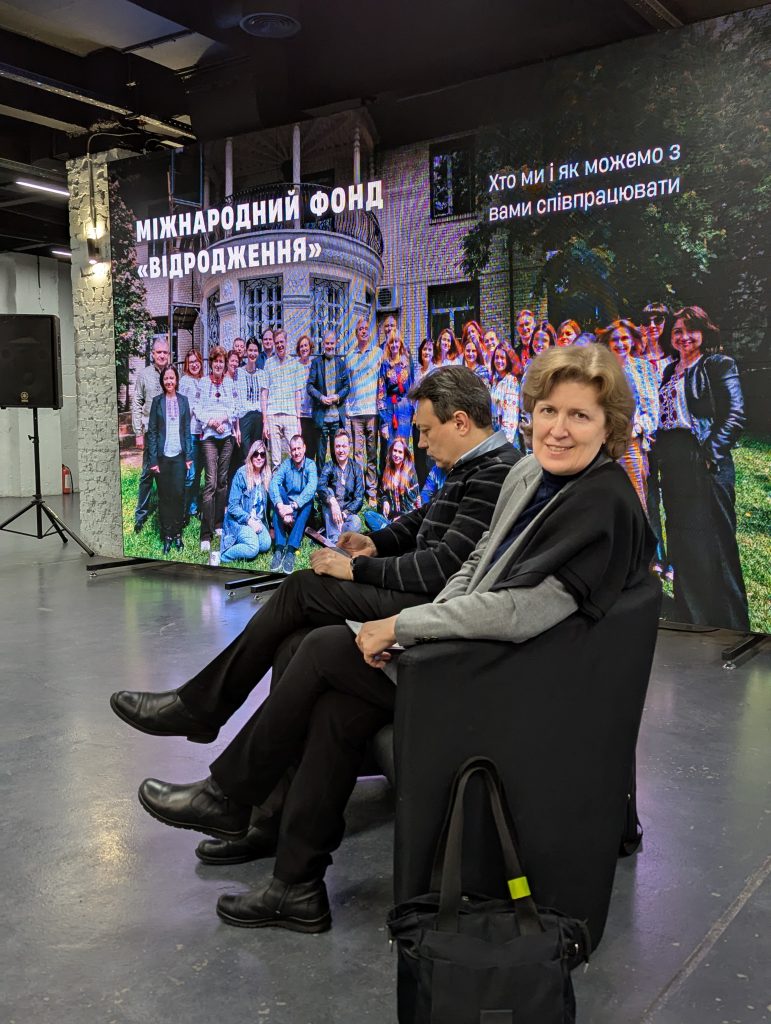
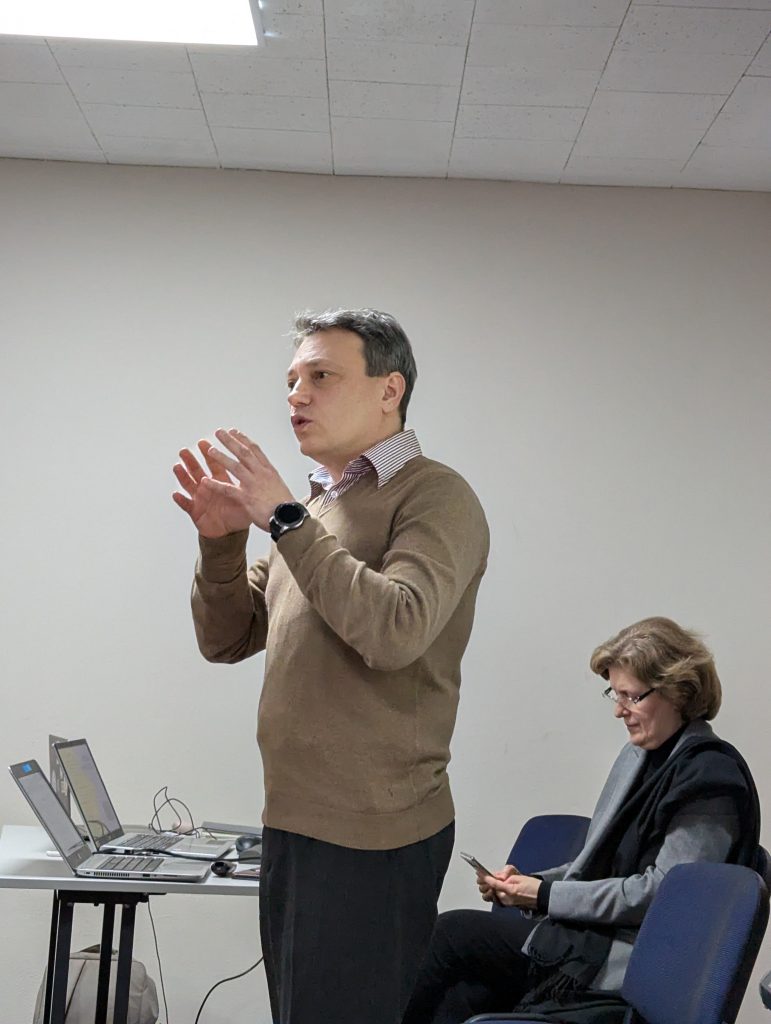
We spoke with Oleksii Orlovskyi, director of the “Democracy and Good Governance” program, and Tetiana Kukharenko, manager of the same program, who are deeply involved in the project. Together, they attempted to draw subjective conclusions about the project’s first year, identifying the biggest wins and challenges, as well as the most inspiring and difficult moments.
No objective criteria—just a human perspective on the results of the first year of work.
The Biggest Breakthrough
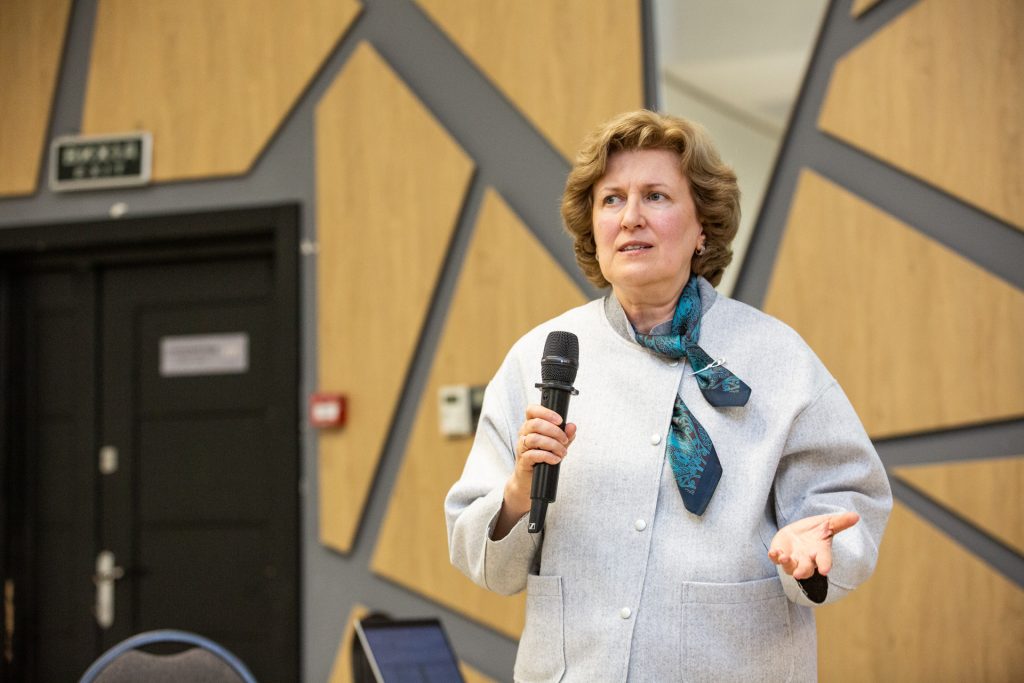
Tetyana Kukharenko
For me, the biggest breakthrough is that, thanks to the Impulse Project, the Foundation has started working with many new organizations that were never previously within our sphere of influence. A very high percentage of them are first-time grantees of the Foundation. Sometimes this is their very first experience managing a grant project. Previously, it was difficult for such organizations to secure grants, but now they can receive thematic grants and try their hand at it.
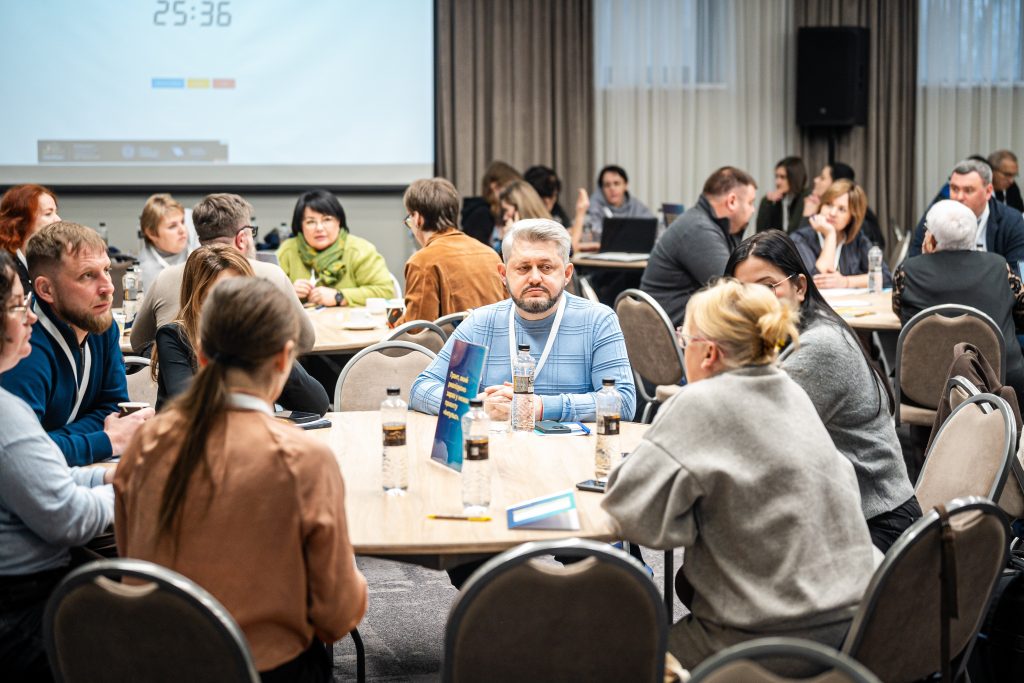
“Impulse” is a program where people learn by doing, so a year after the project begins, teams emerge with new knowledge, honed skills, and an understanding of how to move forward. And, just as importantly, with new connections across Ukraine. During our events, organizations get to know one another, find like-minded people, and discover potential partners. Many say, “We met these people here for the first time and already want to do something together.” For me, that is the real breakthrough.
The Greatest Victory
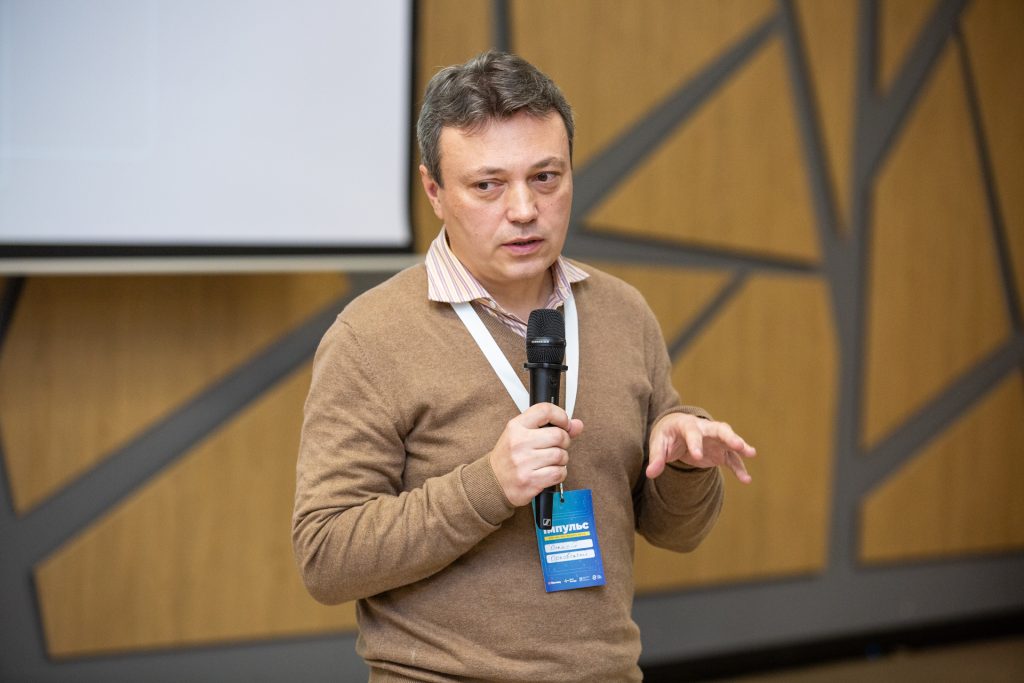
Oleksiy Orlovsky
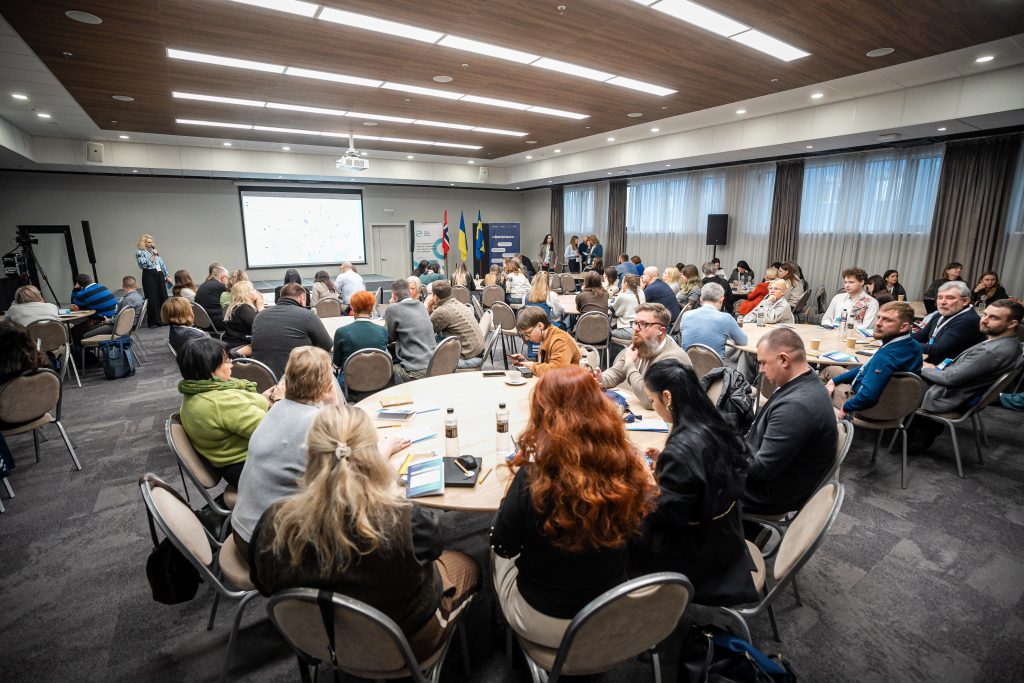
For me, Impulse’s greatest victory this year is that we’ve managed to stir up civil society in the regions a bit. For example, 70 to 90 people attended our on-site presentations. I don’t recall such large audiences gathering for similar Foundation events in the regions before. This means that there is now interest in “Impulse” and trust in the International Renaissance Foundation.
The participants in the presentations felt that we were speaking to them on a human level. And one more important point: we reached places that other donors rarely reach. And I believe that this is also a very significant result of our work.
The Most Tangible Impulse for Organizations
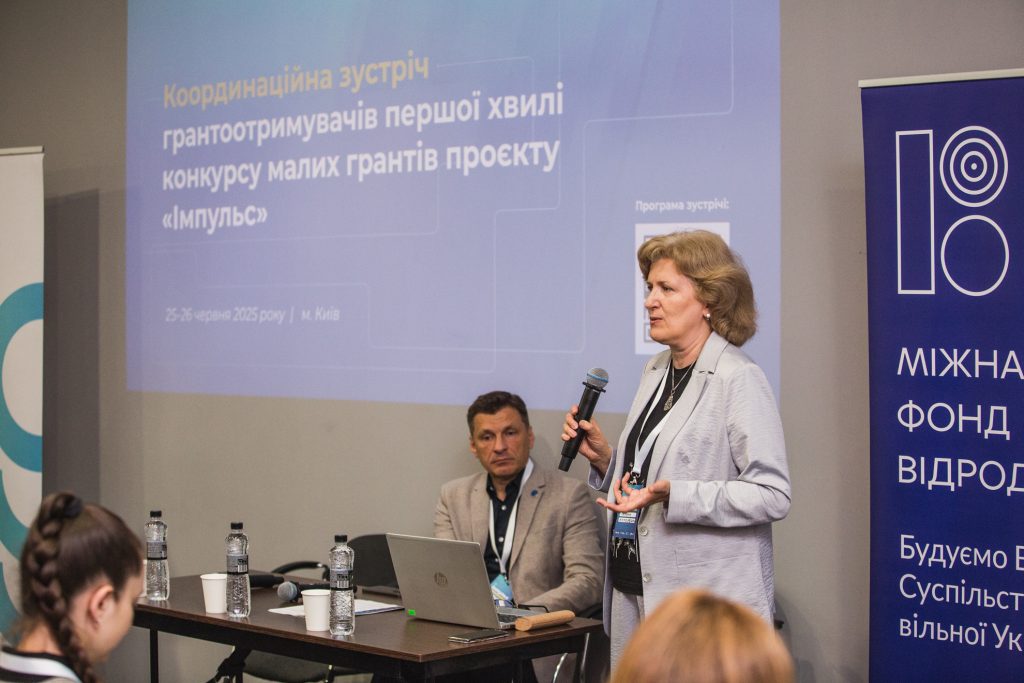
Tetyana Kukharenko
I noticed the changes most clearly in small towns. Take Konotop, for example. There is an Interregional Institute for Community Development there, which used to carry out one-off projects—albeit ones that were very important to the community. Thanks to “Impulse,” they received a new boost and began to think more broadly—not only about their own community but also about neighboring ones. Ambitious strategic plans, new ideas, and new scales emerged. They brought new people on board, are now implementing other projects, and are already planning to apply to other donors. In other words, our project served as the impetus for the organization to learn how to mobilize more financial and human resources. And this affects how effectively they can transform their communities.
A similar story unfolded in Pavlohrad, Dnipropetrovsk Oblast, where the “Persona” Center for Innovative Development operates. It is a well-known, strong organization with large-scale projects. But they lacked the impetus specifically for organizational development. When you’re constantly “in the flow,” you really need a pause to stop and honestly ask yourself: who are we, where are we, where are we heading next, what should we develop, and what should we scale back? “Impulse” gave them the opportunity to optimize their work and rethink their strategy.
The Moment of Greatest Realization
Oleksiy Orlovsky
For me, that moment of realization came during the first institutional grant competition. When we saw the number—430 applications. I was amazed that so many organizations had responded at once. It was a very clear signal that we had hit the mark, both in terms of timing and substance.
There are very few donors who systematically support institutional development, especially in complex, high-risk regions near the front lines—places where no one knows what tomorrow will bring or whether an organization will survive.
For us, this was also a risk, because we understand how difficult it is to report on completed projects under such conditions. But we are consciously taking this risk. Because behind these numbers and reports are real people and organizations that are holding their communities together.
Tetyana Kukharenko
I would add one more important point. At the moment when some donors abruptly ceased their activities at the beginning of the year, this initiative became a real lifeline for many organizations. Especially in small towns and villages, where literally everyone who could have applied.
For them, it offered hope that they could continue their work, avoid scaling back their strategies, and develop new areas of focus. Some organizations received a genuine new boost, as grand as that may sound. And in moments like these, you really understand why “Impulse” exists.
The Biggest Challenge
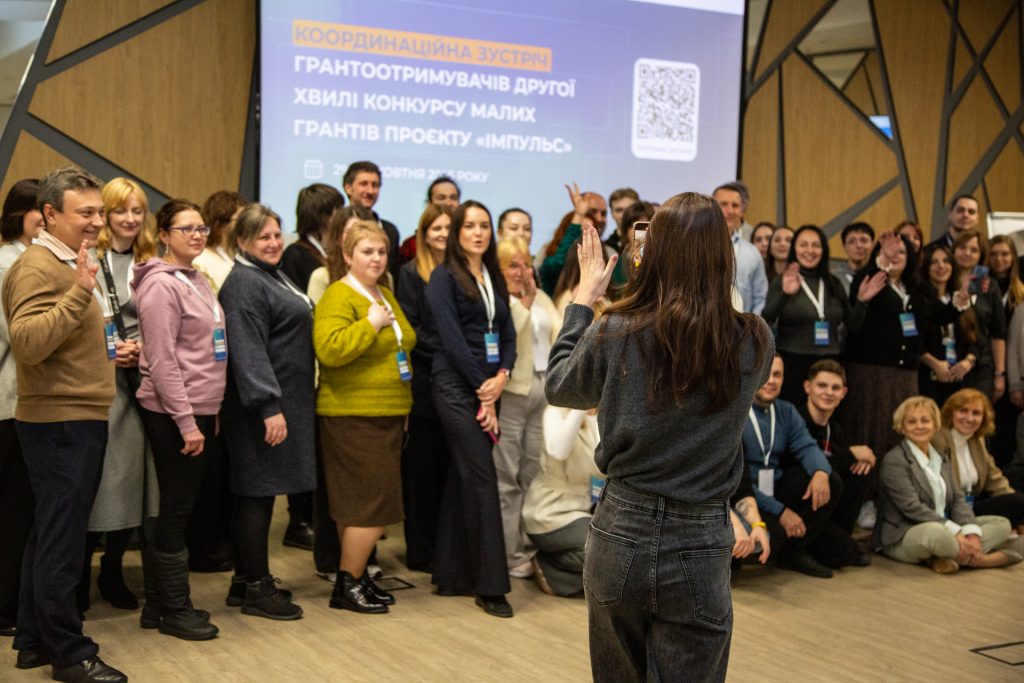
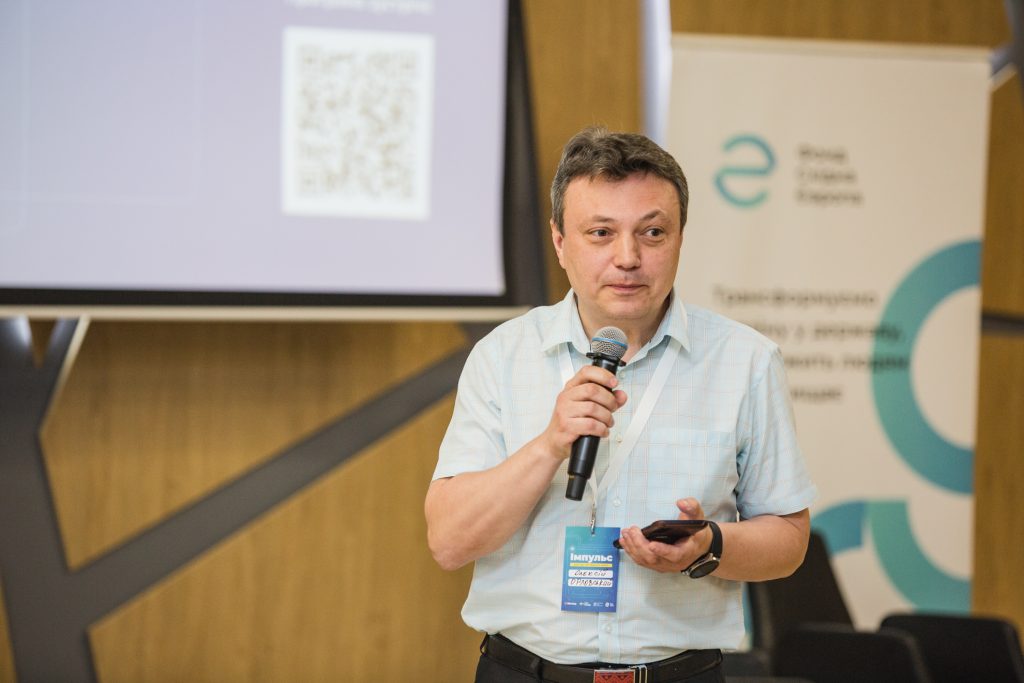
Oleksiy Orlovsky
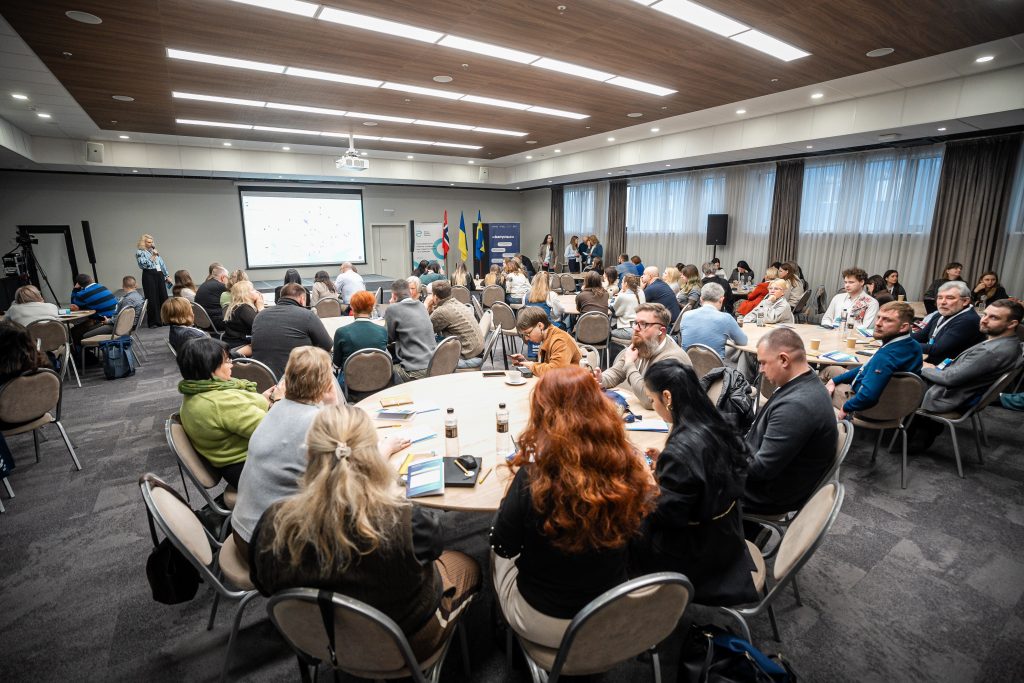
The biggest challenge for me was the sheer number of organizations that applied to “Impulse.” From this vast pool, we had to select those who truly deserved support and would be able to successfully implement their projects. The demand far exceeded our available resources; there were more high-quality projects than we could support.
We deliberately went beyond simply “announcing a competition and handing out money.” “Impulse” includes not only grants but also training, networking, and ongoing support. It’s easier when you’re working with 10–20 organizations. But when you’re ultimately dealing with 67 of them—and ones that are so different in terms of their level, needs, and requests—that’s a whole different scale. And that, in my view, was one of the main challenges of the year.
The Toughest Moment
Tetyana Kukharenko
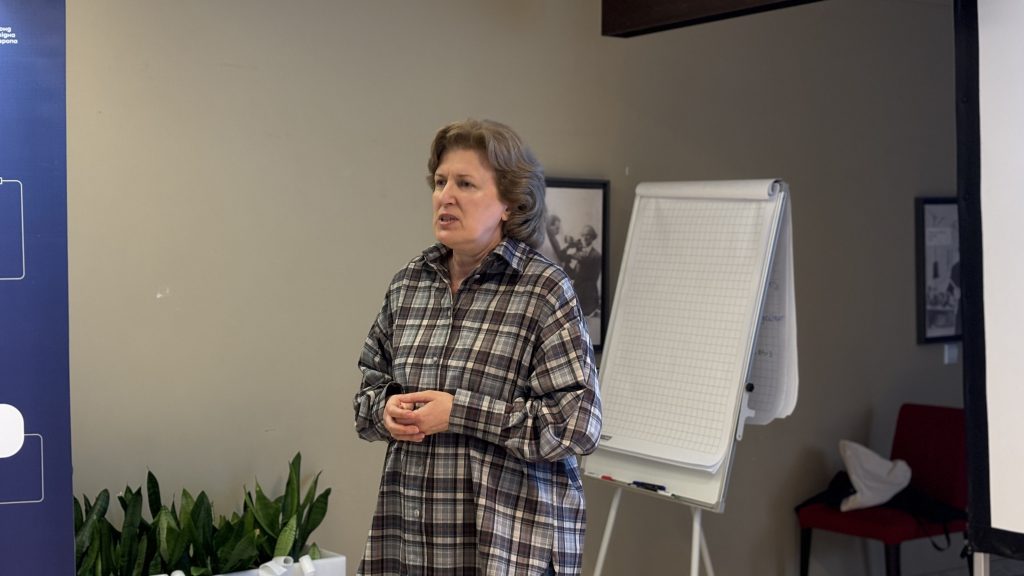
The toughest moment for me was when I was faced with an unprecedented number of applications that needed to be read, evaluated, and processed. When you have over four hundred project proposals just for a single competition, you sometimes catch yourself thinking, “Why did I get myself into this?”
But then you meet the new grantees, see their eyes, that fire, that energy, that desire to work. They clearly understand what they want; their communities and ambitions stand behind them. And that personal connection, their motivation, completely makes up for all the exhaustion from the administrative work.
The Most Inspiring Human Stories
Tetyana Kukharenko
The grant recipients from Kherson who left the strongest impression on me include “Ob’ednannya,” “The Black Sea Center for Political and Social Research,” “Bery i Slav,” and others. The Kherson region is one of the most heavily shelled areas. And despite the high risks, the lion’s share of the teams in these organizations remain in the city.
They say, “If we leave, who will then work for the people on the ground?” Some team members have relocated, while others continue working under shelling, staying in touch, and even organizing necessary events for their communities and strategic sessions. And thanks to “Impulse,” they have the resources to continue helping people, rather than just surviving.
Oleksiy Orlovskyi
For me, the most powerful stories are those of organizations that have relocated from eastern Ukraine. These teams have no access to their home territories, as those areas are currently under occupation; they work in new locations but do not abandon their communities. They continue to think about how to support displaced people and make plans for the future of these territories, even when the future looks very uncertain.
“Impulse” has become a way for them to keep their team together, network with others, not give up, and maintain the belief that their work will still be useful when the chance to return home arises.
The Best Models That Can Be Scaled Up
Tetyana Kukharenko
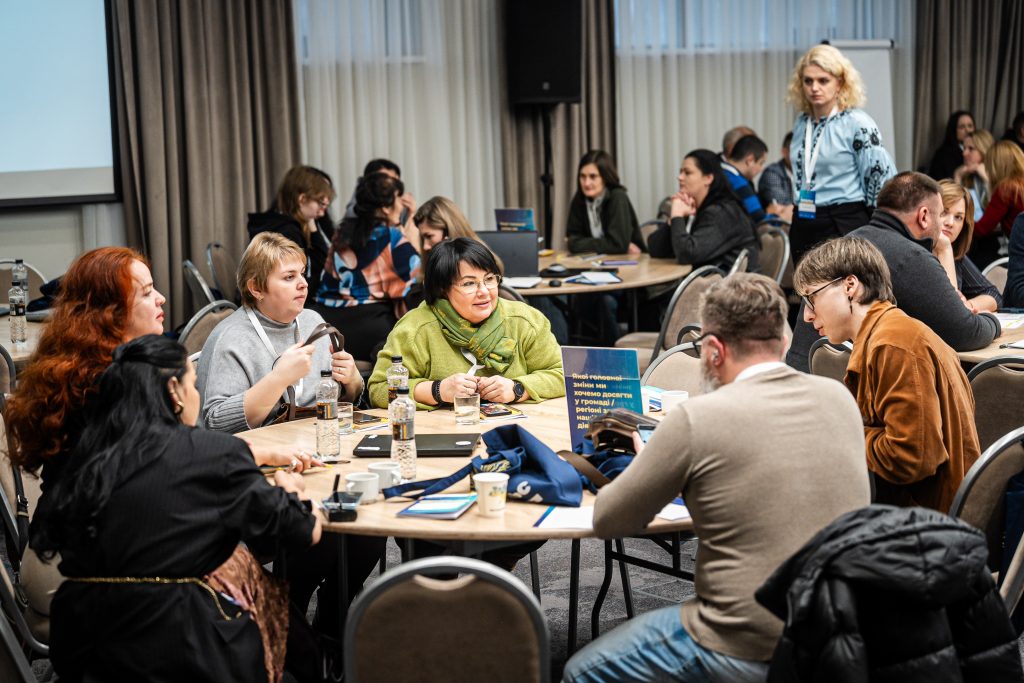
When it comes to models that can already be scaled up, I always think of the NGO “Environmental Geoinformation Systems.” They specialize in landscape planning using GIS tools. This is something that communities are in high demand for today; it truly helps in making decisions regarding early recovery and development planning. And this can definitely be scaled as a model, demonstrating its benefits even in places where people don’t yet fully understand why all of this is necessary.
The Greatest Internal Victory for the Project Team
Oleksiy Orlovskyi
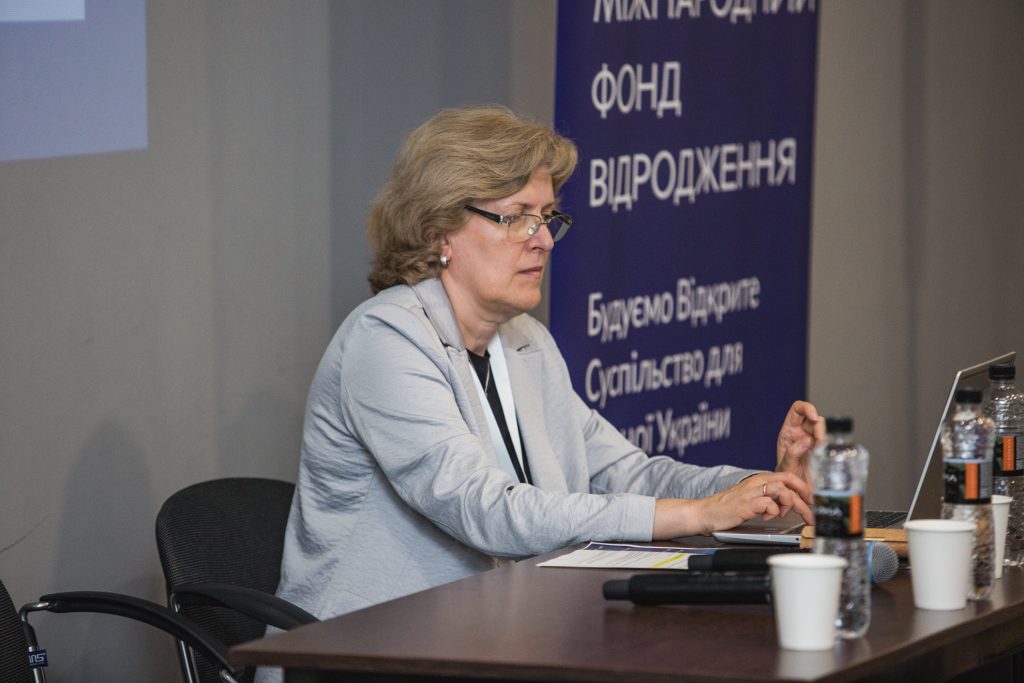
When discussing the achievements of “Impulse,” I would like to highlight our own human dimension. As part of this project, the International Renaissance Foundation has gained two very important members—Lana Kopotun and Diana Kovalova. They have a keen sense of the organization, communicate extensively with grantees, and handle the day-to-day work without which all these wonderful strategies simply wouldn’t work.
Plans and Goals for the Coming Year
Oleksiy Orlovskyi
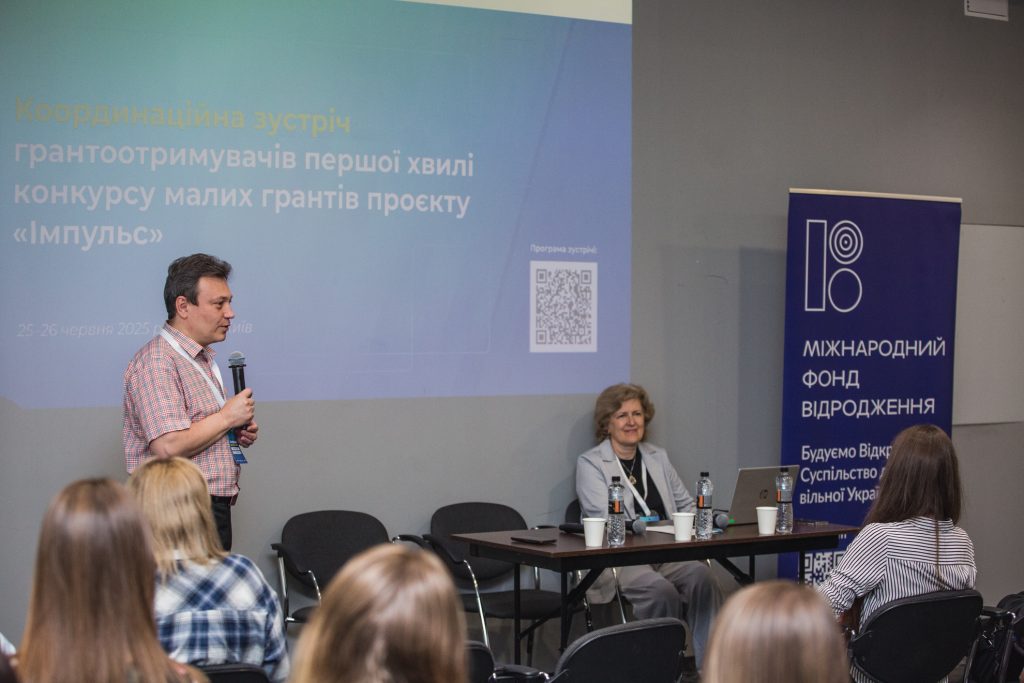
For me, the key focus for the coming year is competitions and the constant search for something new. We are expanding into new regions that we hadn’t even planned on at first: Cherkasy, Kirovohrad, and Poltava.
A major challenge in itself is our new focus on social entrepreneurship. For us, this is an unfamiliar area, a new frontier where we need to learn, find the right people, and build expertise. For me, this is the main milestone: not only to support organizations but also to grow as a team working on a topic that wasn’t previously our main focus.
Tetyana Kukharenko
Another important goal is a new competition for young organizations that have only recently started operating. We want to bring new organizations up to a level where they don’t feel like “newbies” in terms of experience and knowledge. We want to give them a push so they can look at themselves strategically: who we are, what we do, and how we benefit the community. And it is precisely at this stage of self-awareness that we want to lend them a helping hand.
How would you describe this year in three words?
Oleksiy Orlovsky
Challenges.
Solutions.
Action.
Tetyana Kukharenko
Innovation.
Optimism.
Prospects.

