


For the team of the Voznesensk Community Foundation, a charity organization and institutional grantees of the Impulse Project, working with the community is a daily responsibility for the people and the city in which they live and work. The Voznesensk community in the Mykolaiv region has endured combat operations, loss of resources, and drastic social changes, but has retained its human potential. That is why, as the organization notes, the community today needs not only humanitarian support, but also the restoration of dignity, a sense of strength, and prospects.
Viktoria Baltser, a representative of the organization, spoke about how Voznesensk is building resilience and opportunities for people who, despite everything, want to live, develop, and work in their city during the war.
During the panel discussion “Cases of Resilience: What We Are Doing to Survive,” she presented a case study on preserving human capital in Voznesensk through work, education, economic opportunities, and recovery. The panel, held as part of the Impulse Project, brought together civil society organizations from frontline communities working on solutions for resilience, recovery, and cohesion in wartime. The presentations took place on the sidelines of the XIV Civil Society Forum.

Where can you find work if you are an IDP?
In 2022, the Voznesensk community directly experienced combat operations: in March, Russian troops were physically present on its territory. The community was not prepared for such a turn of events. After a wave of attacks, thanks to the Armed Forces of Ukraine, Russian units were pushed back towards Mykolaiv. It was then that internally displaced persons from the Kherson and Mykolaiv regions began to arrive en masse in Voznesensk.
“People came with the idea that their village would be liberated soon and they would return tomorrow,” recalls Viktoria Balzer, a representative of the Voznesensk Community Foundation. Often these were families without belongings or material resources, who remained in the community as guests.
In Voznesensk, we saw a gap between the needs of employers and the capabilities of people, and a clear demand for new professions and employment.
Almost a year after basic humanitarian needs were met, the foundation team decided to ask people about their future plans. 63% of IDPs surveyed responded that Voznesensk would likely become their new home. “This was a serious challenge for us,” Baltser notes.
The key request was for work. People spoke directly about the need not only for assistance, but also for the opportunity to live and earn a living. It was this request that later became the starting point for decisions aimed at long-term integration and community recovery.
The Voznesensk community has about 37,000 residents, of whom nearly 4,000 are internally displaced persons. However, as of 2022, employment opportunities for IDPs were significantly limited: “People came to the community from the Kherson region, who had worked in agriculture, and from the Mykolaiv region, who had experience working in an alumina plant. There was no relevant industry in Voznesensk, and we saw a gap between the needs of employers and the capabilities of people, as well as a clear demand for new professions and employment opportunities.“
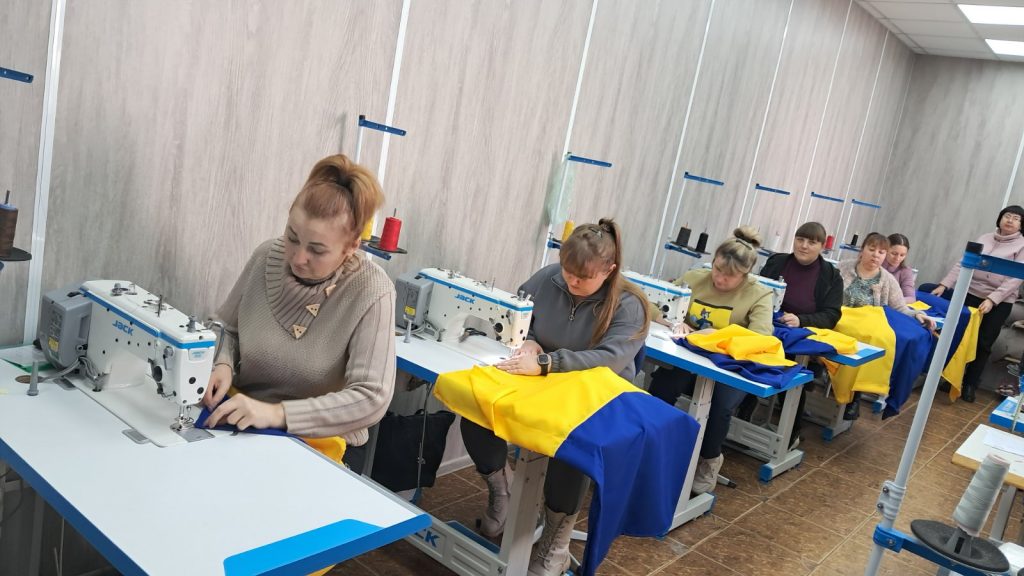
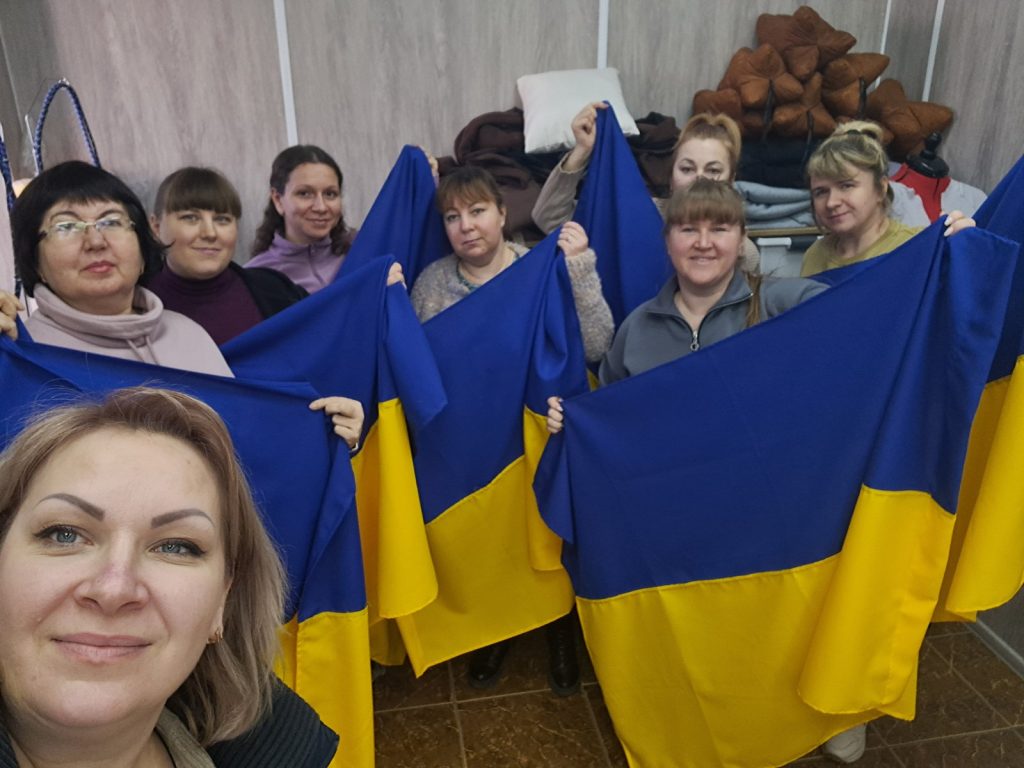
However, the sewing industry remained in the city. Moreover, the sewing factory lost some of its workers who had left and needed new people. Therefore, the Voznesensk Community Foundation decided to create opportunities for young people and adults to learn practical skills and meet the real needs of the labor market. The first courses were sewing classes. Almost 100 people learned the sewing trade. Some of the graduates found jobs at local companies, while others started their own businesses.
“There was an interesting case: a man, a father of three children and an internally displaced person, came to the sewing courses. He said he wanted to learn how to hem his children’s trousers because it was an expensive service for him at the market,” says Balzer.
Adults want to learn
In total, around 20 training courses were launched in the community. In 2024, 400 people completed training at the Adult Education Center; in 2025, about 350. The main format was short courses adapted for adults, with evening classes or weekend training. This approach took into account real-life circumstances—work, side jobs, childcare—and allowed people to learn without taking a break from their daily lives.
The foundation’s team deliberately focused on economic activity as a form of support. For them, this is not a one-time aid, but a contribution to the long-term sustainability of the community. It is an opportunity to give people a tool, not short-term support.
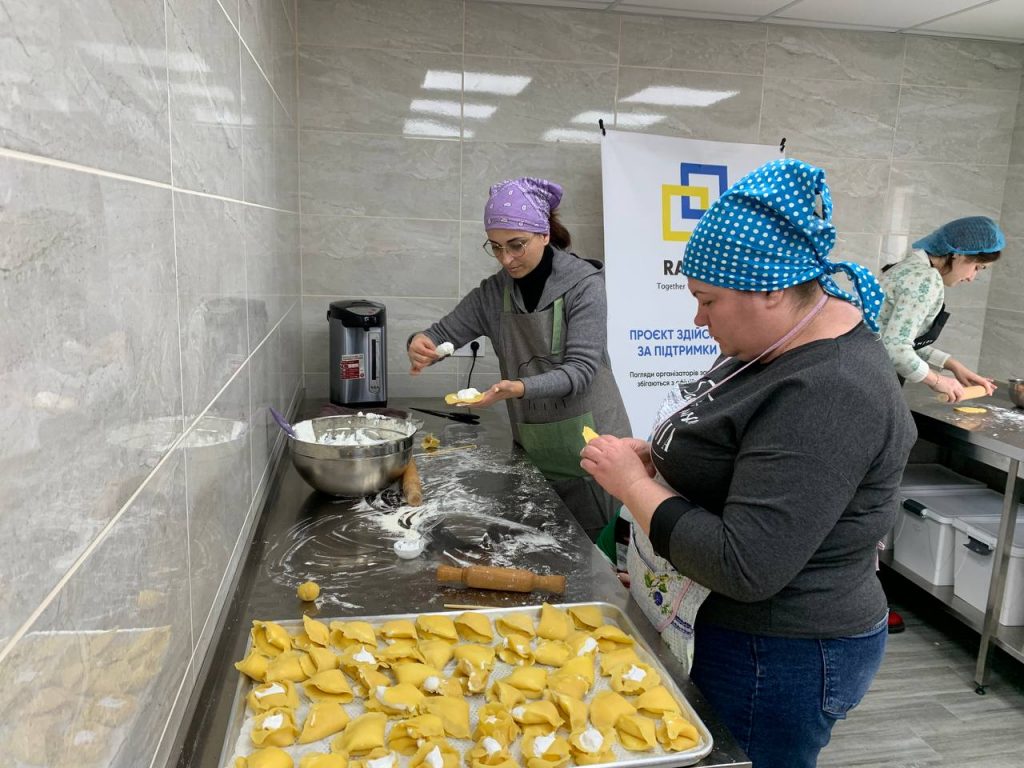
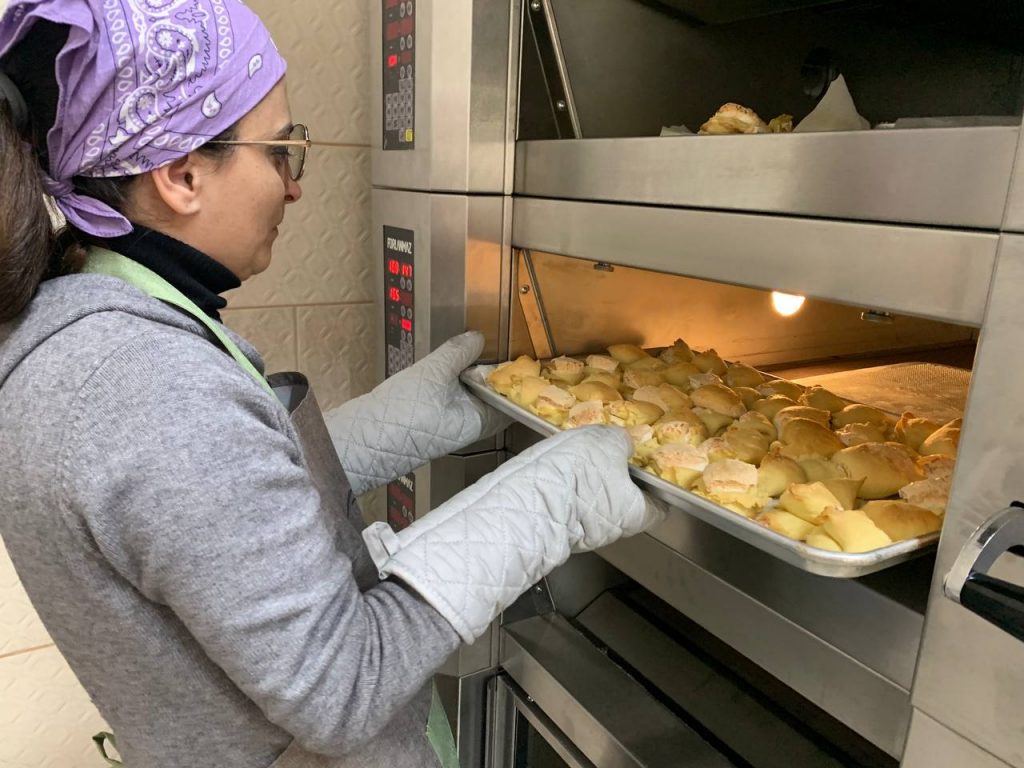
In Voznesensk, you can learn a wide variety of skills: from SMM and digital literacy to coffee making, baking, and confectionery. Most of the programs were implemented with the support of international donors, and demand for them was extremely high: there were up to ten applicants for each place. At the same time, this created tension—not everyone was able to get into the training, because in the first stage, the programs were primarily focused on IDPs, and only later on local residents.
“Today, without continuous learning, people lose their competitiveness in the labor market. Lifelong learning has become a necessity for those who want to remain in demand and maintain their professional qualifications,” emphasizes Viktoria Balzer.
Teaching people what they need
The Voznesensk Community Foundation pays special attention to the quality of adult education. As the team emphasizes, this format is fundamentally different from school education: adults come with their own experience, established skills, and clear expectations. To meet these expectations, the foundation brings in practitioners—specialists who know their stuff—and trains them in working with adults and teaching methodology. They create their own training programs and adapt them to real business needs.
For example, before the full-scale invasion, local garment factories worked mainly for export, producing women’s clothing for the European market. With the start of full-scale war, they reoriented themselves to sewing military uniforms—and, accordingly, the requirements for personnel changed. Businesses needed not universal seamstresses, but specialists for specific operations: working with collars, pockets, and individual elements of the product. And the training program was tailored to these needs.
There are no universal programs. Different groups require different approaches, formats, and areas of training.
Another principle of the foundation is constant contact with the audience. Separate surveys were conducted not only for IDPs but also for veterans—they showed interest in digital tools, in particular working with CNC equipment, 3D printing, as well as basic computer literacy and learning English. This confirmed that there are no universal programs and that different groups require different approaches, formats, and areas of training.
An important part of this work was cooperation with businesses and local authorities. The foundation’s team is working to make adult education programs part of community policy: to this end, they created a working group and conducted an advocacy campaign at the city government level. At the same time, the circle of partnerships and donors supporting the development of this initiative is expanding. Viktoria Balzer emphasizes that the foundation is open to sharing experiences and cooperating with both communities and partners working on long-term sustainability and recovery.

Impulse for the Voznesensk Community Foundation
Participation in the Impulse Project helps the Voznesensk Community Foundation find partnerships. In 2025, the organization became one of 29 institutional grantees of the project. The team had the opportunity to strengthen its institutional capacity and lay the foundation for long-term community development.
As part of the project “Hive of Change: From Institution to Impact,” the organization focused on implementing modern management approaches, automating internal processes, expanding funding sources, and scaling programs that address the needs of people and communities.
At the same time, the team notes that it does not ignore the complex reality in which civil society organizations in frontline territories operate. Limited resources, people’s fatigue, and natural resistance to change accumulated over years of war remain constant challenges. That is why the foundation’s institutional project combines practical support with analytics, strategic thinking, and trust-building both within organizations and at the community level.
“Our belief in change, a strong team, and the support of partners who share our vision of long-term community development help us move forward,” the foundation emphasizes.
The panel was held as part of the Impulse Project, implemented by the International Renaissance Foundation and the Eastern Europe Foundation with funding from Norway (Norad) and Sweden (Sida).

