


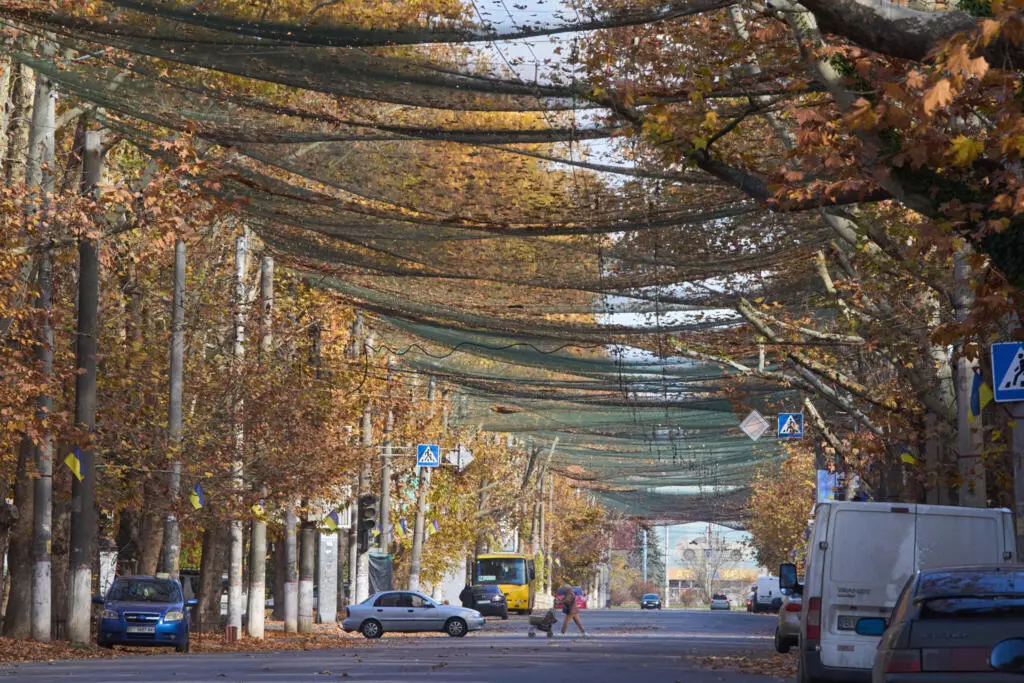
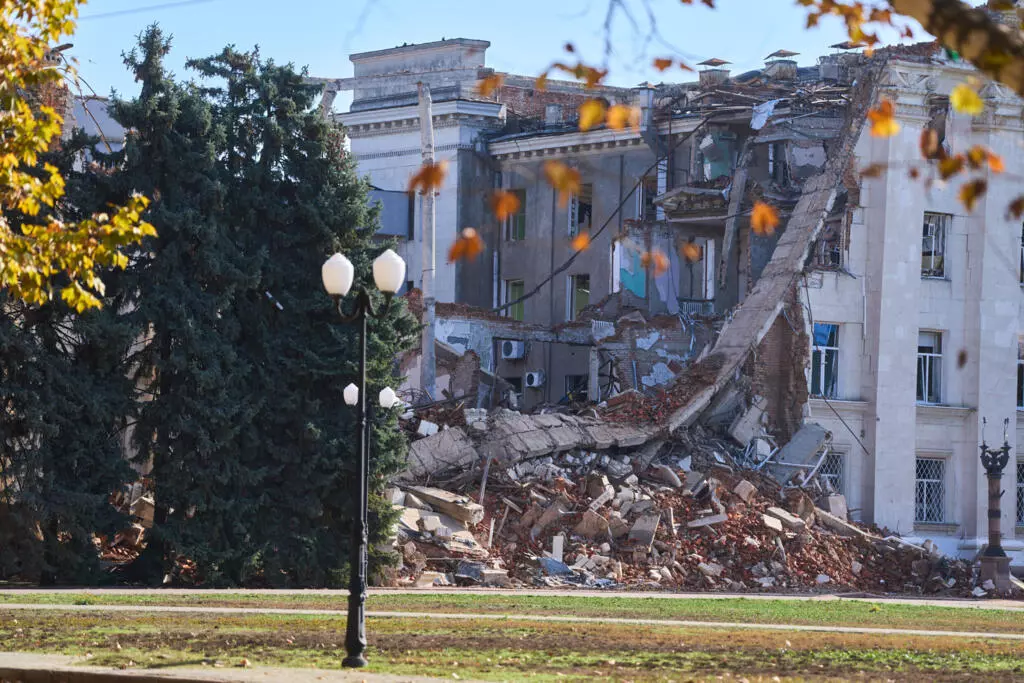
Broken windows, some of which are covered with plywood, and facades marked with traces of debris. Anti-drone nets are stretched over the roads to protect against “human safaris” — as Russians call their practice of hunting city residents with FPV drones. Three years after de-occupation, Kherson has not given up, but has learned to live in seemingly impossible conditions.
© Efrem Lukatsky / AP
Of the 300,000 residents who lived in the city before 2022, 60,000 remain today, most of whom are elderly people and those who are unable to leave. However, among the residents of present-day Kherson are those who have consciously chosen to stay and work in a city that is under daily shelling. They clear debris and extinguish fires, maintain order and restore electricity after shelling, visit residents with limited mobility to bring them food, or try to keep their businesses afloat in conditions that are incomprehensible to consultants from the “big four.” And then there are those who are trying to coordinate the work and interaction of all these people and, even in these conditions, make life easier for the residents of Kherson.
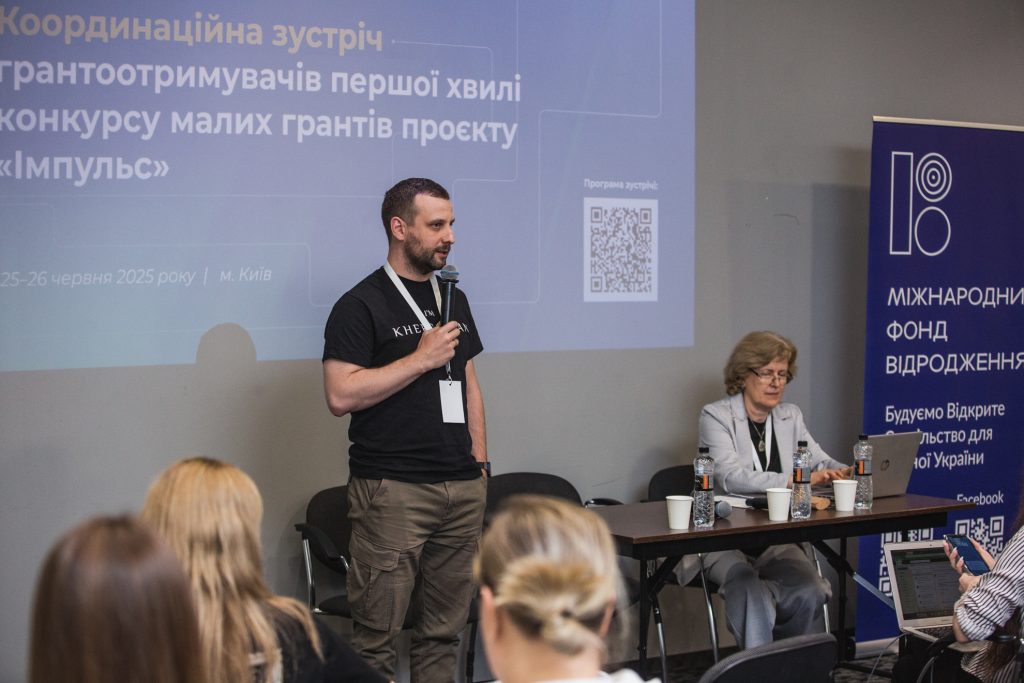
These are the tasks set by the Kherson-based public organization Ob’ednannya, which received a grant from the Foundation in 2025 as part of the Impulse Project. We spoke with Yuriy Antoshchuk, head of the NGO Ob’ednannya, about what helps Kherson remain resilient, why any assistance must begin with conversation, and how platforms for dialogue are already helping the city change.
Hearing the city
“We cannot develop recovery projects right now. What we plan today may become irrelevant tomorrow due to the deterioration of the security situation,“ says Yuriy. In the last three months alone, the number of drone attacks on the city has increased to 5,000 attacks per month, an average of more than 150 attacks per day. And that’s not counting artillery shelling, missiles, and ”suicide bombers.”
Although security issues remain a top priority, they are not the only consequences of the war. Minibuses are not running, and in some areas, shops are closed. People are afraid to leave even their half-destroyed homes, fearing that looters will find only empty walls. Businesses operate without insurance or loans, and children have been studying online for years. None of these problems seem critical on their own, but when they accumulate, they can make life in the city unbearable.
The Ob’ednannya understood that it would not be possible to solve all the problems at once — there are too many of them, they are too complex and interrelated. After all, fear is subjective, and stray dogs may bother some people much more than Russian drones. However, it turned out that no one had yet attempted to conduct research and map all the possible problems that residents of Kherson and its suburbs experience. So this became the first step of their project.
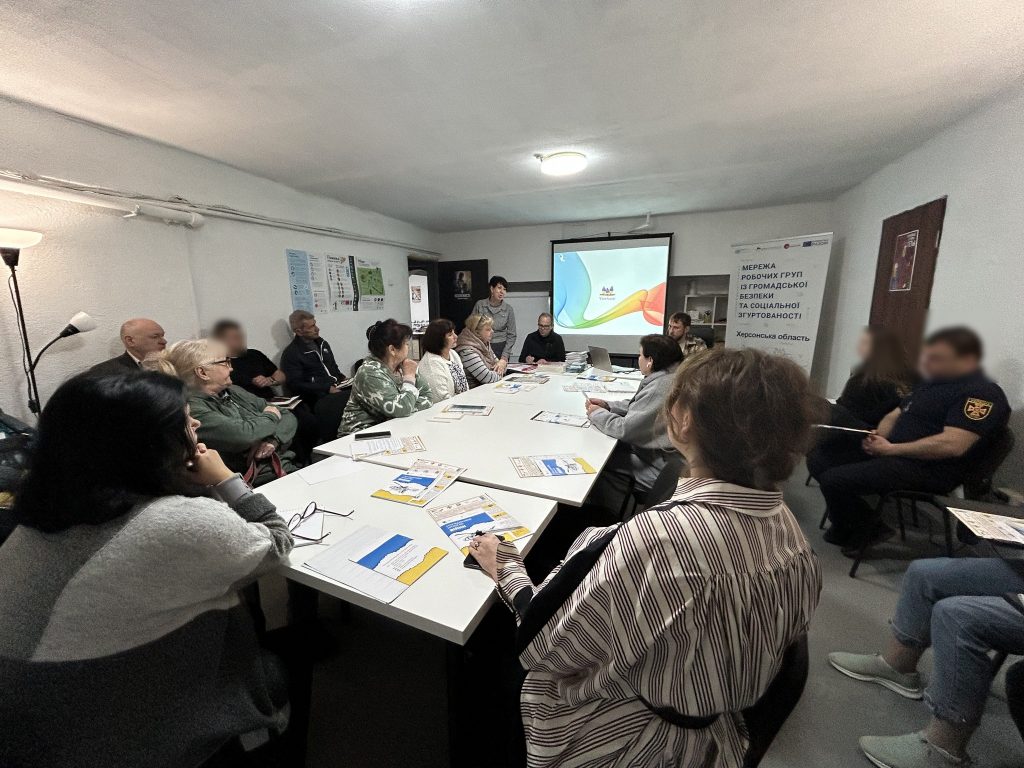
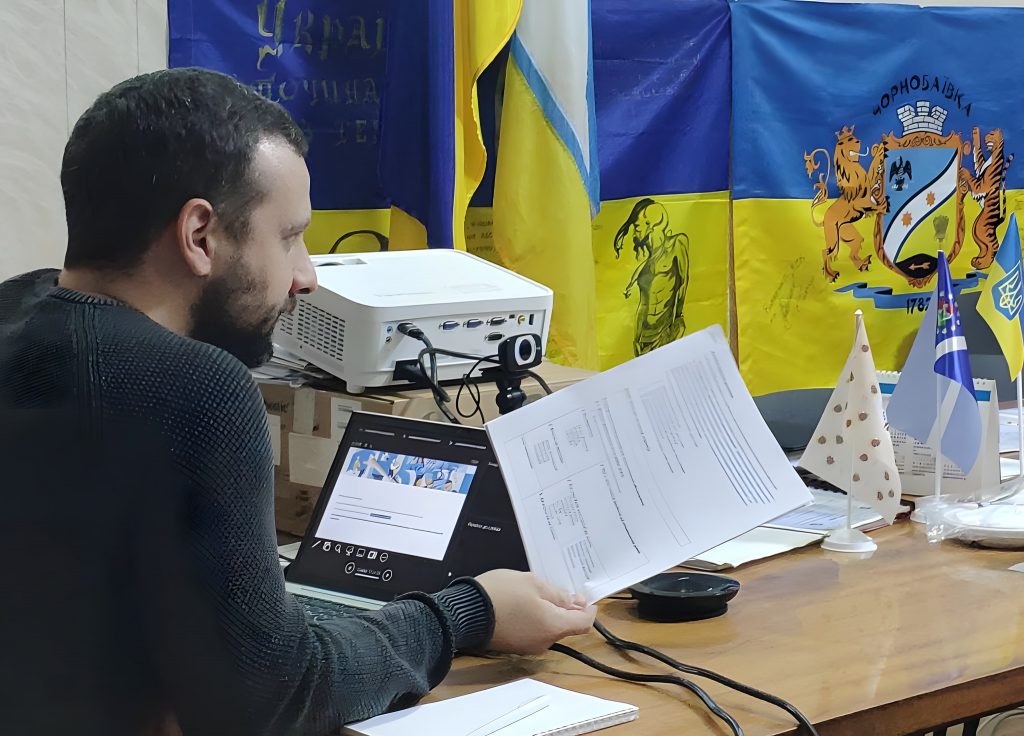
The study covered Kherson and the Chornobaivska community, which is a suburb of the regional center. Information was collected through meetings and focus groups. The most difficult conversations were with local businesses, which have to operate under conditions of shelling, mined territory, and a lack of credit and insurance. When you are balancing on the brink of closing your business every day, it is difficult to talk about systemic solutions and long-term changes. As Yuriy recalls, one of the participants in the study said goodbye with the words, “I don’t know what I’m leaving with, but I know what I’m not leaving with — I’m leaving without money again.”
The researchers sought to avoid questionnaires and ready-made answers, and instead tried to listen to and understand the greatest pains of the local people. “We collected people’s subjective opinions. How they themselves see the risks – during and after the war,” says Yuriy. This made it possible to compile a list of the 50 most pressing issues that concern residents.
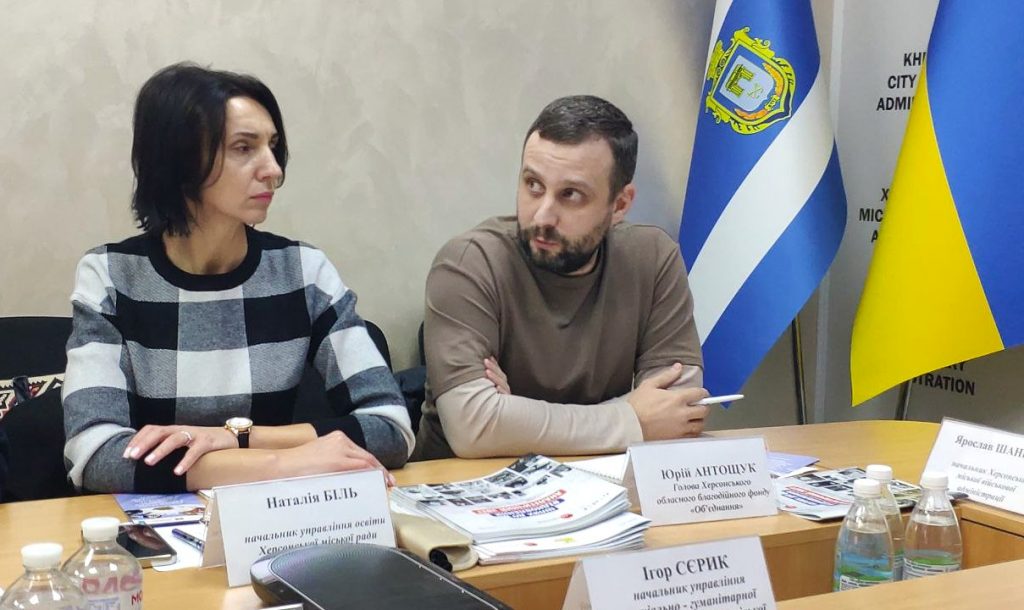
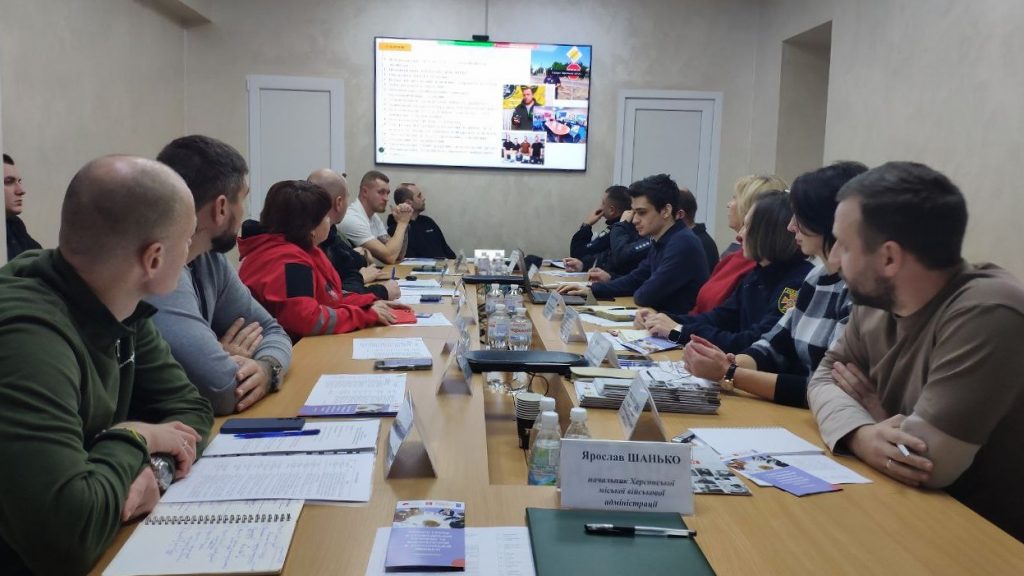
“Of course, everyone talks about the risk of being killed by shelling or losing their homes. But there are many less obvious things that all frontline communities face,” explains Yuriy. People primarily talked about constant shelling, drone attacks, the risk of death or injury, destroyed homes, infrastructure problems, and power and water outages. Other risks are mentioned much less frequently: a sharp increase in the number of stray dogs, looting that prevents people from evacuating, and fraudsters posing as humanitarian workers. It turned out that, along with security issues, people are concerned about psycho-emotional factors: loss of social connections, lack of socialization for children and adolescents, social divisions between those who remained in the community and those who left. “Some things were not even obvious to us,” recalls Yuriy. “And even less so to the authorities. People talked about things that no one had asked about out loud before.”
From a list of problems to finding solutions
Mapping problems is an important step, but it is not enough if you stop there. Of course, you can go to the local authorities, put your printouts on the table, and consider your job done. However, Ob’ednannya’s approach is different—they help local authorities find solutions and organize dialogue with other institutions that can help.
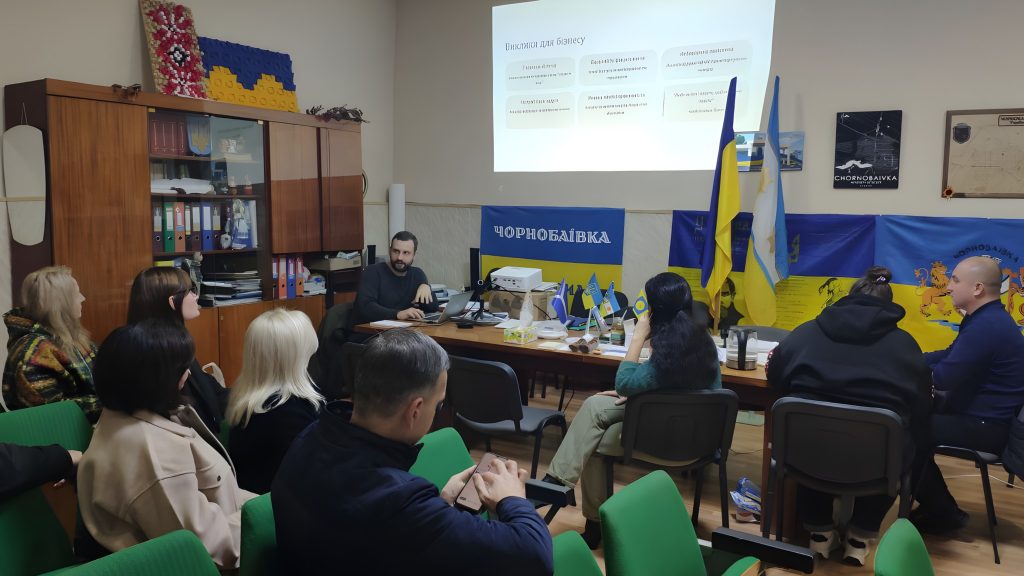
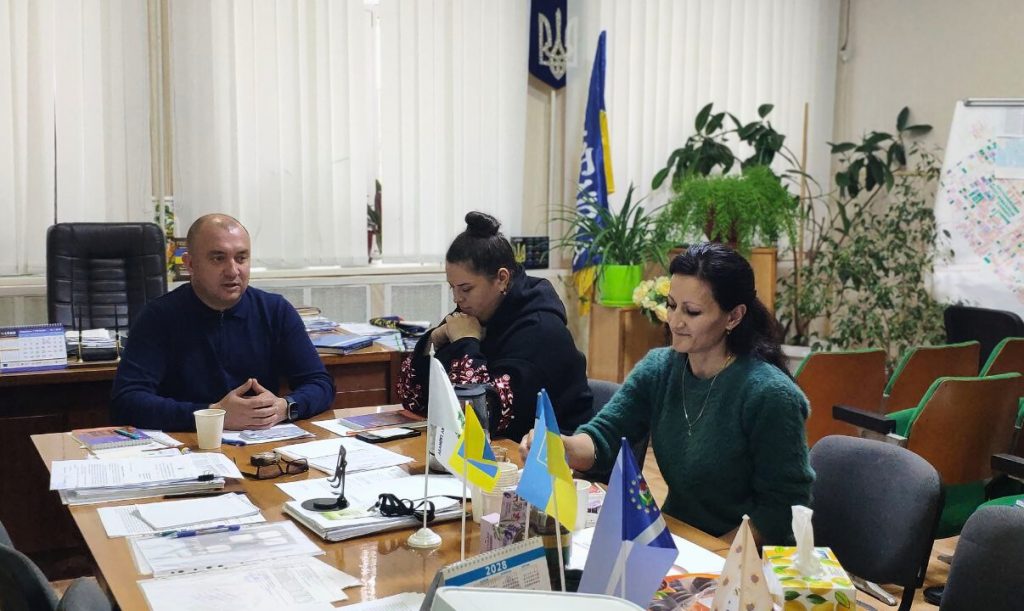
Yuriy explains that the problem with local authorities is not that they are unwilling to do anything, but that the system is “not working.” People in local administrations work in conditions of staff shortages, low salaries, and increased risks to their lives. “They don’t refuse to work—they just hide,” he says, recounting how officials quit their jobs, unwilling to leave their families behind.
Therefore, it is important not to be opponents who see every official as a corrupt criminal, but partners who can provide support and help where local authorities “fall short.” So, the Association began to hold facilitated meetings and discuss the first simple steps that could be taken in a given situation to achieve rapid progress.
The first of these steps turned out to be trivially simple: to develop a practical printed booklet on how to behave in a given dangerous but typical situation.
Algorithm for living under shelling
Paradoxical but true: after three years of constant shelling in Kherson, there was still no simple and concise instruction on what civilians should do if a drone flew into their house. What to do? Who to call? What algorithm to follow? Research conducted by Ob’ednannya revealed that even the heads of condominium associations do not know what the procedure should be.
The organization’s team gathered information from the police, the State Emergency Service, the Kherson military administration, and volunteers and condensed it into a short booklet. “These are really basic things: document the damage, contact the police, file a report, know who is in charge of evacuation,” Yuriy explains. The first 5,000 copies were printed at their own expense, and very soon they were distributed to the relevant services and heads of condominium associations.
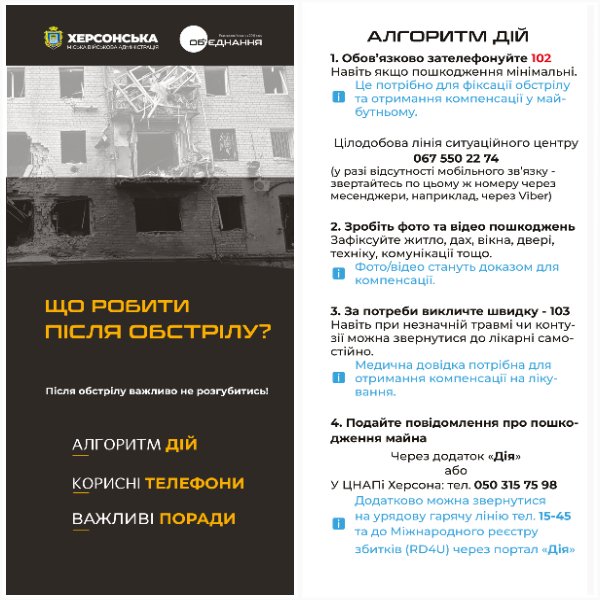
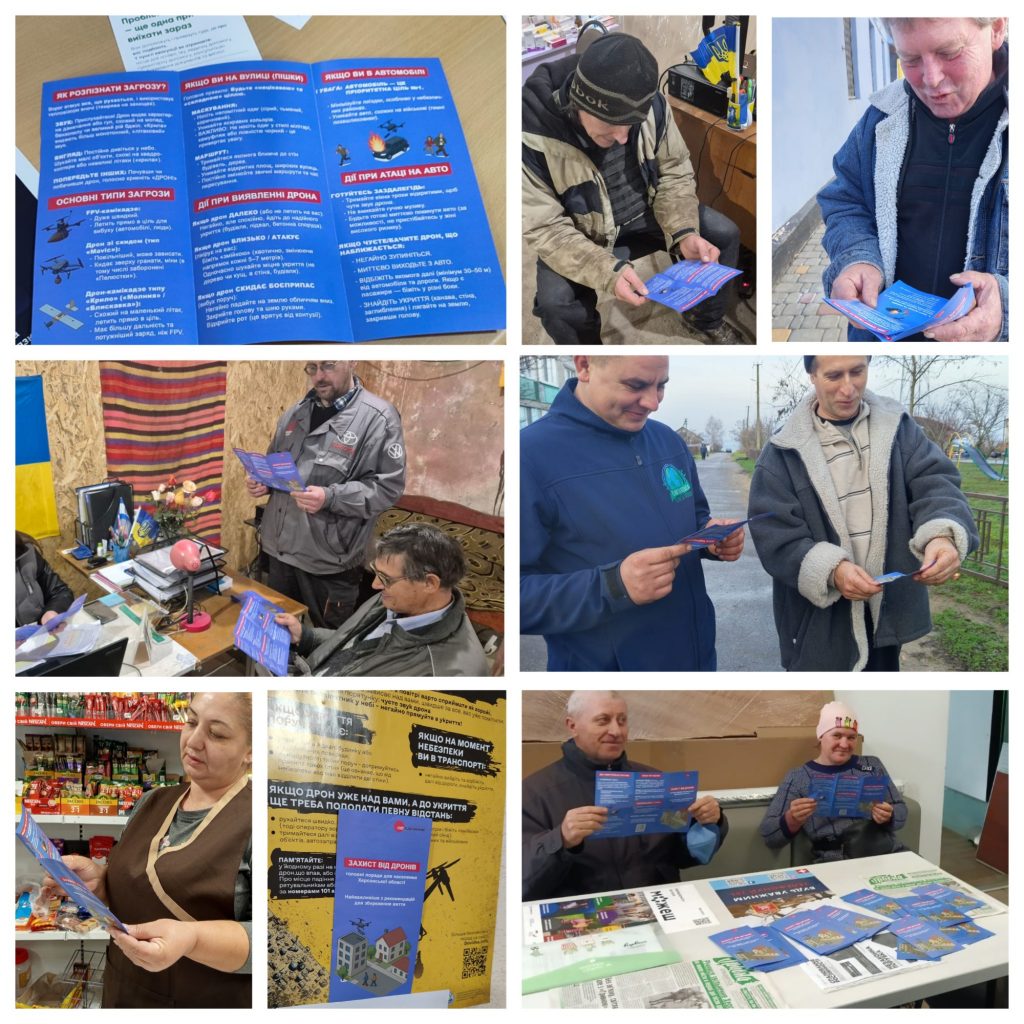
According to Yuriy, even this simple step helped to reduce anxiety and give Kherson residents at least a little sense of control over the situation. “Sometimes, to make things easier, you don’t need anything heroic,” says Yuriy. “You need people to know: here’s the first step, here’s the second, here’s where to call. And then, even in war, there is support.”
Communication and trust as a tool for security
The story with the booklet illustrates that coordination works. Together, we can develop solutions that do not require a lot of money or time, but can really help. These are the kinds of solutions that make you think, “Why didn’t we do this before?”
“It really showed that change is possible,” says Yuriy. “Not global change, but change that immediately makes people’s lives easier.”
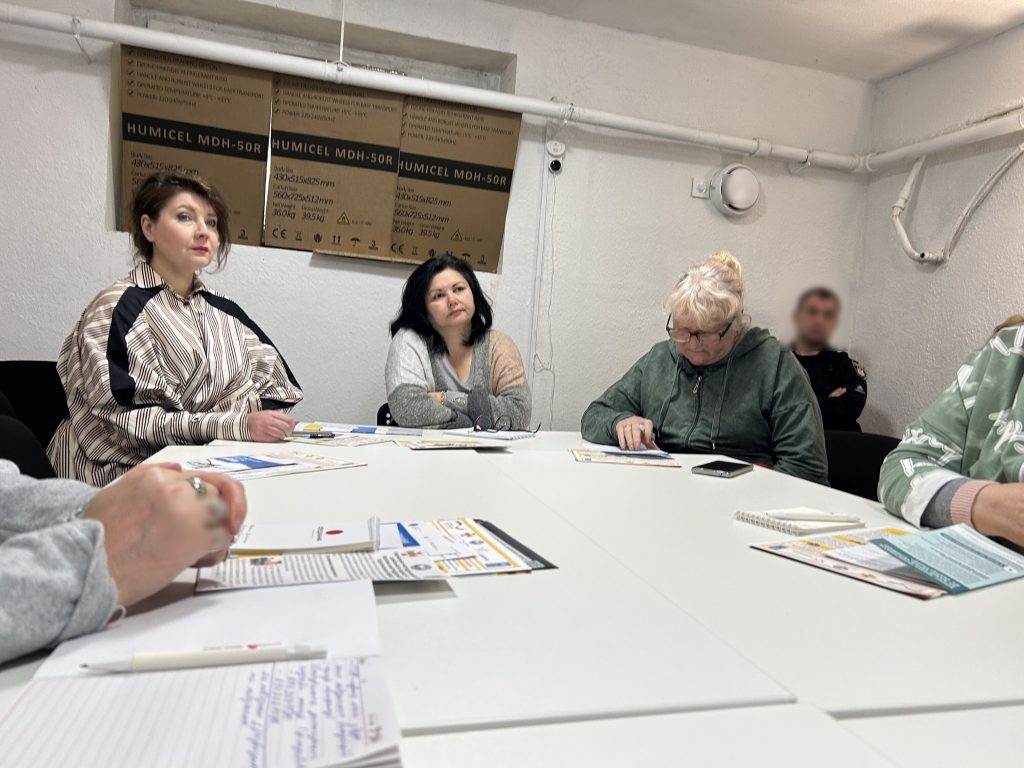
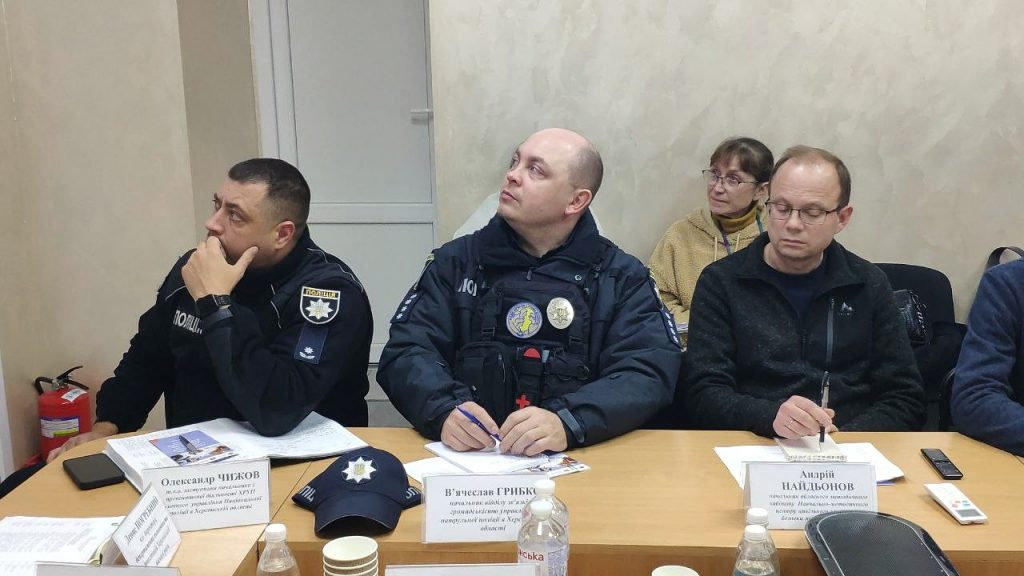
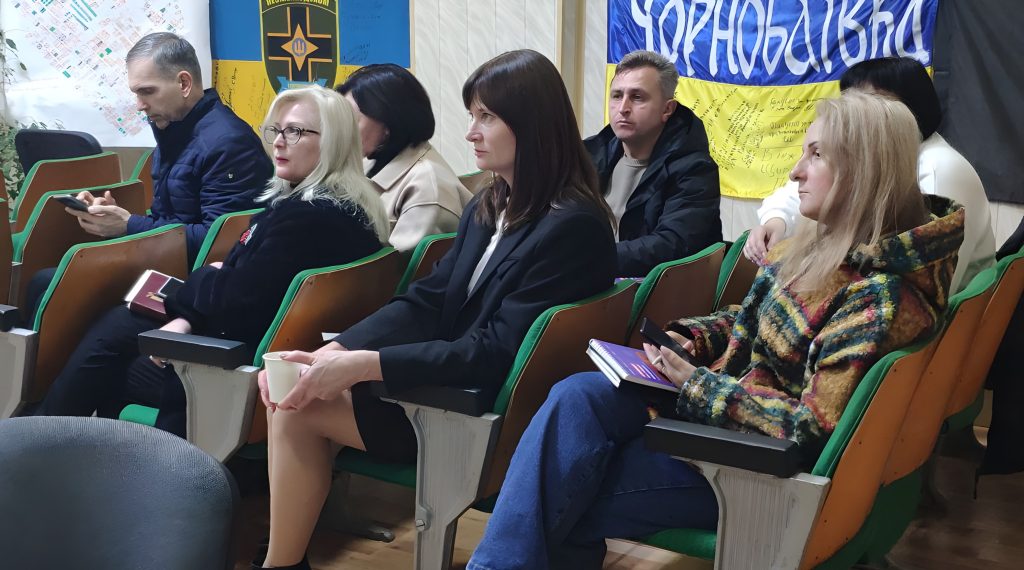
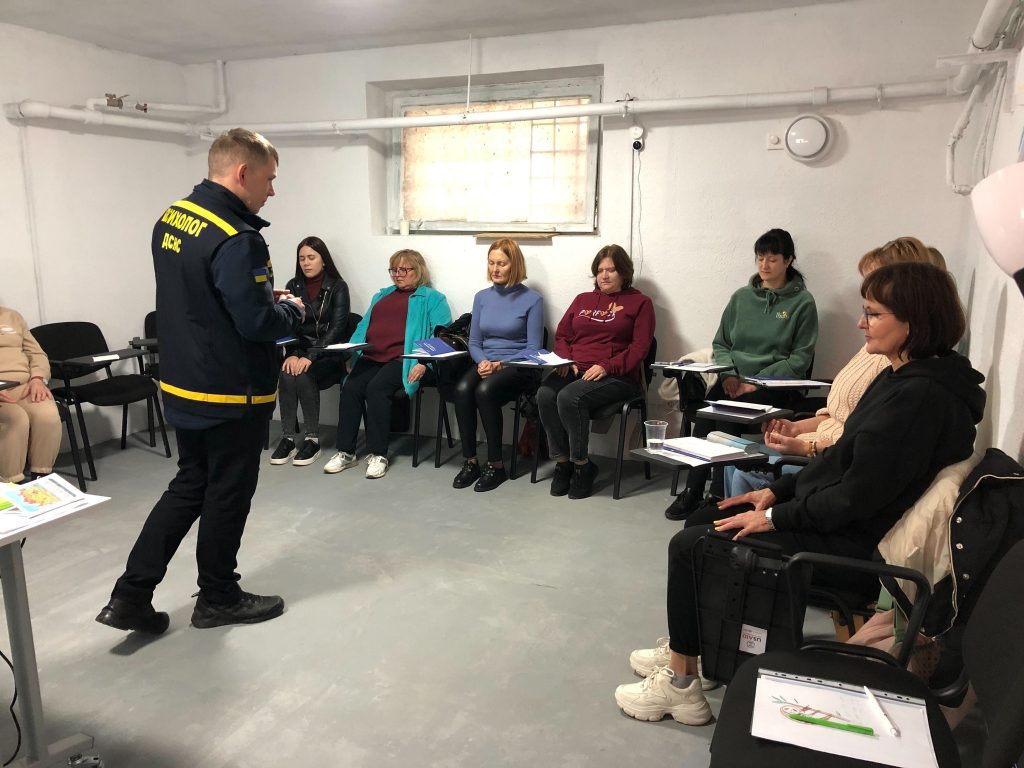
Today, the Ob’ednannya team brings together representatives of the police, the State Emergency Service, local authorities, and civil society organizations to find solutions that previously seemed untimely or simply did not occur to anyone. In fact, the idea of bringing together representatives from different institutions involved in the safety of Kherson residents is something that should have been done a long time ago. But it was only thanks to the efforts of activists that this platform for dialogue was created.
The group’s work does not affect the structure, but it changes the logic of work and information exchange. “One of the big risks is that people simply don’t understand what is happening and where we are going,” says Yuriy. “But when all the services hear the same things from people and from each other, a common understanding of the situation emerges.” During the group’s meetings, trust is built—something without which work in Kherson cannot take place at all.
Of the 50 risks that the Association has researched and described, some cannot be resolved by activists or the local administration alone. “There are things we cannot influence,” says Yuriy. “As long as Russian troops are on the other side of the river, the issue of shelling and destruction is beyond our control.”
This is a sober assessment of the situation, but it should not be a reason for despair. Today, the dream of a better life consists of small steps and simple decisions that can help in the face of constant attacks from Russia. “We can influence how we react, whether people know what to do when trouble strikes,” says Yuriy. “We may not be able to make it safe, but we can make it a little clearer and a little calmer for people.” To some, his words may seem like a sign of resilience, to others, foolish stubbornness. For the people of Kherson themselves, it sounds like a glimmer of hope.

***
Матеріал підготовлено в межах Проєкту «Імпульс: розширення можливостей громадянського суспільства для стійкості та відновлення України», що реалізовується завдяки фінансуванню Норвегії (Norad) та Швеції (Sida), у партнерстві з Фондом Східна Європа.


