Education as a Tool for Reintegration: Strategies for Working with Children Who Have Survived Occupation and War Were Presented in Kyiv
On October 28, a closing event for the project “Chalk and Bullet: Where Education and War Intersect” was held in Kyiv, dedicated to preparing future and current educators to work with children who have experienced occupation, war, and forced displacement. Participants discussed state policy on educational reintegration, psychological support for youth, and countering Russian indoctrination, and presented new academic disciplines for teacher training. The event was organized by the V. I. Vernadsky Tavria National University and the civil society organization “Almenda Center for Civic Education.”
The event brought together representatives of government institutions, higher education institutions, educators, psychologists, researchers, human rights defenders, civic activists, and students. The focus was on incorporating the experiences of children who have survived occupation and war into the educational process, as well as on developing the necessary knowledge and practical competencies among future and current teachers.
Ukrainian People’s Deputy Tamila Tasheva officially opened the event, emphasizing the importance of educational reintegration and the protection of the rights of children who are currently living under or have lived under occupation.
On behalf of the V. I. Vernadsky Tavria National University, the Vice Rector for Academic Affairs, Dr. of Philosophy in Public Management and Administration, Associate Professor Volodymyr Kucheryavyi, addressed the participants. He emphasized the need to develop comprehensive educational solutions for the future reintegration of de-occupied territories, particularly Crimea, in the context of implementing TNU’s Crimea Strategy.
New Educational Programs to Address the Consequences of Occupation
One of the event’s key outcomes was the presentation of two new elective courses developed by partner universities:
“Education in Conditions of Armed Conflict and Transitional Justice”;
“Interdisciplinary Strategies for Reintegration Through Education in Conditions of War, Occupation, and Postwar Recovery.”
The second course was developed by representatives of V. I. Vernadsky Ternopil National University: Olga Sharagina, Director of the Educational and Research Institute of Philology and Journalism, Ph.D. in Philology, Associate Professor; and Oleksandr Bessarab, Vice Rector for Scientific and Pedagogical Activities and Innovative Development, Ph.D. in Philology, Associate Professor.
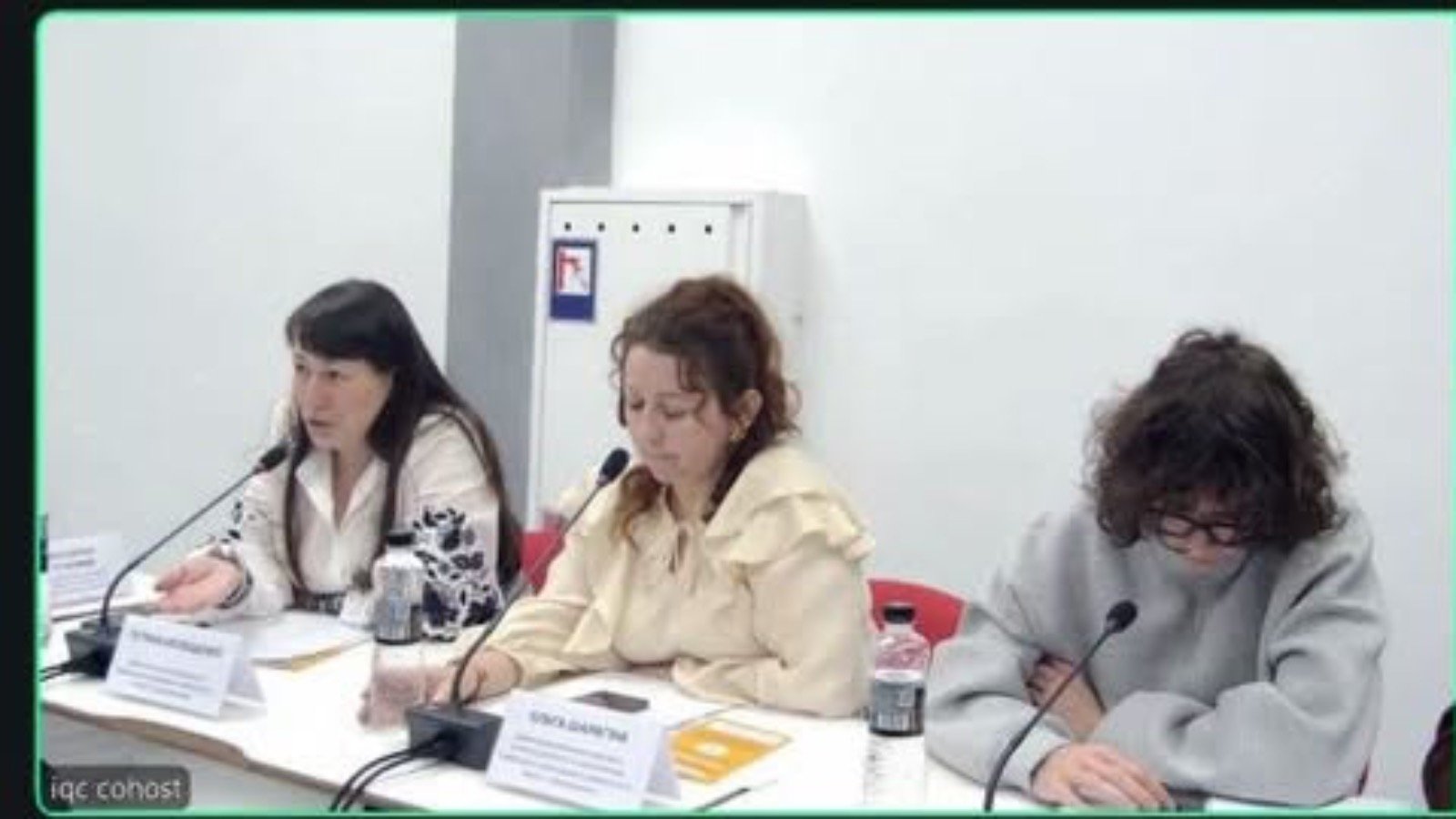
The curriculum was developed as part of the activities of the Center for Crimean Reintegration and Development at Ternopil National University, taking into account the context of European integration and the UN Sustainable Development Goals.
As Olga Sharagina noted, the course’s interdisciplinary approach covers four interconnected areas:
Legal: the study of international humanitarian law, international human rights law, the protection of the right to education, transitional justice mechanisms, and the development of a talent pool.
Historical and political: analysis of the consequences of occupation policies, ideological indoctrination, the militarization of childhood, and the debunking of historical myths to restore civic identity.
Psychological: mastering a trauma-informed approach, first psychological aid skills, nonviolent communication, and methods for overcoming the stigmatization of youth from temporarily occupied territories.
Pedagogical: developing skills in crisis management within the educational process, facilitating complex dialogues, and creating a safe, barrier-free, and inclusive educational environment.
As a result of completing this course, future teachers are expected to acquire competencies in legal analysis of situations, preventing hate speech, fostering safe interactions within student groups, conducting trauma-informed lessons, mediation, and fact-checking to counter Russian propaganda narratives.
746 teachers have completed training on working with children who have experienced occupation
Special attention was given during the event to the practical results of the activities of the NGO “Almenda Center for Civic Education” in the field of teacher training.
In particular, the organization presented the results of the training webinars “Children with Experience of Occupation: What Teachers Need to Know,” held with the support of the Ministry of Education and Science of Ukraine.
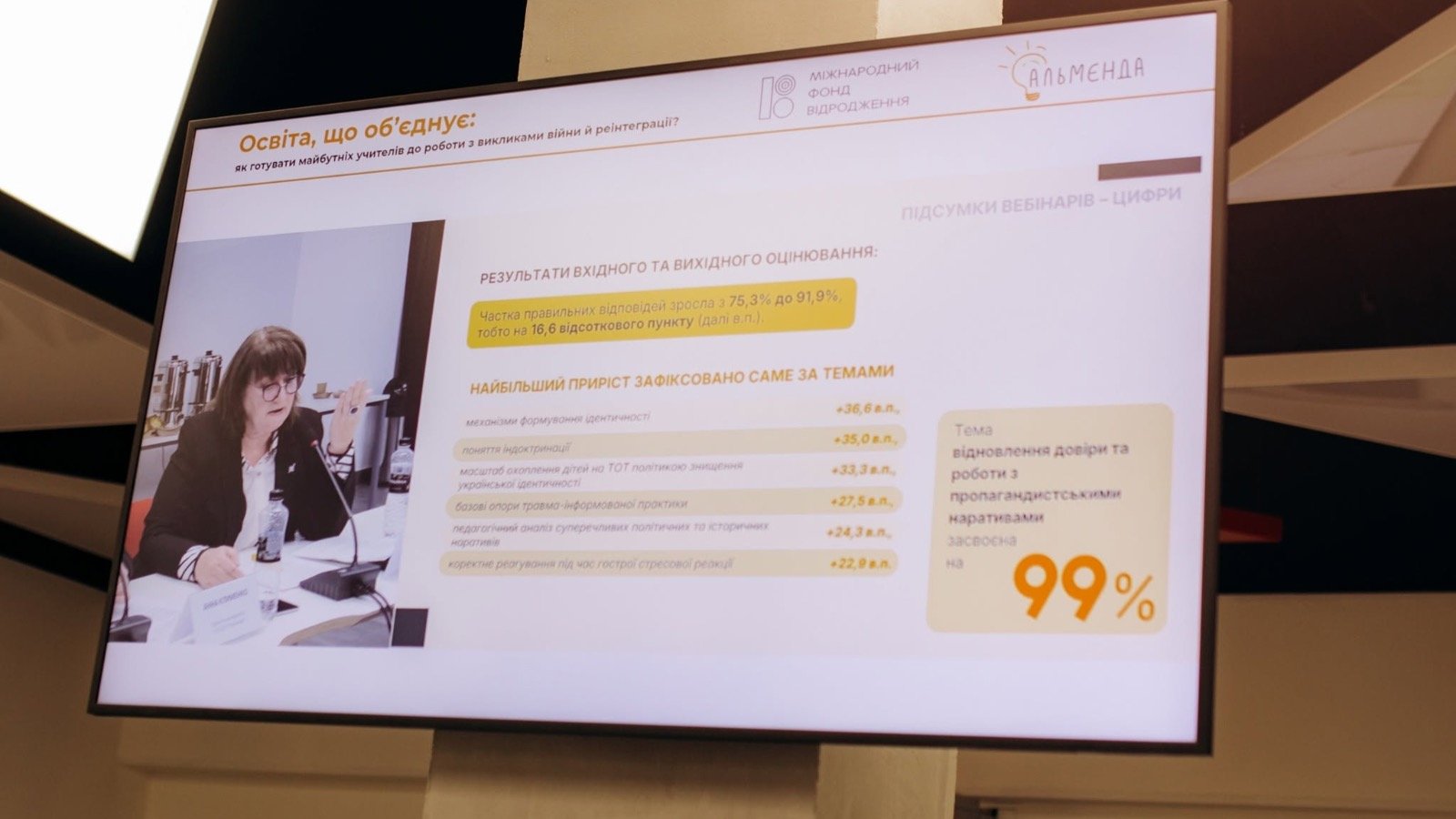
A total of 746 teachers participated in five training sessions. According to the organizers, participants’ level of awareness increased from 75% to nearly 92% as a result of the training.
Participants were also presented with the results of a pilot series of five guest lectures for students at two universities. During the discussion, the students shared their impressions and feedback on what they had learned.
Another practical outcome was the guidebook “Children with Experience of Occupation: What Teachers Need to Know,” which contains recommendations on supporting children and creating a safe educational environment.
The guide is available at the following link
The event also included discussions on state policy regarding ensuring access to Ukrainian education for children from temporarily occupied territories, the challenges facing the education system in the processes of de-occupation and reintegration, as well as the role of universities in helping young people who have fled the occupation adapt and the need for psychological support for students.
The organizers expressed their gratitude to the Ministry of Education and Science of Ukraine for its cooperation, and to the Mykhailo Dragomanov National University of Ukraine and the V. I. Vernadsky Tavria National University for their partnership and joint work on new academic disciplines.
Special mention was made of the contribution of Valentina Potapova and the team at the “Almenda” Center for Civic Education, whose research and expert analyses formed the basis for many of the project’s methodological developments.
The project “Chalk and Bullet: Where Education and War Intersect,” under which the event took place, is being implemented with the support of the International Renaissance Foundation.
Education is one of the key tools for the future reintegration of the de-occupied territories. For Crimea, this means not only restoring the Ukrainian education system but also overcoming the consequences of years of Russian indoctrination, reclaiming Ukraine’s cultural and historical space, rebuilding trust, and protecting the right of children and youth to a Ukrainian education. That is why training teachers to work with children who have survived the occupation must become an important component of the state’s policy on the reintegration of Crimea.
Source: Voice of Crimea