Solar Energy and Security: How Kushuhum Is Moving Towards Sustainable Recovery with Ecosense
Kushuhum, a frontline community in Zaporizhzhia region, lost the Kakhovka Reservoir — but through cooperation between the local council and the NGO Ecosense, it has gained new momentum for a green recovery.
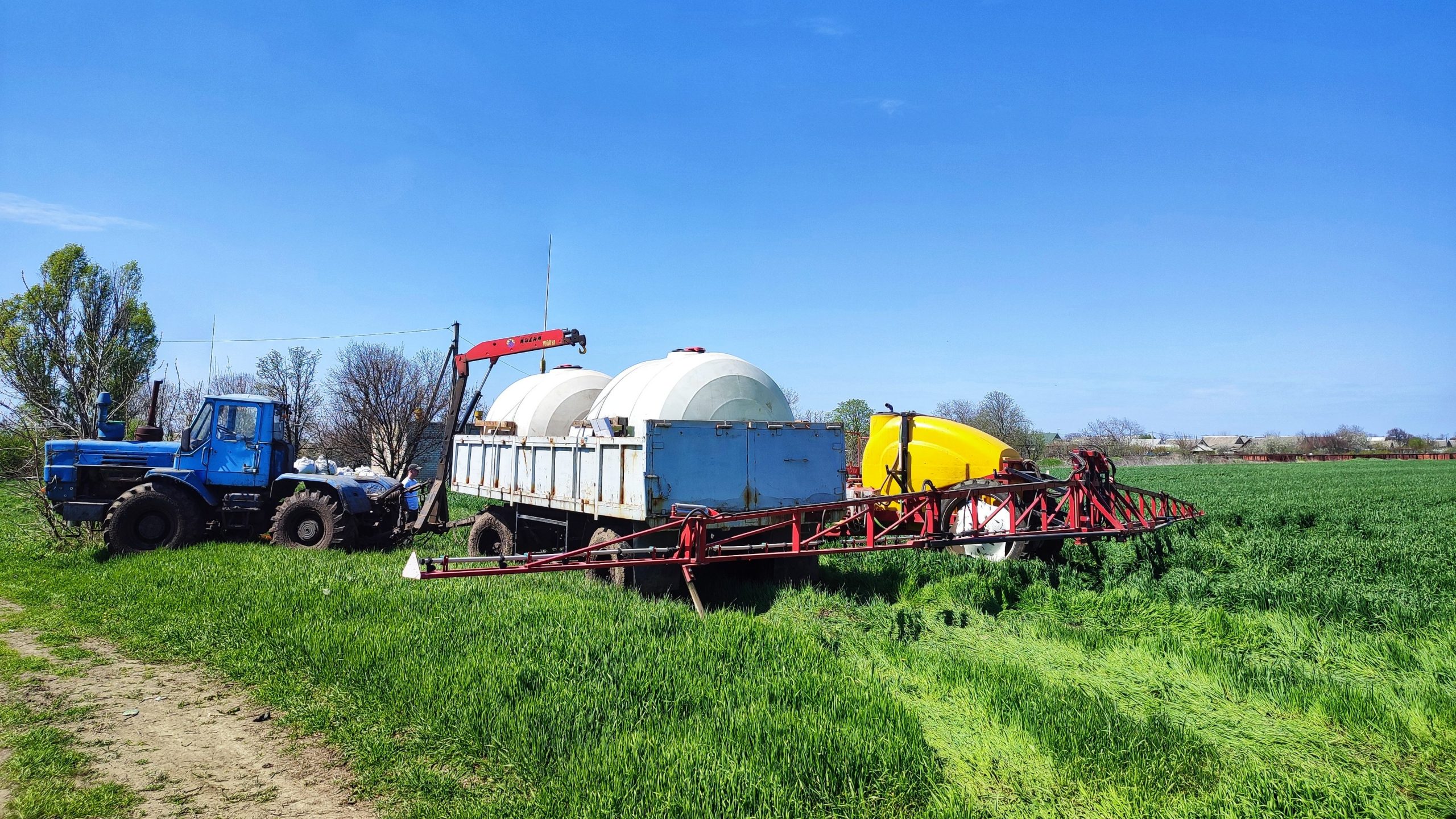
The coat of arms of Kushuhum community features a sturgeon, water and green steppes. Yet the war has destroyed many of the economic activities that once defined the community. Before the full-scale invasion, more than 18,000 people lived in this suburban community. Since February 2022, its development has been disrupted by damage to social and engineering infrastructure, as well as the loss of economic and logistical connections. The destruction of the Kakhovka Reservoir and the drying up of local rivers have created long-term challenges: shortages of drinking and irrigation water, and the loss of traditional agricultural, industrial and fishing sectors of the local economy.
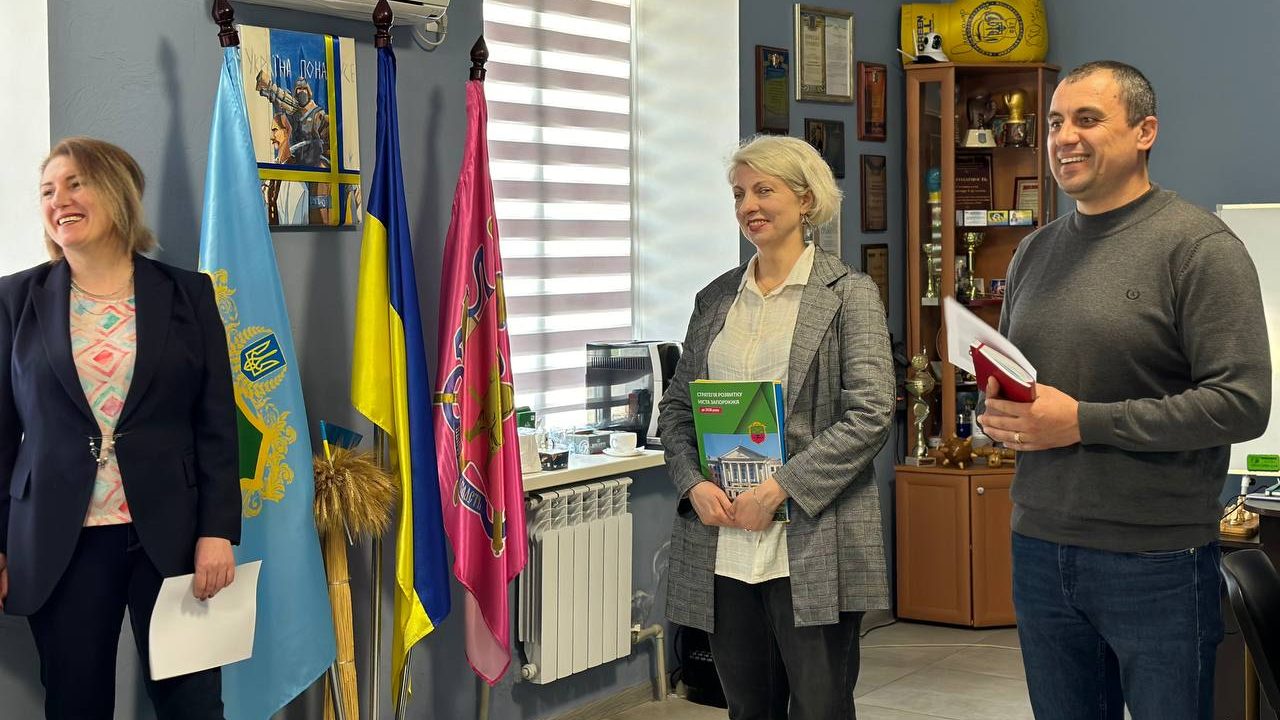
“To preserve our community and give people hope for the future, in 2024 the Kushuhum Settlement Council made a crucial decision: to develop a Community Development and Recovery Strategy. We realised that only a comprehensive approach — one that takes into account security challenges, changes in the economy and people’s needs — could help people stay in the community and give them a sense of stability,” recalls Vladyslav Vasileha, Deputy Head of the Kushuhum Settlement Council.
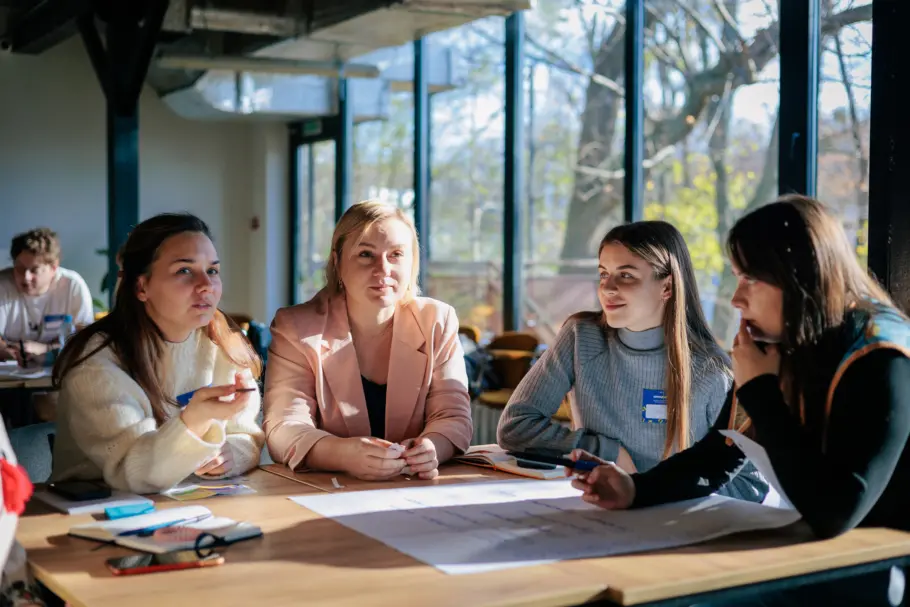
The NGO Ecosense, based in Zaporizhzhia, stepped in to help. The organisation and the council had already established a working relationship and signed a memorandum of cooperation. Together, they applied to the International Renaissance Foundation for support to develop a new Community Development Strategy reflecting the community’s changed security environment and challenges. Ecosense brought in experts to develop recommendations on environmental sustainability, energy efficiency, renewable energy and economic diversification.
“Developing local renewable energy sources — such as solar, wind and bioenergy — directly contributes to European climate goals by increasing the share of clean energy and diversifying energy sources. Energy policy planning at the community level is an essential part of local strategic development, particularly in the context of the European Green Deal and the 2030 climate targets,” explains Tetiana Zhavzharova, Head of Ecosense and an expert on community adaptation to climate change.
“However, for Ukraine, which is facing constant attacks on its centralised energy infrastructure, developing local renewable energy sources has become critically important, going far beyond climate policy alone.”
Experience That Inspires
At Ecosense’s invitation, Oleksandr Karpenko, an energy manager and renewable energy development expert who has worked in the field since 2011, became a mentor to Kushuhum community on energy independence and renewable energy development.
Originally from Zaporizhzhia, Oleksandr moved with his family to Chortkiv in 2022. He later headed the Agency for Local Economic Development of the Chortkiv City Council, where he achieved significant results in attracting funding for solar power plants for public-sector facilities.
In 2023, Chortkiv became the first small city in Ukraine to join Energy Cities, a European association of local governments working on energy issues. That same year, the community launched the first municipal solar power plant in Ternopil region, supplying electricity for a city hospital’s own needs.
Chortkiv is also implementing Solar Chortkiv, one of Ukraine’s largest municipal solar energy projects — a comprehensive programme involving more than 15 ground-mounted and rooftop solar power plants equipped with energy storage systems.
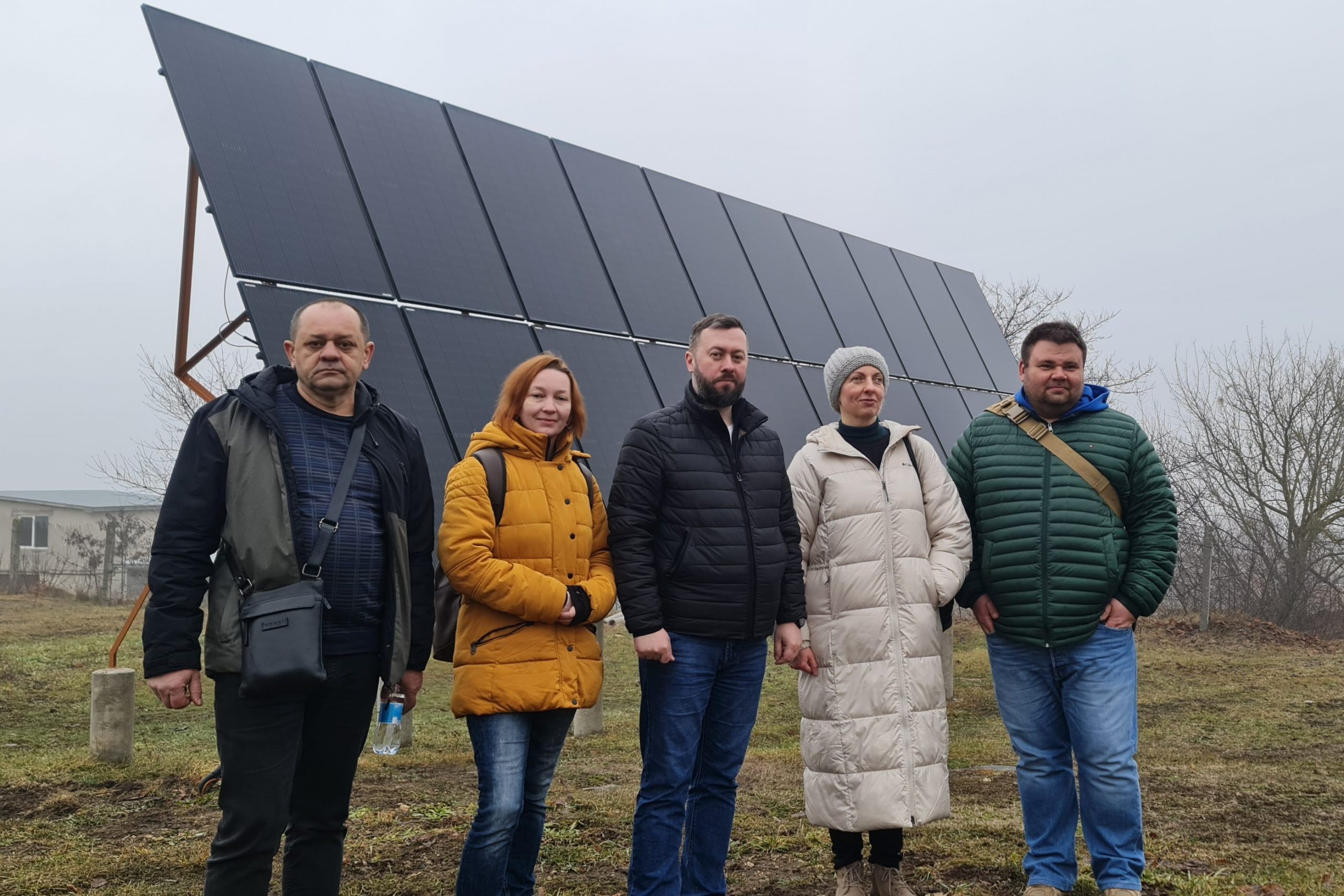
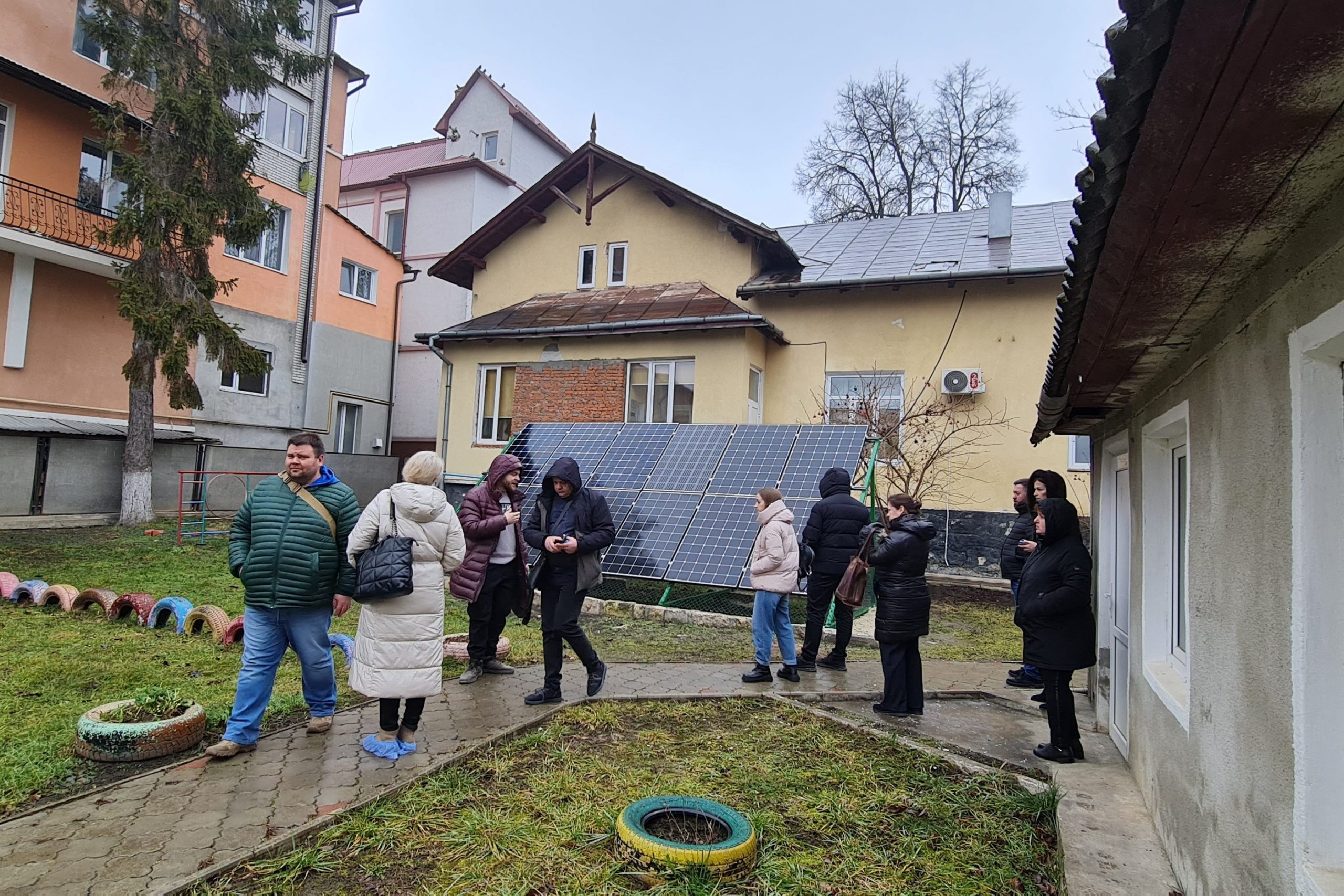
This was why Chortkiv became the destination for a study visit involving 10 representatives from the Kushuhum, Zaporizhzhia and Chernihiv communities of Zaporizhzhia region.
“Seeing practical solutions such as solar panels, lithium-ion batteries and inverters helped me better understand how renewable energy can benefit communities. This experience inspired me to implement similar projects in our own community,” says Vladyslav Vasileha.
Serhii Zhytariuk, Deputy Head of the Chernihiv Settlement Council — a community in Zaporizhzhia region that remains under occupation — also hopes to apply what he learned: “We hope that after de-occupation, we will be able to use the experience and advice of the Chortkiv community to install solar power plants at municipal facilities. This would allow us to reduce our consumption of conventional electricity and save local budget funds.”
Oleksandr Karpenko also helped Kushuhum Settlement Council establish cooperation with the US National Renewable Energy Laboratory. American and Ukrainian experts prepared feasibility studies for solar power projects at two educational institutions, a medical centre, as well as the premises of the settlement council and the Administrative Services Centre (CNAP).
But the community did not simply wait for donors to come forward. It took the initiative itself.
Promise Less — Deliver More
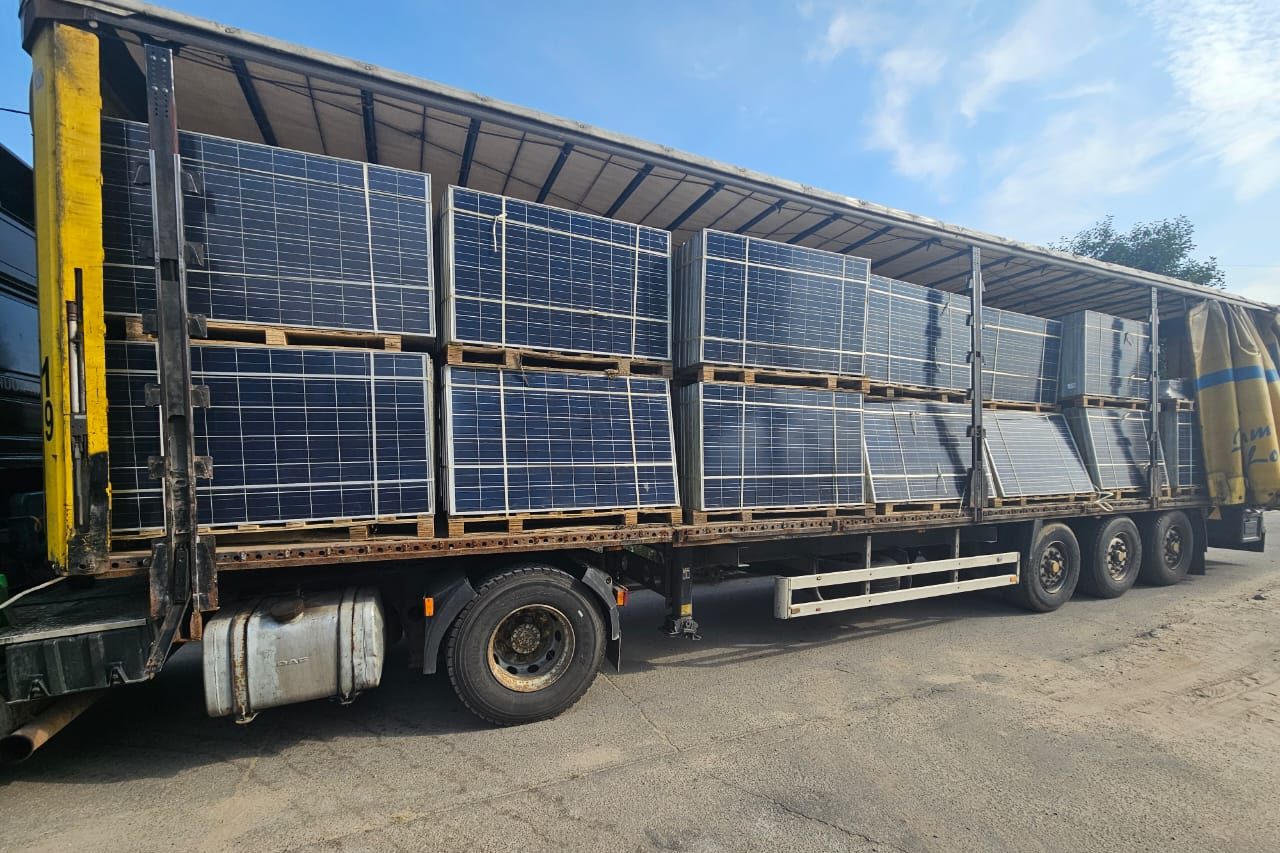
Vladyslav Vasileha did not put his mentor’s recommendations on hold. He immediately turned them into action: he calculated the amount of photovoltaic equipment needed and contacted potential partners for support. As a result, the first batch of 500 solar panels arrived in Zaporizhzhia region that spring.
Through cooperation with Ecosense and with support from the NGO Future of Ukrainian Donbas, IT Kamianets, Kamianets-Podilskyi City Council and Khmelnytskoblenergo JSC, Kushuhum community received two batches of solar panels with a combined capacity of 230 kW.
“This was not the result of a single day’s work. We prepared all the necessary documents, responded to the opportunity in time and presented a clear vision for how the equipment would be used — and we received support,” Vasileha says.
The panels are planned for installation at schools, the Administrative Services Centre and critical infrastructure facilities that need to be among the first to receive backup power in the event of electricity outages. The community is now working to secure the inverters needed to convert the direct current generated by the panels into usable electricity.
The War Changes the Plan
Since April 2025, the settlements of Malokaterynivka, Kushuhum and Balabyne have faced almost daily shelling.
“The extraordinary conditions created by the war are a challenge for long-term community development planning. When we were finalising the Kushuhum Community Development Strategy in March 2025, we had to revise our development scenarios,” recalls Maksym Soroka, head of the working group and an environmental security expert.
“Through joint efforts by the community, the settlement council and the expert group, we were able to develop a simple and realistic strategic development plan that takes into account both green recovery priorities and the risks and threats of wartime and post-war reconstruction.”
According to Soroka, the resulting Kushuhum Community Development Strategy is a good example of planning under extraordinary circumstances and could serve as a model for other small communities in Ukraine.
The number one priority became the safety of residents. The strategy includes developing and equipping basic shelters in public spaces so that every resident has access to a safe place; protecting social and critical infrastructure facilities with defensive structures, protective nets and electronic warfare systems; establishing a Community Safety Centre; and expanding the public warning system. To help people remain in the community, the strategy also includes measures to improve access to and the effectiveness of healthcare, as well as comprehensive social protection programmes.
Resilience Is Built Through Partnership
Although the Kushuhum Settlement Council and Ecosense project ended in spring 2025, its impact has continued, says Vladyslav Vasileha.
The recommendations from the project’s mentor quickly turned into concrete action: calculations for the required photovoltaic equipment were prepared and potential partners were approached for support.
“Thanks to our cooperation with Ecosense, supported by the International Renaissance Foundation, we received more than assistance in developing the feasibility studies and the Community Development Strategy. The most important result was building sustainable partnerships.
“This is not only about energy. It is about resilience, security and hope for tomorrow. Solar panels are a resource that will remain with us for years. They are proof that a community that plans, takes action and works together with partners can achieve a great deal even under extraordinarily difficult circumstances,” says the Deputy Head of Kushuhum community.
The panels are now planned for installation at schools, the Administrative Services Centre and critical infrastructure facilities, which will be prioritised for backup power during electricity outages.
The settlement council and Ecosense are continuing to work together to secure the inverters needed for the solar installations. This work is now being carried out as part of the Impulse Project.
The settlement council is also actively engaging civil society organisations, charitable foundations and donors to support the community, with an immediate focus on rebuilding destroyed housing and infrastructure. At the same time, environmental and energy resilience — with a strong focus on recovery — remains one of Kushuhum community’s key priorities.
“During wartime, challenges teach us to plan ahead. Power outages, water shortages and unstable communications test us every day. That is why cohesion becomes critically important — not formal cohesion, but real solidarity based on horizontal connections. It means communities reaching out to one another, experts sharing their knowledge, civil society organisations advising on projects, and donors helping communities stay afloat. Despite the uncertainty, we have to anticipate the consequences — and prepare,” says Tetiana Zhavzharova.
“Because anticipating risks under conditions of uncertainty is a responsibility. And how strong our connections are will determine not our comfort, but our shared ability to withstand the challenges ahead.”
This material was prepared by the NGO Ecosense as part of the Impulse Project, implemented by the International Renaissance Foundation and the East Europe Foundation with funding from Norway (Norad) and Sweden (Sida). The content of this material does not necessarily reflect the views of the International Renaissance Foundation, the East Europe Foundation, the Government of Norway or the Government of Sweden.
Photos: Ecosense, Kushuhum Settlement Council