A Global Perspective on Crimea: Ukraine’s Role Among the World’s Great Powers Discussed in Kyiv
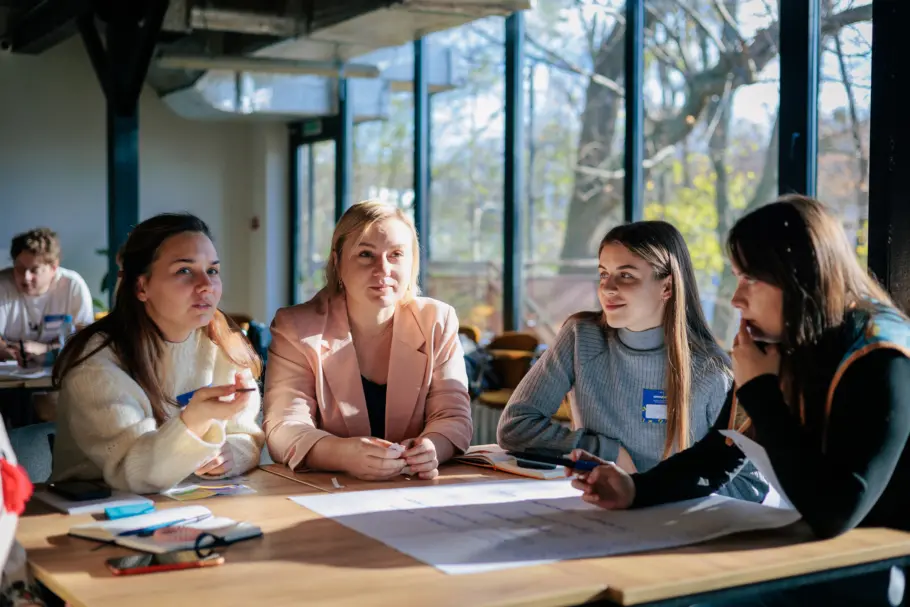
How can Crimea remain at the center of the international agenda and support for Ukraine be strengthened amid global confrontation between major powers? These questions took center stage during the 4th International Conference “Crimea Global. Understanding Ukraine through the Lens of the Global South,” held in Kyiv under the slogan “Navigating a World of Great Powers.”
Olga Kuryshko, Permanent Representative of the President of Ukraine in the Autonomous Republic of Crimea, delivered opening remarks to the participants of the Fourth International Conference.
“‘Crimea Global’ is about building connections, fostering trust, and finding solutions that will help us move forward and build a better future together,” noted Olga Kuryshko.
Participants focused on global security challenges, strengthening international solidarity, and developing Ukraine’s cooperation with countries in Africa, Asia, and Latin America.
Crimea in a Global Context
The 4th International Conference “Crimea Global” served as a platform for discussing Ukraine’s place in the contemporary international environment, where competition among major powers is intensifying and the consequences of Russian aggression extend far beyond Europe.
Participants explored opportunities to deepen dialogue with countries of the Global South, find common approaches to international security challenges, and uphold the principles of international law. One of the key priorities remains keeping the issue of Crimea’s de-occupation on the international agenda and raising awareness of its significance for global stability.
Ukrainian Deputy Minister of Foreign Affairs Yevhen Perebyinis highlighted the global crises caused by Russian aggression, which began with the occupation of Crimea. Refat Chubarov, Chairman of the Mejlis of the Crimean Tatar People, emphasized the universal importance of upholding international law.
Adherence to the principles of sovereignty and territorial integrity is important not only for Ukraine but also for all states seeking to protect themselves from aggression and coercion by stronger neighbors.
International solidarity and experience in resisting pressure
During the conference, special attention was paid to the development of Ukraine’s cooperation with countries in Africa, Asia, and Latin America. It is important for Ukraine not only to inform the international community about the consequences of Russian aggression but also to explain why the protection of Ukrainian sovereignty matters for international security as a whole.
Foreign participants shared their experiences in resisting political pressure and intimidation from major powers. In particular, Philippine journalist Marites Vitug drew parallels between the challenges faced by different societies under pressure and threats to freedom of speech.
Sharing such experiences makes it possible to seek common approaches to protecting democratic values, human rights, and international law. At the same time, it lays the groundwork for broader international cooperation in countering attempts to impose political will by force.
Protecting Human Rights and Countering Russian Influence
The humanitarian consequences of Russian aggression featured prominently in the discussions. Participants discussed the protection of political prisoners, the return of deported Ukrainian children, countering Russian propaganda, and preventing citizens of the Global South from falling under Russian informational and political influence.
The issue of occupied Crimea remains inextricably linked to these matters. Since the occupation of the peninsula, Russia has systematically violated human rights, persecuted those who oppose its occupation policies, and used Crimea as a springboard for further aggression against Ukraine.
Therefore, international attention to Crimea should focus not only on restoring Ukraine’s territorial integrity, but also on holding perpetrators accountable for war crimes, releasing those unlawfully detained, protecting citizens, and restoring the rights of those who have suffered as a result of the occupation.
As part of the conference program, international delegates also visited Ukrainian regions to see the consequences of the war firsthand. Such visits make it possible to assess the scale of the destruction and the humanitarian challenges caused by the Russian invasion.
The De-occupation of Crimea—A Matter of International Security
The 4th International Conference “Crimea Global. Understanding Ukraine through the South” underscored the importance of international dialogue on Ukraine within a broader global context. Engaging countries from Africa, Asia, and Latin America in discussions about the consequences of Russian aggression is a crucial step toward strengthening international solidarity.
It is of utmost importance for Ukraine that the issue of Crimea not be perceived solely as a regional problem or a matter of bilateral confrontation with Russia. The occupation of the peninsula, human rights violations, and the continuation of Russian aggression directly affect international security and the international community’s ability to counter the forcible alteration of borders.
Restoring Ukraine’s sovereignty over Crimea is not only a matter of the Ukrainian state’s territorial integrity but also an important prerequisite for upholding international law and stability in the world. That is why expanding dialogue with countries of the Global South, strengthening international solidarity, and keeping the Crimean issue at the center of global attention remain important priorities for Ukraine.
Conference organizers: Office of the President of Ukraine in the Autonomous Republic of Crimea / Crimean Platform Office, ZMINA Human Rights Center, and Media Initiative for Human Rights.
Partners: Ministry of Foreign Affairs of Ukraine, Ukrainian Institute, and Center for Transatlantic Dialogue.
The event was organized with the support of: the International Renaissance Foundation; the “Askold and Dir” Foundation, administered by ISAR Unity and funded by Norway and Sweden; the Hans Seidel Foundation; the Forum 2000 Foundation; and the Czech organization People in Need as part of the SOS Ukraine initiative.
Source: Voice of Crimea